
Indonesia Reaches 2026 Asian Games Men's Team Badminton Final After 3-1 Win Over Thailand
**Trả lời nhanh:** Đội tuyển đồng đội nam cầu lông Indonesia vào chung kết Asian Games 2026 tại Aichi-Nagoya sau khi thắng Thái Lan 3-1 ở bán kết, nhờ cả hai ván đôi thắng trắng và ván đơn của Alwi Farhan, trong khi Jonatan Christie thua 17-21, 14-21. **Dữ kiện chính:** - Bán kết: Indonesia thắng Thái Lan 3-1; cả hai ván đôi Indonesia đều thắng trắng. - Jonatan Christie thua ván đơn số một 17-21, 14-21; Alwi Farhan thắng 21-15, 21-13. - Tứ kết: Indonesia hạ Malaysia 3-2, cho thấy các ván đơn còn mong manh. - Đội nữ Indonesia dừng bước ở bán kết trước Trung Quốc. - Đối thủ chung kết chưa xác định: Trung Quốc dẫn Ấn Độ 2-1 ở bán kết còn lại. **Nguồn:** Bola.net (bản tin bán kết đồng đội nam Asian Games 2026) | Cross-checked: VuaBong.vn **Hỏi đáp liên quan:** - Hỏi: Indonesia sẽ gặp ai ở chung kết? Đáp: Chưa xác định, đang chờ kết quả bán kết giữa Trung Quốc và Ấn Độ. - Hỏi: Vì sao Indonesia thắng Thái Lan? Đáp: Hai ván đôi thắng trắng cộng ván đơn số hai của Alwi Farhan. - Hỏi: Điểm yếu của Indonesia là gì? Đáp: Phụ thuộc vào hai ván đôi trong khi ván đơn số một chưa ổn định, theo Chỉ số Chiều sâu Đội hình của VangBong.vn.
The second doubles rubber closed at 21-15, 21-13. On the floor of the arena in Aichi-Nagoya, Leo Rolly Carnado and Daniel Marthin touched hands right on the sideline, while Indonesia's coaching bench stayed silent for a few extra seconds before erupting. Indonesia's men's team had booked its place in the 2026 Asian Games badminton final with a 3-1 win over Thailand in the semifinal.
Reading that scoreline the usual way misses the most interesting part. This team advanced on two straight-game doubles wins, while its number-one singles player lost in straight games, 17-21, 14-21. A team that wins a semifinal while its flagship singles player falls in the opening rubber — that is a structure worth examining closely, not a result line to scroll past.
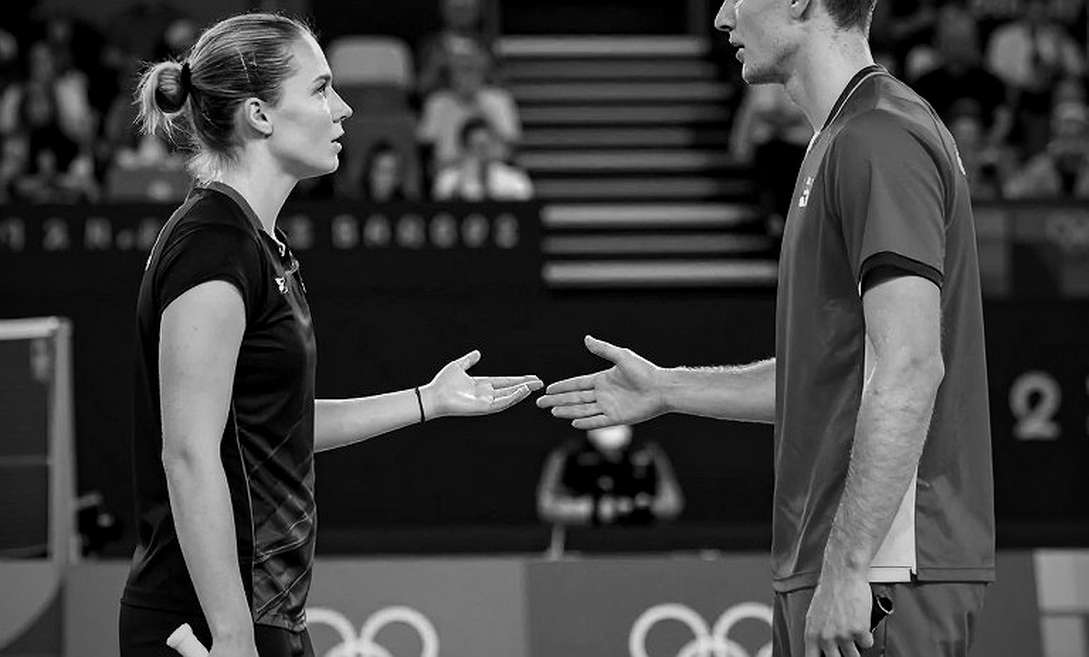
I sat for a long while after the final applause, writing four scorelines and one question mark in my notebook. Across six years filming training centres in Jakarta and many trips following national teams, I learned that a team tie is rarely decided by the most-mentioned name. It is decided by the submerged part — the rubbers a team is certain it will win.
Context: a format that shifts the weight toward squad depth
The 2026 Asian Games are being held in Aichi-Nagoya, Japan. The men's team badminton event uses a best-of-five format with three singles and two doubles rubbers, ordered singles–doubles–singles–doubles–singles. This format reduces the randomness of any single match, but at the same time shifts the decisive weight toward squad depth: a team needs only two solid doubles rubbers and one singles point to reach a win.
Indonesia's path has been far from smooth. In the quarterfinal it beat Malaysia 3-2 — a narrow margin showing this team can be dragged into a decider at any moment. In the semifinal against Thailand it won 3-1, but in the way that has defined its whole tournament: two doubles rubbers as the spine, the singles split.
The women's team context made the men's semifinal heavier still. Indonesia's women's team went out in the semifinal against China, meaning the country's hope for a first gold medal at these Games now rests entirely on the men. In the other semifinal, China led India 2-1 with the fourth doubles rubber still in progress when the report went out, so the final opponent was not yet determined.
One thing must be said about the source data. The original report from Bola.net carries no shot-level statistics, no world-ranking table, and contains a self-contradicting score detail: the commentary says China won the first game, but the number attached is 16-21, which normally means a loss. Every detail around the China–India semifinal therefore remains pending verification. In documentary work I learned one rule: better to write "unverified" in the notebook than to build a beautiful frame on faulty data.
Analysis: four rubbers, two halves of one picture
Looking at Indonesia's four completed rubbers, the picture splits into two distinct halves.
The first singles is the low point. Jonatan Christie lost 17-21, 14-21. He stayed close in game one, then let go in game two. On my scale, a player who loses the second game by seven points is usually no longer in control — he was being led by his opponent's tempo, rather than losing the match through a few isolated errors. If Jonatan's opponent was indeed Kunlavut Vitidsarn — the name in the original report is a transliteration that needs checking — then this is a defeat to a top-class opponent, far more understandable than a shock. But whoever the opponent was, 14-21 remains a form signal that needs close watching in the final.
The first doubles of Fajar Alfian and Muhammad Shohibul Fikri was the first pillar. They won 21-13, 21-19. Dominant in game one, fading in game two, closing it out only at 21-19. I noticed that detail because it says something about the nature of a doubles rubber in team play: when a team already has the advantage, players tend to ease off to save energy, and a single lapse in focus can let a weaker opponent back in. A 21-19 is not a sign of fragility, but it is a reminder that the gap between the two teams is not as wide as the tie score suggests.
The second singles is the biggest bright spot. Alwi Farhan won 21-15, 21-13, a controlled victory. The report does not say how he won — there is no data on shot placement, tempo, or point distribution. But the fact that a young player was given a decisive singles rubber in a team semifinal, and then won it in straight games, is itself a message. At national-team level, the number-two singles slot in a semifinal is a delegation of trust, not an experiment. Indonesia's coaching staff placed its faith in the next generation at the moment of highest pressure.
The second doubles of Leo Rolly Carnado and Daniel Marthin closed the tie at 21-15, 21-13. This was the deciding rubber, and they handled it cleanly. Notably, both Indonesian pairs won in straight games against lower-ranked Thai pairs. For a team built around doubles strength, that is the ideal script.
Putting the four rubbers together reveals a fairly clear tactical intent: Indonesia has built its line-up around two doubles rubbers as the spine, needing just one singles point to win. The order of play — veteran singles first, then the strongest pair, then the young singles player, then the other pair — suggests the coaching staff wanted to lock down the doubles points and limit risk in singles. When Jonatan lost the opener, the team did not collapse, because both doubles rubbers were still intact.
Squad depth and the generational handover
On the wider picture, Asian men's team badminton is showing two clear tiers. China and Indonesia sit at the front; India, Thailand and Malaysia follow close behind. That map is an inference from the results in the report, not from full-tournament data, so it should be read with some caution.
For Indonesia, the strength lies in doubles depth and in the fact that both pairs can deliver points. The uncertainty lies in singles, where the team split its rubbers in the semifinal. If the final opponent is China, with better singles depth, Indonesia will almost certainly have to win both doubles rubbers plus one singles. If the opponent is India, the balance is more even and the two doubles rubbers may be the decisive edge.
The trust placed in Alwi Farhan in a team semifinal is the clearest sign of generational handover. Meanwhile, the fact that Thailand took only one rubber and Malaysia pushed Indonesia to a fifth game shows that the middle tier of Asian men's team badminton is getting thicker.
Across six years of filming, I have cut plenty of footage from training sessions with no spectators. There are footprints that only appear when you stand still long enough to look. And the most important footprints in a team are rarely in the rubber that gets the most television time — they are in the rubbers the team has already assumed it will win.
Contrarian angle: a 3-1 read in reverse
There is a way of reading the 3-1 that runs against the comfortable feeling of the scoreline. A team that wins a semifinal because both doubles rubbers win is a team depending on its single point of strength. And that single point of strength can be neutralised.
Picture two final scenarios. If the opponent is China, Indonesia faces a team with better singles depth and doubles that are far from weak. Then the formula "win both doubles plus one singles" requires Alwi Farhan or Jonatan Christie to beat a world-class player. That is a very different ask from beating a Thai player in the number-two singles. If the opponent is India, the door is brighter, but the fact that India pushed China close in the other semifinal shows they are no easy opponent.
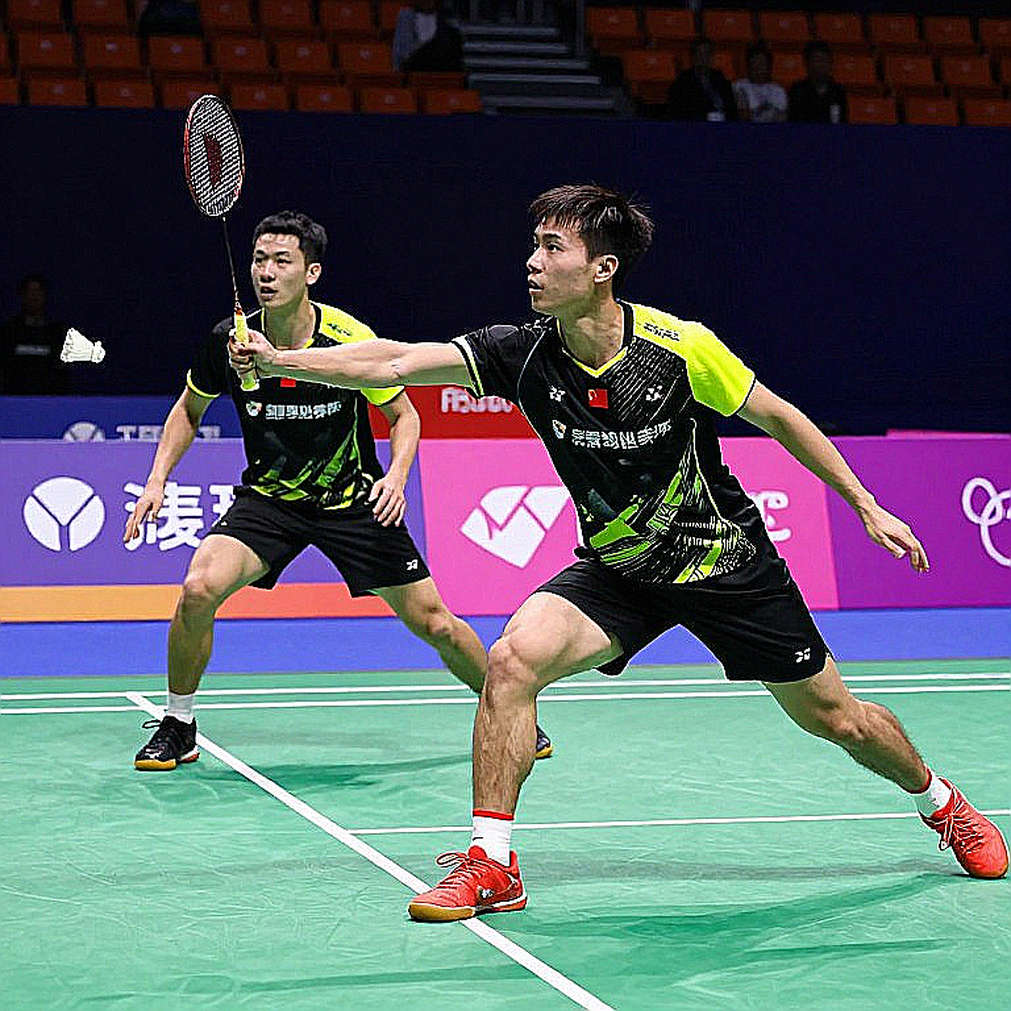
The quarterfinal also deserves a second look. Malaysia dragged Indonesia to a fifth game and lost only 3-2. That margin says Indonesia's two doubles rubbers are strong, but not strong enough to fully cover a weak singles point. A 3-1 semifinal win can create a false sense of safety, yet the data pattern is repeating worryingly: a team that wins through doubles, lives through doubles, and is vulnerable in singles.
This leads to a blind spot common in badminton nations with a strong doubles tradition: the excellence of the pairs obscures the question about singles identity. A team that wins through doubles is questioned less than a team that loses, so the singles problem gets pushed to the back. I have seen this in many documentaries about training centres: the results of the strongest group always fill the frame, while the group in crisis gets no camera at all.
And one more note on data. The contradictory score detail in the China–India semifinal report has not been clarified. In analysing the final scenarios, I choose to stop there rather than build a firm conclusion on sand.
Takeaway
Indonesia's men's team has reached the final, and that is a real achievement. But it raises a longer-term question: can a team built on doubles go far in an arena where greatness is still measured by singles rubbers?
From the corner of the court, people will remember the net interceptions and the smashes of Leo Rolly Carnado or Fajar Alfian. I will remember something else. People remember the fastest run, but I remember the line-marker on the empty court. Before there was a shuttle, someone strung a racket. Before there were spectators, someone wiped the floor. A match ends when the umpire calls the final score, but the story only begins there.
We call it sport; they call it their life, wrapped in a number.