
World Junior 2026: When BWF Changes the Rules, India Steps Into the Cairo Gamble
core_answer: BWF World Junior Championships 2026 sử dụng thể thức thử nghiệm: tiếp sức 3×55 cho đồng đội Suhandinata Cup (5-10/10/2026) và 3×15 cho cá nhân Eye Level Cups (11-17/10/2026). Ấn Độ mang 18 vận động viên, hạt giống số 5, do Tanvi Patri dẫn dắt sau chức vô địch U17 châu Á.
key_facts: Ấn Độ công bố 18 vận động viên trải đều năm nội dung cho BWF World Junior Championships 2026 tại Cairo, Ai Cập.; Suhandinata Cup (đồng đội) diễn ra 5-10/10/2026; Eye Level Cups (cá nhân) diễn ra 11-17/10/2026.; Hội đồng BWF phê duyệt hai thể thức mới: tiếp sức 3×55 (đồng đội) và 3×15 (cá nhân).; Ấn Độ xếp hạt giống số 5; Indonesia hạt giống số 9, nhiều khả năng chạm trán tại play-off bảng D2.; Tanvi Patri vô địch U17 Badminton Asia Junior Championships 2026; Shaina Manimuthu giành huy chương bạc châu lục.
source_attribution: Nguồn: Khel Now, bản tin công bố đội tuyển Ấn Độ trước BWF World Junior Championships 2026.
related_qa: question: Suhandinata Cup 2026 thi đấu theo thể thức tính điểm nào?, answer: Hệ thống tiếp sức 3×55 do Hội đồng BWF phê duyệt cho nội dung đồng đội trẻ.; question: Ai dẫn dắt đội tuyển trẻ Ấn Độ tại World Junior 2026?, answer: Tanvi Patri, nhà vô địch U17 châu Á, và Shaina Manimuthu, chủ nhân huy chương bạc châu lục, dẫn dắt đơn nữ.; question: Vì sao huy chương 2025 của Ấn Độ cần được chiết khấu?, answer: Vì cả hai tấm huy chương năm 2025 đều giành trên sân nhà Guwahati, còn giải 2026 diễn ra tại Cairo.
The biggest anomaly at the BWF World Junior Championships 2026 is not any single name on India's 18-player roster. It is the number 55. The Suhandinata Cup team event this year will operate under a 3×55 relay system, per a BWF Council decision for the 2026 season. The individual Eye Level Cups run on a 3×15 format. Both depart from the 21-point, best-of-three system the senior players still contest every week on the World Tour.
For someone who makes a living reading numbers, this is a rare signal: a junior event being used as a rules laboratory. And when the rules change, every old ranking becomes obsolete data.
India arrives in Cairo with 18 athletes spread across all five disciplines. Boys' singles: Nishchal Chand, Dev Ruparelia, Jagsher Singh Khangurra and Akhil Reddy Bobba. Girls' singles: Parul Choudhary, Tanvi Reddy Andluri, Shaina Manimuthu and Tanvi Patri. Boys' doubles has two pairs: Aathish Sreenivas P.V. with Yogansh Singh, and Pavan Suresh with Punith Suresh. Girls' doubles also has two pairs: Aanya Bisht with Angel Punera, and Diya Bheemaiah B. with Baruni Parshwal. Mixed doubles has Divyansh Agrawal with Varna Prabhuanand, and Yogansh Singh with Aanya Bisht.
This structure is not accidental. It reflects a team-first strategy: four singles players per gender, two pairs per doubles discipline, two mixed pairs. On paper, this is a balanced squad. But only two names appear in more than one discipline: Yogansh Singh, who plays both boys' doubles and mixed doubles, and Aanya Bisht, who plays both girls' doubles and mixed doubles. At junior level, a player carrying two disciplines across a 13-day competition block is a load-management variable, not merely a tactical choice.
The three names Indian media mentions most are Tanvi Patri, Shaina Manimuthu and Dev Ruparelia. Patri has just won the U17 title at the Badminton Asia Junior Championships 2026. Manimuthu took a continental silver. Ruparelia won an India Junior International Grand Prix. These are real results, and they mark a rising phase for all three.
But a sober filter is required: a U17 Asian title is an age-group achievement, not a global U19 title, and the step from one age group to the next has never been linear. Manimuthu's continental silver and Ruparelia's junior Grand Prix title are honest credentials, but of lower provenance than a global junior title. No BWF junior ranking is cited in this selection file. There is no smash speed, no rally length, no unforced-error rate. In other words, we are evaluating a team by its resume, not by match data.
Here I must state plainly what most squad reports avoid: a roster announcement is a pre-competition snapshot, not a form verdict. It tells you who was chosen, not who is playing well. It took me years to learn that, ever since the night in 2026 when I stayed up redrawing a World Cup final heat map in Excel, and realised that raw data is always more honest than polished emotion.
More notable is the path itself. India is seeded 5th in the Suhandinata Cup. Indonesia is seeded 9th. At a glance, that gap looks safe. But the draw tells a different story. India sits in Group D1 with Peru and Brazil, neither a junior badminton powerhouse. To reach the quarterfinals, India must top Group D1 and then win a playoff tie against the winner of Group D2. And Group D2 contains Indonesia, Macau China and Senegal.
In other words, India's decisive hurdle almost certainly bears the name Indonesia — a nation with an exceptionally deep junior development tradition. The gap between the 5th and 9th seeds is narrow, and it guarantees nothing. A single knockout playoff against Indonesia is a gamble, not a formality.
This is where the new rules enter the story. The 3×55 relay in the team event and the 3×15 format in the individual events are both short, segmented structures. Statistically, short formats raise upset probability, because they compress the sample of points and cut away the grind-back space a 21-point game still affords an underdog. When a game is decided by a handful of points, one lucky rally, one service fault, one wrong umpiring call can swing the whole match.
I must admit something: the exact mechanics of the 3×55 relay format are not clearly defined in the source. Is 55 points the running total of an entire relay, or a figure for each of three segments? This data awaits verification against the BWF Council decision. Any tactical inference drawn from it must be treated cautiously. As someone who always checks original data sources before writing, I leave this open.
But the essential signal is already clear: the 2026 junior event is serving as BWF's rules testing ground. And that means the entire field is entering a zone where no one — not even the powerhouses — holds an experience advantage.
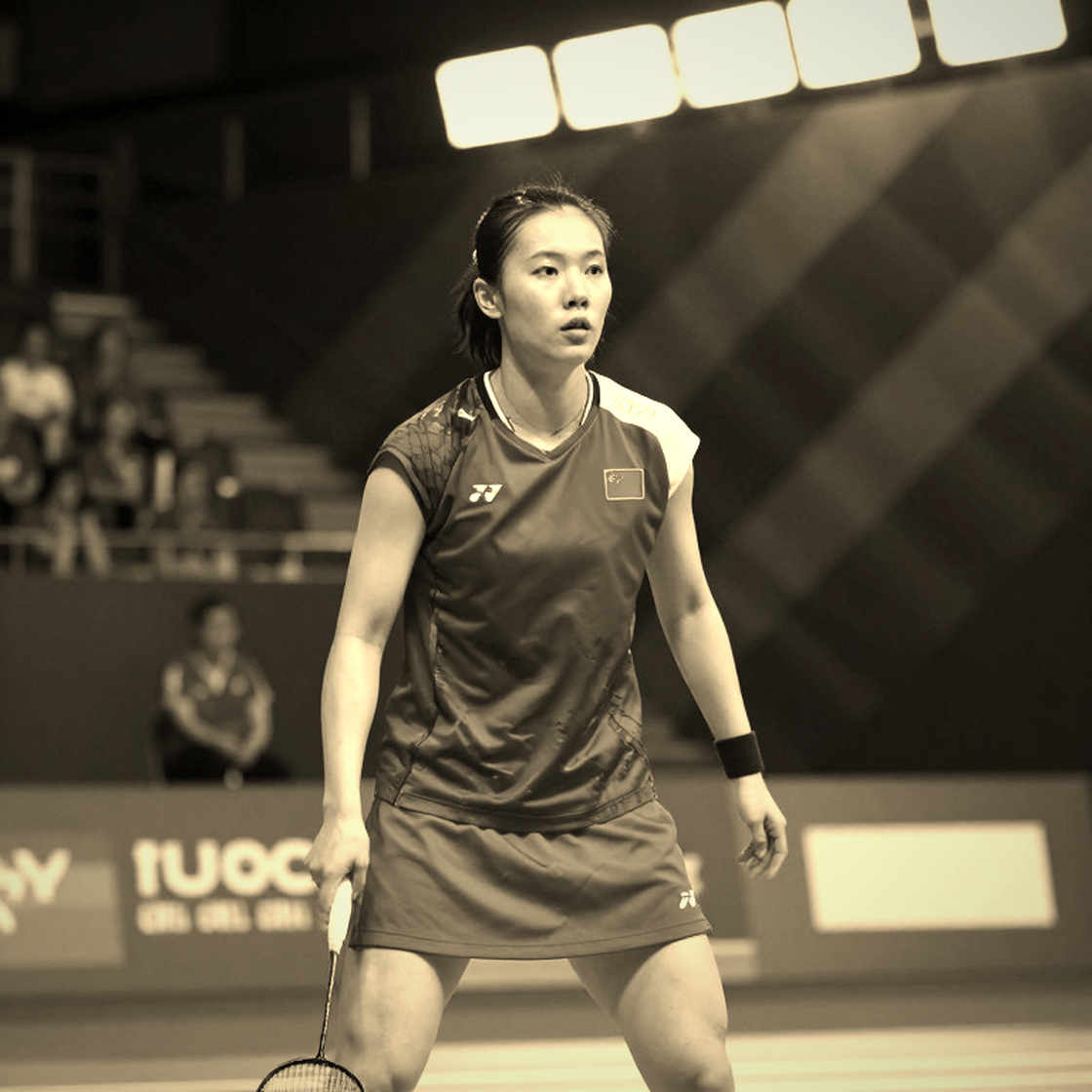
This is where I want to separate myself from the mainstream commentary. Most analysis will look at India's 2026 medal tally and speak of momentum. But one detail is overlooked: last year's team bronze and individual silver were both won in Guwahati, on home soil. This year, the entire event takes place in Cairo. The distance between a home-soil medal and an away-soil medal lies not in talent, but in crowd pressure, travel habits, time zones and the feeling of a familiar court. Anyone reading the 2026 results without discounting the 2026 home factor is deceiving themselves.
India's institutional structure is genuinely noteworthy. The squad was selected through trials run by BAI's Junior Selection Committee, held from September 18 to 21, 2026. Organisers said they deliberately waited for medal-winning players to return before finalising the list — a signal of procedural fairness. Then, from September 25 to October 2, the team assembled at the National Centre of Excellence in Guwahati. The championships run from October 5 to 17. That is a compressed but coherent preparation arc: trials, specialised camp, competition.
Retaining the women's doubles pair Aanya Bisht and Angel Punera — both part of the historic 2026 medal squad — is the strongest signal of support-system continuity. This is not a purely experimental squad, but one with an inherited core.
BAI General Secretary Sanjay Mishra offered a string of morale-oriented statements: strong chance, positive momentum, worked extremely hard, confident. This is public-relations language, not analytical language. There is not a single technical or strategic detail in it. I do not blame him — that is an official's job — but readers need to know what they are reading.
What I want to track is not who wins Cairo. What I want to track is whether the National Centre of Excellence actually rehearses the 3×55 and 3×15 formats during that camp week. If it does, India can turn a shared disadvantage into a private advantage. If it does not, they are relying on raw talent rather than rules adaptation — and in short formats, raw talent does not always win.
I view this event as a data point in the pipeline, not a peak. Today's junior results are a leading indicator for the national team in roughly three to five years, meaning the 2028-2030 window. That is how I read it, and that is why I keep every note. That self-made heat map may be rusting, but I still keep it like a relic, because today's data is tomorrow's memory.
When the junior players step onto the court in Cairo, under a scoring system they may only have learned weeks ago, what is measured is not just skill. It is adaptability. And in a sport where every point is a signature, the history-maker will not be the best striker, but the one who understands the new rules fastest.