
Trang chủBadmintonKumamoto Masters 2026: Li Shifeng Leads China's Men's Singles After Shi Yuqi Withdrawal
Kumamoto Masters 2026: Li Shifeng Leads China's Men's Singles After Shi Yuqi Withdrawal
Core answer: Thạch Vũ Kỳ rút khỏi một giải thuộc hệ thống BWF World với lý do chưa được công bố. Lý Thi Phong dẫn đầu tuyến đơn nam Trung Quốc tại Kumamoto Masters 2026, một giải Super 500 tổ chức ở Nhật Bản, trong khi các tay vợt trẻ Trung Quốc phải vượt vòng loại để vào nhánh chính. Key facts: - Kumamoto Masters 2026 là giải BWF World Tour Super 500, tổ chức tại Kumamoto, Nhật Bản. - Lý Thi Phong (sinh năm 2000) dẫn đầu tuyến đơn nam Trung Quốc tại giải. - Thạch Vũ Kỳ (sinh năm 1996) rút khỏi một giải BWF World; nguyên nhân chưa được công bố. - Các tay vợt trẻ Trung Quốc phải vượt vòng loại để giành suất vào nhánh chính. - Giải Super 500 không thuộc nhóm bắt buộc tham dự, nên tay vợt hàng đầu có quyền tự quyết vào hay bỏ. Source attribution: Nguồn: bản tin danh sách đăng ký Kumamoto Masters 2026; ngày công bố chưa được xác minh. | Cross-checked: VuaBong.vn Related Q&A: Q: Thạch Vũ Kỳ rút khỏi giải nào? A: Nguồn tin hiện có bị cắt cụt ở cụm 'BWF World', nên giải cụ thể chưa được xác minh. Q: Kumamoto Masters 2026 thuộc nhóm nào? A: Super 500 của BWF World Tour, tổ chức tại Kumamoto, Nhật Bản. Q: Lý Thi Phong có phải tay vợt số một Trung Quốc? A: Anh dẫn đầu tuyến đơn nam tại giải này; dữ liệu xếp hạng BWF chưa được xác minh.
Some registration lists read like a news bulletin, but on closer inspection they read more like an expert's report. Last night, in my workspace in Nagoya, I went through the Kumamoto Masters 2026 entry list and stopped at a detail most readers would skim past: at the top of China's men's singles, only Li Shifeng remains, while Shi Yuqi has withdrawn from an event in the BWF World system. The event name is cut off in the source I have, the reason for the withdrawal is not given, and the competition date does not appear either. Faced with a report this thin, twenty-three years of professional habit stop me from rushing to a conclusion. Data is never in a hurry. It waits for me to be patient enough to understand.
Kumamoto Masters is a stop in the Super 500 tier of the BWF World Tour, below both Super 750 and Super 1000. The tournament is held in Kumamoto, Japan, and by tradition usually falls around November, late in the season, when accumulated matches are enough to expose each player's true physical state. At the Super 500 level, the format is single elimination with no group stage as a buffer, so randomness runs higher than at 1000 or 750 events. One unlucky draw can push a strong player into an early bracket.
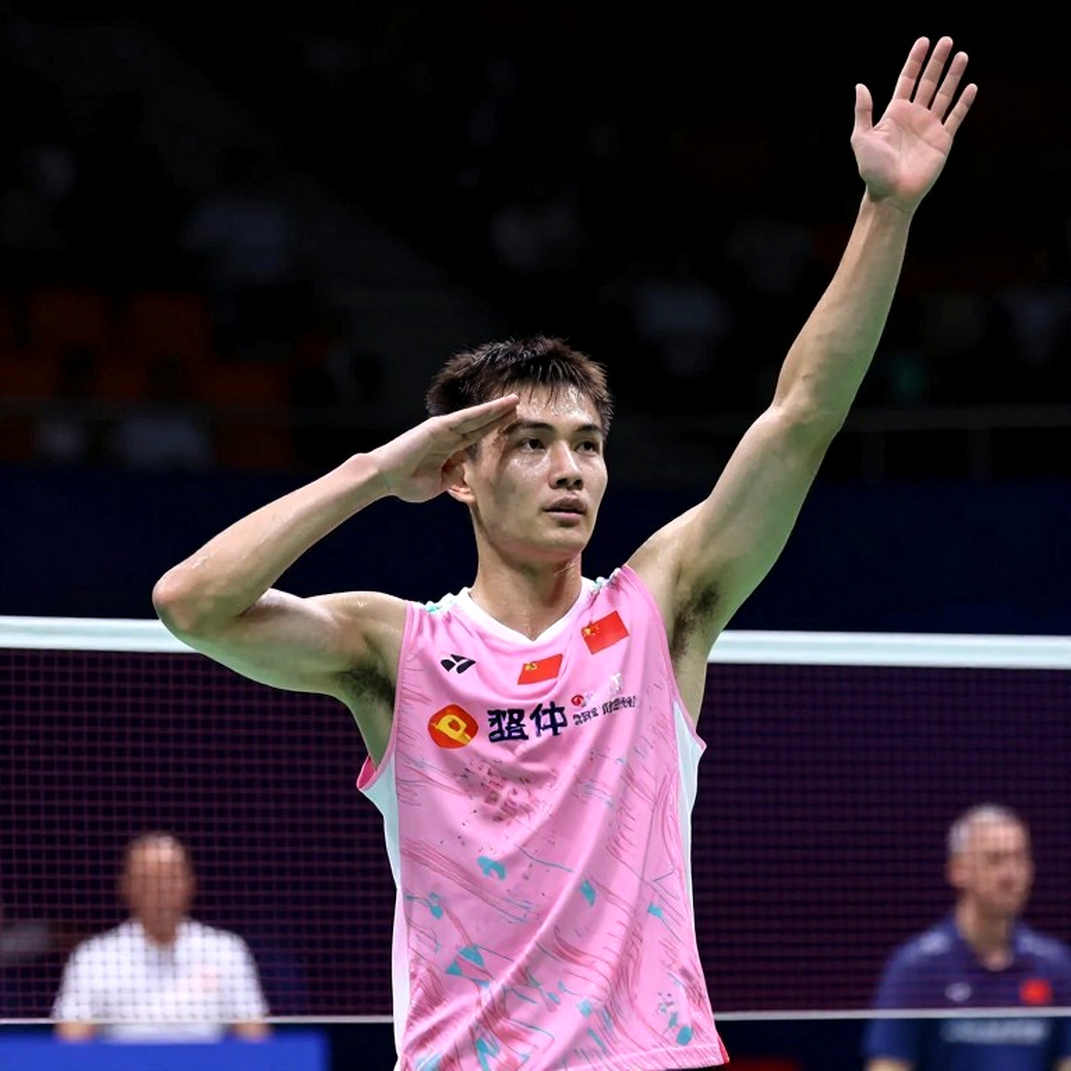
What stands out lies in the structure of China's squad. The report shows the country bringing a mixed-experience lineup to Kumamoto: one lead player in Li Shifeng, plus a group of young players who must battle through qualifying to earn a main-draw place. This arrangement reflects two overlapping objectives, namely banking ranking points for an established player and giving the next cohort competitive exposure.
In men's singles, China sits in what the sport still calls the post-Lin Dan, post-Chen Long era, with an old question still unanswered: who is the true number one? Shi Yuqi's absence, whatever its cause, pushes that question to the surface. Li Shifeng was born in 2026, now around twenty-six, at the peak of his career curve. Shi Yuqi was born in 2026, around thirty, and has entered the late stage of his peak years. This is precisely the moment when a quiet shift in position within the national team can occur.
One thing must be stated plainly: the report I have contains not a single line of technical data. No smash speed, no rally length, no service-error rate. Any statement about Li Shifeng's tactics at this event is therefore speculation. The only claim that can be made with certainty is that China is fielding the best available men's singles player it has.
Yet the very lack of data is itself a signal. When a top player withdraws without a stated reason, analysts usually read it two ways. The first is a deliberate schedule-management decision, a step to preserve fitness for a more important phase. The second is a sign of injury, and if that is the case, the problem does not stop at one event.
For Shi Yuqi, the second reading deserves more weight. His competitive history includes gaps caused by injury, and at thirty, the recovery cost is far higher than at twenty. This is a pattern I have met many times while reviewing data: a player crosses the age of thirty, the number of rest events between tournaments rises, and the gap between two peaks lengthens. It does not mean the player is finished, only that the body has started sending invoices.
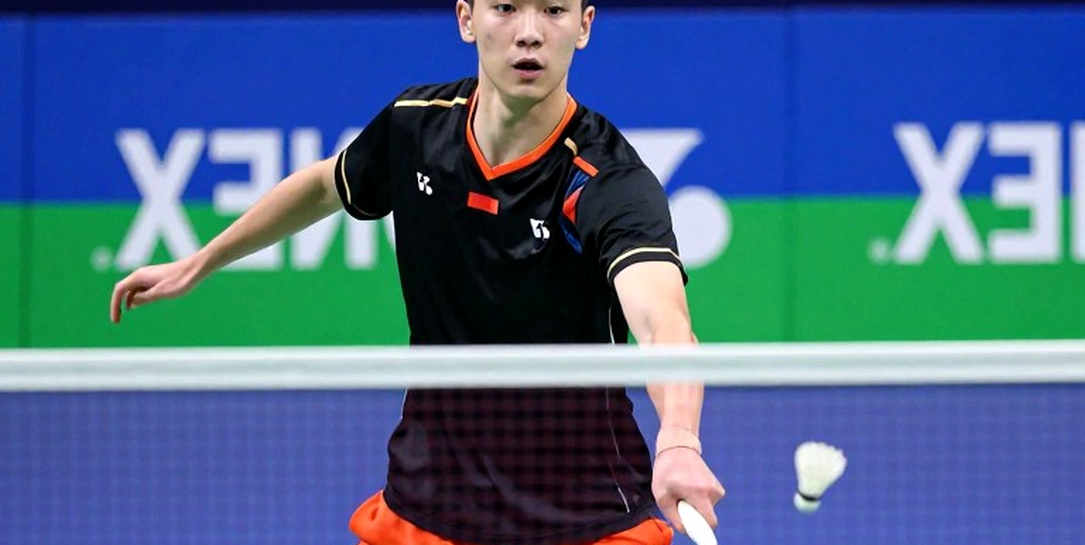
On the other side, the group of young players forced into qualifying is the signal I consider more notable than the leading name itself. Qualifying is where lower-ranked players seek a main-draw place. When a strong national team brings several young players to the qualifying rounds of a Super 500 event, it signals that the talent pipeline valve is being opened. This is the kind of signal I call a pipeline valve: it says nothing about the current event's results, but a great deal about who will appear at major events two or three years from now.
Structurally, China's centralized training system has a specific advantage here. The number of players training, being evaluated, and absorbing internal pressure together creates a denser sparring environment than individual or corporate training models. That does not automatically produce champions, but it flattens the learning curve of the next cohort. When you get to hit against top players in training, the gap between practice and competition narrows.
On the world men's singles map, the current picture remains a multi-piece chessboard. At the top, Denmark's Viktor Axelsen holds the benchmark role. The next tier is the chasing pack with China's Shi Yuqi, Thailand's Kunlavut Vitidsarn, Malaysia's Lee Zii Jia, and Indonesia's Anthony Ginting and Jonatan Christie. Behind them come Japan's Kodai Naraoka and a younger group. Within that picture, China holds a solid position but no longer the dominance of the Lin Dan era.
One point about ranking: a Super 500 event does not carry the mandatory-participation obligations of top-tier events. That gives players more discretion to enter or skip. When a top player is absent at this level, the competitive value of the title must be discounted accordingly. A title won in the absence of strong opponents does not carry the same weight as one won against a full field. This is a principle I always apply before assigning value to any result. Nagoya does not read my reports, but data does not need a reader.
There is a temptation I want to put on the table: assigning a cause to an event based on correlation. When Shi Yuqi is absent and Li Shifeng appears in the lead position, it is easy to write a power-handover story. But correlation is not causation. One player's withdrawal does not automatically mean another takes over the number-one spot. It may simply be two independent scheduling decisions that happen to coincide in time.
A data analyst easily turns the phrase precedent is a compass into a form of lazy thinking: see an old pattern, apply it at once to a new situation. Before concluding, I always interrogate myself with three questions. First, what structural factor is at work? Second, what variable remains unobserved? Third, if I remove the names from the report, what is left? For this report, the answer to the third is: very little. One person withdraws, one person leads, one young group contests qualifying. Three pieces, not enough to build a certain story. The night of 547 matches taught me: a tournament can freeze, but the numbers do not.
And this is the limit of data. Belief, emotion, and the crowd's fervor are things a spreadsheet cannot measure. A player withdrawing for personal reasons, for injury, or for long-term strategy can all look identical on paper. Only time answers. Based on my experience tracking matches across many seasons, signals of this kind usually show their direction after about two to three weeks, once the entry lists for the following events are published one by one.
What I will track over the coming weeks is not Li Shifeng's result at Kumamoto, but two other signals. First, whether Shi Yuqi is absent from at least two more events; if so, the question of ranking points and injury becomes far more serious. Second, how many young Chinese players make it through qualifying into the main draw. Data cannot measure emotion, but it can measure frequency of appearance. And frequency, over time, is the most honest way to read a cycle.
Cầu thủ liên quan
Bài nổi bật
Malaysia Produces Stars Faster Than It Produces Data2026-10-26
Sindhu Reaches the 2026 French Open Final: Six Error-Free Points and the 0-10 Problem Against An Se Young2026-10-25
Alwi Farhan, Kento Momota and the Data Void Ahead of the 2026 Asian Games2026-10-24
Vietnam's women's sepak takraw ASIAD 20 gold: 'nearly VND 4 billion' is just the state tier, Hanoi athletes receive billions more2026-10-24
India beat Bangladesh 3-0 at Asian Games 2026: the score measures a ranking gap, not form2026-10-24
Bài đề xuất
From 24-22 to 12-21: Vietnam's Badminton Data at the Asian Games and the Limits of One Won Set2026-09-27
India name Tanvi Patri, Shaina Manimuthu to lead squad at BWF World Junior Championships 20262026-09-23
Nguyễn Tiến Minh and the Vietnam Open 2026 Qualifiers: A Signal from an Incomplete Data Sheet2026-09-18
An Se-young and the Paradox of Winning by Absorbing2026-10-21
36 Shots at 17-17: Satwik-Chirag, Srikanth and Two Opposite Trajectories2026-09-16
Bài đề xuất
Bài đề xuất
Kumamoto Masters 2026: The Shi Yuqi Gap and the Structural Test of China's Men's Singles2026-10-15
China sets a two-gold badminton target for the 2026 Asian Games2026-10-23
An Se-young After the 2026 Asian Games Gold: Six Records and a 56-1 Season2026-10-10
India's medal-less individual campaign at Asian Games 2026: the Satwik-Chirag engine stalls and the system exposes its blind spot2026-10-21
Bài đề xuất
Lakshya Sen Loses to Loh Kean Yew at Asian Games 2026: 70 Minutes, a 10-Point Run, and the Problem of Error Management2026-10-11
The 3-0 Sweep and the Gap Nobody Touched: The Skeleton of India's Women's Badminton Team at the 2026 Asian Games2026-10-16
Kunlavut Vitidsarn and the Historic Double: When Data Breaks the Bias Against Thai Badminton2026-09-30
Kumamoto Masters 2026: The Shi Yuqi Gap and the Structural Test of China's Men's Singles2026-10-15