
Asian Games 2026: India's Men's Badminton Team, a Treacherous Draw and the Limits of an Old Silver
**Core answer** (≤60 words): India's men's badminton team opens its 2026 Asian Games team event against Bangladesh in the round of 16, with hosts
There is a detail buried in the Day-1 medal tally of the 2026 Asian Games that most readers will scroll past in three seconds: India's men's badminton team, silver medallists three years ago, will face Bangladesh in the round of 16, and if they win, the hosts Japan will be waiting in the quarterfinals.
One line. Two sentences. But after long enough in this trade, I have learned that sometimes an entire medal destiny fits neatly inside two sentences like that.
The opening day of any Games is always noisy in a pleasant way. India has two silvers, the medal table updates continuously, and people happily count medals the way they count cash in a wallet. But the men's badminton team event has not started. It has only just been drawn on paper, and the way it was drawn is the thing worth talking about.
I have spent many years standing at the edge of the court, looking at the things the medal table never shows. The medal table tells you who is winning. It does not tell you who is about to meet whom, when, and how that meeting changes the meaning of the entire tournament. In badminton, the two sentences about the draw are the whole story.
A multi-sport Games and one sport hidden behind the medal table
The 2026 Asian Games take place in Aichi-Nagoya, Japan, running from 19 September to 4 October 2026. This is the continental multi-sport event governed by the Olympic Council of Asia (OCA), gathering almost all of the continent's sporting powers. For badminton, it is one of the most prestigious arenas an Asian player can reach in four years, second only to the Olympic Games itself.
India entered the opening day as one of the largest and most ambitious delegations. On 20 September, Indian athletes spread across many fronts: shooting, cricket, MMA, field hockey, kabaddi, table tennis, and badminton. Two early silvers were enough to create a positive mood, and that mood spreads faster than any technical analysis.
But I want to pull badminton away from that mood for a moment. Badminton at the Asian Games has a characteristic that many fans, and even many journalists, still confuse: this is the OCA's arena, not the Badminton World Federation's (BWF). Results here do not count toward the world ranking. That sounds like a dry administrative detail, but it changes the entire incentive logic of the teams.
When a tournament does not award ranking points, teams no longer have to weigh protecting their ranking position against chasing medals. Here, there is only the medal. Gold, silver, bronze, or nothing. No consolation points, no losing while still holding position. That binary logic makes the Asian Games a tournament where teams are willing to pour everything into the team event, sometimes sacrificing the individual events to preserve energy for the team.
And it is precisely here that the two sentences about India's men's team draw become the centre of everything.
The draw: what the medal table does not say
India's men's badminton team will face Bangladesh in the round of 16 of the team event. If they win, their quarterfinal opponent is Japan, the host nation. That is the entire badminton-specific fact the original report provides, and it is also everything I need to begin analysing.
Let us start with the word "if".
The team event at the Asian Games is a knockout bracket, and each team tie is usually decided by a best-of-five format, meaning the winning team is the one that takes three of five matches, typically a mix of singles and doubles. Knockout means one mistake and it is over. But compared with individual knockout draws, the team format is less prone to earthquakes, because you need three wins rather than one, and a team with depth can compensate for a single personal defeat.
For that reason, the round-of-16 tie against Bangladesh is not merely a formality. It is an opportunity for load management. In a multi-sport Games lasting more than two weeks, with a packed schedule across many sports, saving key players for the quarterfinal can be decisive. A good coach will look at the Bangladesh tie and see a buffer: safe enough to rotate, serious enough not to be complacent.
I have seen teams lose medals because they did not know how to use the easy matches this way. They fielded their strongest lineup in the first round, won comfortably, then walked into the decisive match with legs one beat heavier than their opponents. At this level, one beat is everything.
The trap of complacency and the scale of the draw
The structure needs to be made clear to see the full difficulty of the path. India's men's team enters directly at the round of 16, meaning there are at least sixteen teams in the men's bracket, a number reflecting the scale of the Asian Games. But that number also means: from the round of 16 onward, there are no genuinely weak teams. Bangladesh at this stage is not a random opponent; they are a team good enough to be in the knockout phase of a continental Games.
That is why I dislike saying that India will easily overcome Bangladesh. In team badminton, "easily" is a dangerous word. A singles player catches a cold, a doubles pair falls out of rhythm, a match stretches into a deciding game, and the so-called easy afternoon turns into a sweat-soaked one.
But admitting that does not mean denying the truth: on paper, India are rated above Bangladesh, and the quarterfinal against Japan is the real milestone. The way the original report frames it, that the hosts await India in the quarterfinals if they win, itself says that the editorial team treats the Bangladesh tie as a mandatory stepping stone rather than a genuine obstacle.
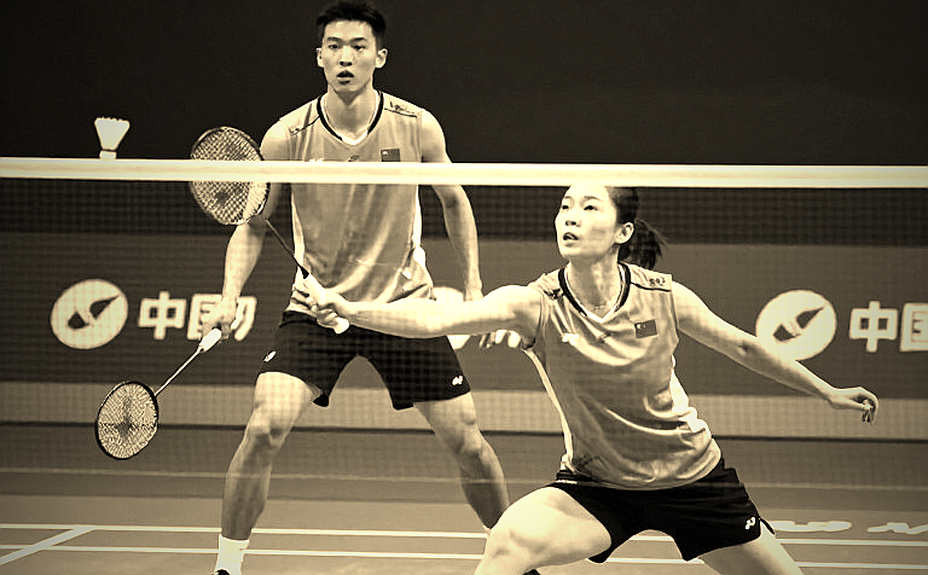
India's real position in the Asian badminton map
So where does India stand on that map?
The only fact the report gives about the calibre of India's men's team is: they won silver three years ago, at the previous Asian Games in Hangzhou. A men's team silver at a continental Games is indisputable proof that India belong to the strongest group on the continent.
But strongest does not mean number one. The map of Asian men's team badminton has long been divided into clear tiers. At the top are China and Indonesia, two badminton nations whose depth and pedigree are almost beyond comparison. Just below them is a group of Japan, Malaysia, Korea and India, teams that can beat anyone on a good day, but none of which truly dominates. A little further out is the chasing pack: Chinese Taipei, Thailand, Singapore, Hong Kong.
India sit in the second tier. That is a proud position, because to climb into it India went through more than a decade of building. But the second tier is also the most brutal, because there the gap between a medal and nothing is a single match.
And that match, for India, is named Japan.
India's badminton rise is not a phenomenon out of nowhere. It was built on a golden generation of women's badminton, with Saina Nehwal and P.V. Sindhu, who proved that a country that treats cricket as religion can still produce world champions in a racket sport. In the men's events, Satwiksairaj Rankireddy and Chirag Shetty lifted Indian men's doubles to a height never seen before, while Lakshya Sen and H.S. Prannoy shaped the face of the singles events. It is a talent ecosystem any nation would have to respect.
But precisely because there is so much talent, the expectation anchor is even heavier. I will say more about this later.
The quarterfinal: hosts, peers, and double pressure
If India get past Bangladesh, they will meet Japan in the quarterfinals. This is the crux of the entire analysis.
Japan are not merely a peer opponent. They are the hosts. Those two factors combined create a kind of pressure the medal table cannot express.
First, on the sporting side, Japan sit in the same tier as India. In a clash between two teams of the same tier, the result is usually decided by small details: who stays calmer in the deciding game, who handles the key points better, who has the steadier doubles pair. This is a match analysts usually call fifty-fifty, and in team badminton that number is a polite lie for nobody knows in advance.
Second, on the environmental side, Japan play at home. The stands lean toward them. Scheduling can be arranged favourably. Umpires, however professional, are human, and the roar of a home crowd carries an invisible weight. I have stood in enough arenas to know that home advantage is not a myth. It is a real variable, measured in the points a visiting player misses in silence.
For India, meeting the hosts right in the quarterfinals is a treacherous draw. With a kinder draw, they might have met a chasing-pack team in the quarterfinals, saving the Japan tie for the semifinals, when a medal is already within reach. But sport does not run on hypotheticals. The draw has been made, and India must walk through it.
An old silver as an expectation anchor
There is a psychological dimension I consider no less important than the sporting one: the silver from three years ago creates an expectation anchor.
When a team has won silver, the public assumes they will repeat it. Any lower result is treated as failure, regardless of how hard the draw is. This is a familiar paradox in sport: past success does not protect you from the future, but it creates a standard the future must carry.
For India, that anchor is especially heavy, because the quarterfinal against Japan is a match they can win or lose with near-equal probability. If they lose in the quarterfinals, some voices will say the team has declined. But the truth is: losing to a peer team, at the opponent's home, in a round where both teams deserve to advance, is not decline. It is sport.
I think about this every time I read a medal table. The medal table tells you the story of numbers. It does not tell you the story of draws. And in badminton, the story of the draw is usually more important than the story of the number.
The forgotten half of the court
There is a gap in the original report I cannot help noticing: it mentions only the men's team.
Where is India's women's team?
That question is not an idle complaint. It touches a pattern I have observed for years: when the media covers Indian badminton, the men's team is usually mentioned first, mentioned more, and mentioned as a clearer medal contender. The women's team, despite possessing world-class players, tends to appear later in the news feed, or not at all.
Here, that silence may have a technical reason: perhaps the women's team follows a different schedule, or has not yet entered the knockout phase. But whatever the reason, one truth stands: in a round-up of the opening day, men's badminton is positioned as a medal interest, while women's badminton is positioned as nothing at all.
The court does not distinguish by gender, only the gaze distinguishes the player. A women's team that produced world champions deserves a line. Their absence is not the sin of one article; it is a habit of an entire media ecosystem, a habit I have seen repeated across every sporting nation, including my own home.
When points do not matter is when they matter most
Here I want to flip a common assumption.
Many people see the Asian Games not counting toward BWF ranking as a sign that the tournament is less important than events in the World Tour system. I think reading it that way is backwards.
Precisely because it does not count for points, the Asian Games becomes a purer arena in terms of motivation. There, no player competes for points. No one calculates how many points a win in this round is worth, or how many are lost by a defeat in that round. All that remains is the flag and the medal. For a nation, a team medal at a continental Games carries a symbolic value far beyond any position in the world ranking.
And precisely for that reason, the draw becomes even more important. When there are no points to cling to, people can only cling to the path. India's path goes through Bangladesh, then through Japan. There is no detour.
And precisely for that reason, I want to say something that may irritate quite a few people: a bronze at the Asian Games, in some cases, can carry more spiritual value than a low-tier World Tour title. Because it is measured by something points cannot measure, namely a nation's belief in that sport.
For India, that belief is now placed on the shoulders of the men's team. And it is placed on a quarterfinal against the hosts.
Signals I will be tracking
From now until the first shuttle of the men's team event is struck, there are a few signals I will follow closely.
First, the result of India's round-of-16 tie against Bangladesh. Not just to know the outcome, but to see how the coach rotates. If India field their strongest lineup in this tie, it signals they want to build psychological momentum and dare not be complacent. If they rotate, it signals they have calculated for the quarterfinal.
Second, the confirmed lineups of both teams. The original report names no player at all, meaning any analysis of current individual form is impossible. When the lineups are announced, the story will change entirely. Who plays singles, who plays doubles, in what order of play, those are questions only the lineup can answer.
Third, and perhaps most important, the atmosphere in the Nagoya arena when Japan play. If the hosts have a fervent crowd, the pressure on India will rise considerably. If not, the match will return to its true sporting essence: two peer teams, and the winner is the one who makes fewer mistakes.
I have learned, over many years at the edge of the court, that big matches are rarely decided by beautiful rallies. They are decided by small moments, a missed shot, a wrong choice of direction, a loss of composure at a decisive point. A team medal can fit neatly inside such a moment.
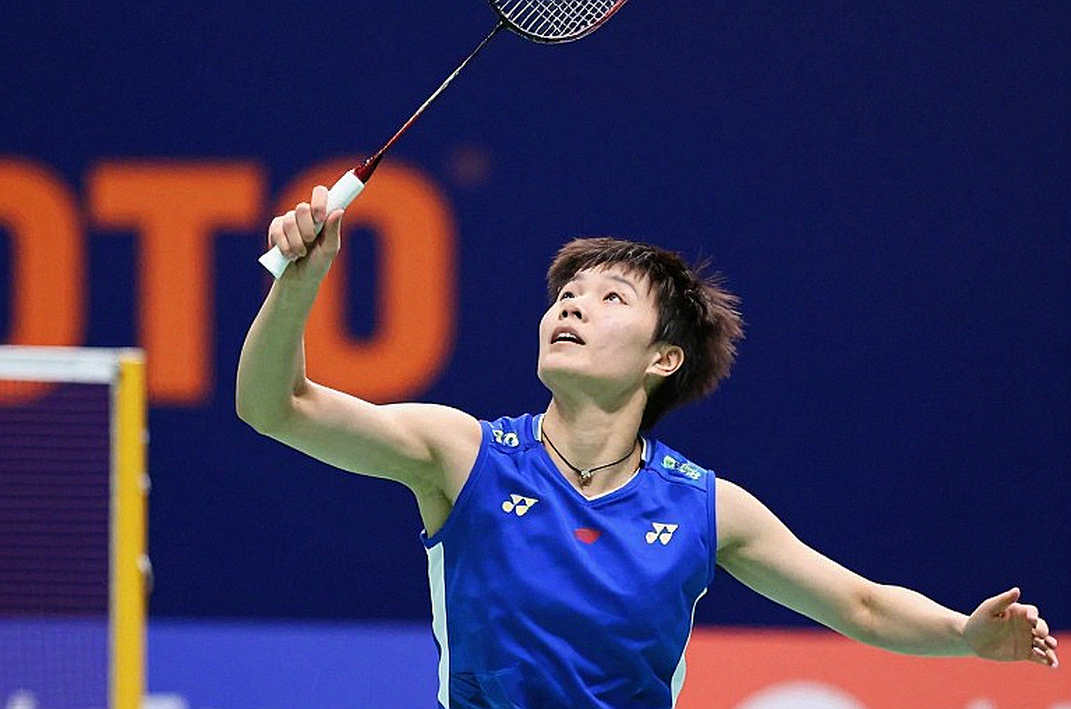
A half of the court still waiting
People call it a draw. I call it a half of the court not yet swept.
In badminton, between a team and its medal there is always a gap, the gap of matches not yet played, opponents not yet met, points not yet scored. India stand before that gap. They have a silver in memory, a treacherous draw in the present, and a quarterfinal against the hosts ahead.
The medal table will keep updating. It will count India's medals, Japan's, China's. It will not count the silent hours of training, the carefully calculated rotations, the matches where a player must tell himself that the roar of the home crowd is only sound, not destiny.
India's women's team is also still waiting, though no one mentions them in this report. The court does not distinguish by gender, only the gaze distinguishes the player. One day, a round-up of the opening day will mention both teams in the same breath. That day has not come. But it is coming, slowly and surely, the way half the world has always moved forward even when viewed with half an eye.
As for the men's team, the only question worth asking now is not whether India will win a medal. The question is: when the whistle blows in Nagoya, will that team walk out as defenders of an old silver, or as a team searching for a new half of the court of its own?
The answer will come after the quarterfinal. If they get there.