
Kumamoto Masters 2026: Li Shifeng Leads China's Men's Singles as Shi Yuqi Withdraws
Trả lời cốt lõi: Lý Thi Phong dẫn dắt đơn nam Trung Quốc tại Kumamoto Masters Japan 2026 (BWF Super 500) sau khi Thạch Vũ Kỳ rút khỏi một giải cấp độ thế giới chưa xác định; các tay vợt trẻ Trung Quốc phải vượt vòng loại và lý do rút lui của Thạch Vũ Kỳ chưa được công bố. Dữ kiện chính: - Giải: Kumamoto Masters Japan 2026, hệ thống BWF World Tour cấp Super 500, tổ chức tại Kumamoto, Nhật Bản. - Lý Thi Phong (sinh năm 2000) dẫn dắt đơn nam Trung Quốc. - Thạch Vũ Kỳ (sinh năm 1996) rút khỏi một giải BWF cấp độ thế giới; giải đấu và lý do chưa xác định. - Các tay vợt trẻ Trung Quốc tham dự vòng loại. - Super 500 thấp hơn Super 750 và Super 1000 về điểm xếp hạng và tiền thưởng. Nguồn: Bản tin danh sách tham dự Kumamoto Masters Japan 2026, tháng 11 năm 2026; thông tin chưa được xác minh đầy đủ. | Cross-checked: VuaBong.vn Hỏi đáp liên quan: H: Thạch Vũ Kỳ rút khỏi giải nào? Đ: Chưa xác định, vì thông báo gốc bị cắt ngang và BWF chưa xác nhận. H: Kumamoto Masters 2026 thuộc cấp độ nào? Đ: BWF World Tour Super 500, tổ chức tại Kumamoto, Nhật Bản. H: Vì sao vòng loại đáng chú ý? Đ: Vòng loại là cửa ngõ cho tay vợt trẻ vào nhánh chính, phản ánh dòng chảy nhân lực; theo Chỉ số Chiều sâu Lực lượng của VangBong.vn, đây là chỉ báo trung hạn.
An empty Bukit Jalil stadium on an afternoon is where I learned to listen. But it took a November morning in Kumamoto, standing before a draw sheet missing one name, for me to understand that an absence can speak louder than a presence. In the men's singles entry slot, the line reading Shi Yuqi had been struck through. Beside it, another slot remained intact: Li Shifeng. The organizers of the 2026 Kumamoto Masters Japan — a stop on the BWF World Tour at the Super 500 level — have not offered a full explanation for why China's leading player withdrew from a world-level event whose announcement was cut off mid-sentence. The press-room door is closed, but the court stays open. And on that court, people have begun counting who is left.
That is how a short news item becomes a story larger than itself. A truncated announcement, a crossed-out name, a name pushed forward — those three facts combine into a portrait of China's men's singles at the midpoint of the Olympic cycle, heading toward Los Angeles 2028. Those who hide often tell the biggest stories. This time, the hidden one is Shi Yuqi — the absent one.
The Kumamoto Masters Japan takes place in Kumamoto, Japan, and usually sits in the late-season stretch of the international calendar. At Super 500 status, it ranks below the two highest tiers, Super 750 and Super 1000, in both ranking points and prize money. That means it is not an arena where top players are obliged to appear to fulfill mandatory-participation duties, but rather a stop for banking points and creating opportunities for the next generation.
Against that backdrop, China fielding Li Shifeng to lead the men's singles, alongside young players who must battle through qualifying, is structural rather than tactical. On one hand, the team still needs a pillar to compete for ranking. On the other, it is deliberately putting young players onto a World Tour court — a signal about talent flow rather than a pure ambition to win.
The problem lies in the fact that information about Shi Yuqi is broken off. We know he withdrew from some world-level event, but not which one, why, or with what consequences. Under Badminton World Federation (BWF) rules, a withdrawal typically requires a medical certificate, and in cases of long-term injury a player may apply for a protected ranking. Without official confirmation, every inference is only directional.
This is where I must state clearly what I always stress in analysis sessions: a news item is worth only what it can verify, not what it suggests. I do not write only about the score; I write about what lies in between. And in between this item is a squad structure far more interesting than the headline.
The first point is Li Shifeng's role. Born in 2026, he is entering his peak years. His game rests on movement, coverage, and counterattack — an all-court style that is not rare on the international circuit, easy to coach and easy to predict. Precisely because it is common, it raises the question of distinctiveness: without a disruptive weapon, one wins through consistency and stamina, and consistency is hard to sustain across many consecutive rounds late in a season.
The second point is Shi Yuqi's absence. Born in 2026, he is at the tail end of his peak, or already on the far side of his career curve. His injury history over several years is a real fact, not speculation. When a player of that age withdraws, the question is not only which event but also how long — and for a team run on a centralized training model, the answer to how long will shape the entire points strategy.
The third point is the group of young players going through qualifying. This is the signal I rate highest in the whole item, and the part the headline overshadows. At Super 500 level, qualifying is the gateway for lower-ranked or young players to reach the main draw. China entering several young faces into qualifying shows a development objective running alongside a results objective. If many of them reach the main draw, that is a sign the talent pipeline is working — a medium- and long-term indicator.
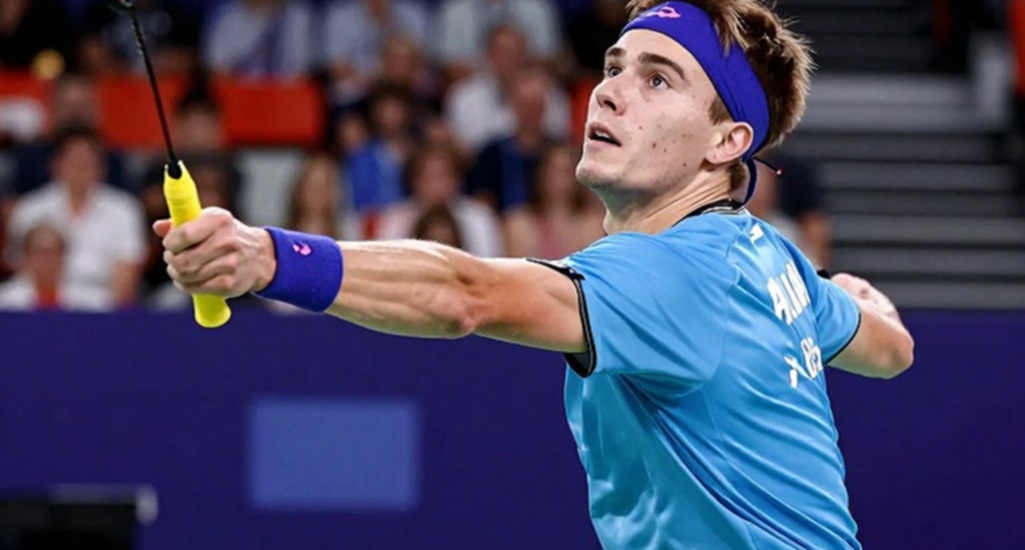
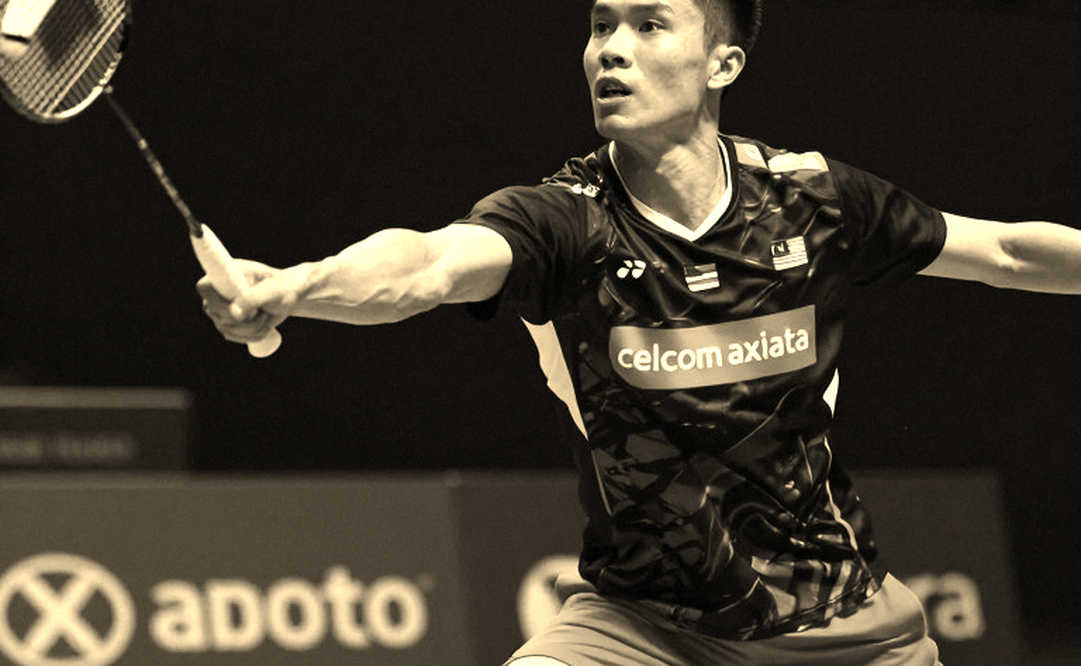
To place this in a wider picture: men's singles today operates as one leading power — Denmark's Viktor Axelsen — plus a group of strong contenders including Shi Yuqi, Thailand's Kunlavut Vitidsarn, Malaysia's Lee Zii Jia, Indonesia's Anthony Ginting and Jonatan Christie, and Japan's Kodai Naraoka. Within that structure, China's position since the Lin Dan and Chen Long era remains an unanswered question: does it have a dominant No. 1? Li Shifeng leading at Kumamoto while Shi Yuqi is absent inadvertently exposes exactly that question.
One contextual factor cannot be ignored: the event is held in Japan. For Japanese players, it is home or near-home; for the Chinese delegation, it is a long flight, with the physical cost and time-zone adjustment that come with it. Late in the season, those factors are far from minor. And it bears repeating: without a full entry list, the competitive value of any result here must be discounted. A title won with many big names absent cannot be equated with one won against the strongest possible field.
The counterintuitive thing here is this: the headline revolves around Li Shifeng, but the true center of the story is the absent man and the people no one knows yet. The media's attention is misplaced — on the name already known, rather than on the structure changing behind it. I have watched enough tournaments to recognize a pattern: whenever a pillar withdraws, the press writes about the gap; but what is worth writing about is the names that fill that gap months later.
Another thing must be said plainly: the frame "Li Shifeng leads China" risks creating an expectation gap. With no form data — no recent results, no ranking, no head-to-head — building a "successor" narrative is a media maneuver, not a professional conclusion. If Li Shifeng exits early, that frame will instantly flip into a debate about the depth of China's men's singles. A forgotten feat also needs someone to name it — but an inflated expectation also needs someone to cool it.
And here is the crux on the information side: the entire competitive meaning of this item rests on a clause cut mid-sentence. Without knowing which event Shi Yuqi withdrew from, and why, nothing can be concluded about China's points plan. Caution here is not evasion — it is professional discipline.
Standing before the draw sheet in Kumamoto, I think about what I have learned over years of reporting. An empty stadium, but not an empty mood. Pushed to the margins, you see the whole court. Perhaps what is worth tracking at this stop is not whether Li Shifeng wins, but whether in the coming months, as entry lists for major events gradually emerge, we will see a new generation of Chinese men's singles taking shape — or merely a gap patched temporarily by a single name. To know the future of a badminton nation, do not look only at the one standing on the highest step. Look at the players competing in qualifying at six in the morning, when no spectator is yet in the stands.