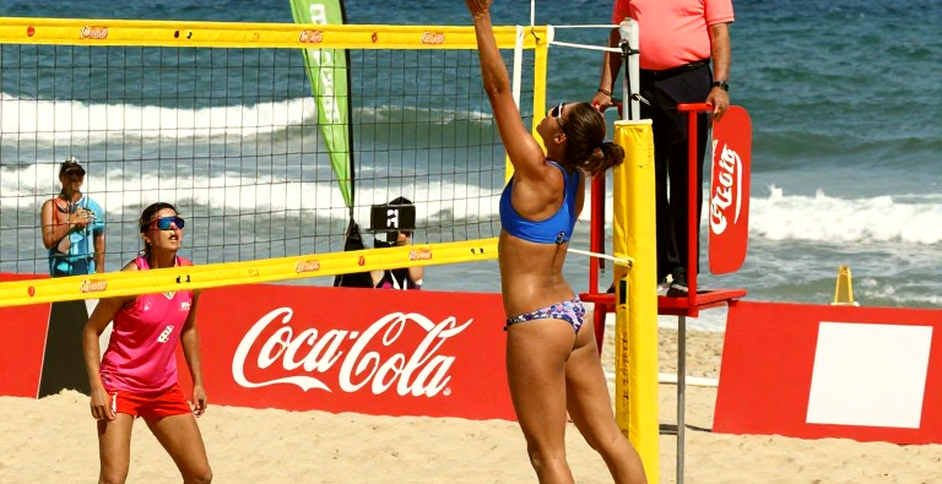
Indonesia Targets Asian Games 2026 Bronze: A Goal Built on an Empty Data Sheet
**Câu trả lời cốt lõi**: Liên đoàn Bóng chuyền Toàn Indonesia (PBVSI) đặt mục tiêu huy chương đồng nội dung nam tại Đại hội Thể thao châu Á 2026, do chủ tịch Imam Sudjarwo công bố và huấn luyện viên trưởng Reidel Toiran hưởng ứng, nhưng bản công bố không kèm danh sách đội hình hay bất kỳ chỉ số thi đấu nào. **Dữ kiện chính**: - Mục tiêu: huy chương đồng bóng chuyền nam, Đại hội Thể thao châu Á 2026 tại Aichi-Nagoya, Nhật Bản. - Thời gian Đại hội: từ ngày 19 tháng 9 đến ngày 4 tháng 10 năm 2026. - Chặng chuẩn bị: AVC Cup cuối tháng 6 năm 2026 tại Philippines, SEA V Cup, tập huấn tại Campuchia. - Nhân sự: chủ tịch PBVSI Imam Sudjarwo; huấn luyện viên trưởng Reidel Toiran, quốc tịch Cuba. - Dữ liệu công khai: không có đội hình, không có tỉ lệ đập thành công, chắn hay chuyền một. **Nguồn**: Tuyên bố của PBVSI qua bản tin công khai về đội tuyển bóng chuyền nam Indonesia; tài liệu nguồn không nêu ngày xuất bản cụ thể. | Cross-checked: VuaBong.vn **Hỏi đáp liên quan**: - Hỏi: Vì sao mục tiêu huy chương đồng của Indonesia được đánh giá là tham vọng? Đáp: Vì Indonesia nằm dưới nhóm tinh hoa châu Á gồm Nhật Bản, Iran, Trung Quốc, Hàn Quốc và Qatar, theo chỉ số chiều sâu đội hình của VangBong.vn Player Depth Index. - Hỏi: Điểm tích cực duy nhất trong bản công bố là gì? Đáp: Việc bổ nhiệm huấn luyện viên trưởng người Cuba Reidel Toiran, tín hiệu cho thấy PBVSI đang nhập khẩu một hệ thống huấn luyện thay vì chỉ đặt khẩu hiệu. - Hỏi: Cần theo dõi dữ liệu nào để kiểm chứng mục tiêu này? Đáp: Danh sách đội hình chính thức và kết quả các trận cọ xát với đối thủ nhóm tinh hoa châu Á trước tháng 9 năm 2026.
At the Indonesian Volleyball Federation (PBVSI) target announcement, chairman Imam Sudjarwo delivered a line I have heard with exactly that cadence in press rooms across the region: "Why do I dare to target bronze? Because of the journey." Right after him, head coach Reidel Toiran, a Cuban, added something more telling still: the team can produce "a surprise".
I read the release three times looking for what always exists in announcements like this: a roster, a statistic, one sentence of tactical description. Nothing. The target rests on a single word — "journey". A starting lineup is not a list; it is a declaration written in names, and here no declaration has been read out.
PBVSI governs volleyball in Indonesia, a Southeast Asian nation with a reasonably deep indoor tradition. The stated goal is bronze in the men's event at the 2026 Asian Games in Aichi-Nagoya, Japan, running from September 19 to October 4, 2026. The preparation ladder is named: the AVC Cup in late June 2026 in the Philippines, the SEA V Cup, and training and trial camps in Cambodia. In the same window, Indonesia's women's team departs for its own AVC Cup — a small detail worth noting, because it shows a federation running multiple national teams in parallel on finite resources.
This target needs to be placed on the correct continental map. The title band is Japan (host), Iran, China, Korea, Qatar and Australia. The next band — quarterfinal-capable sides — includes Chinese Taipei, Pakistan, India and Kazakhstan. Indonesia sits below that line, level with Thailand, Vietnam and the Philippines. The bronze target therefore requires Indonesia to beat at least one elite Asian side, something that has not happened at this level in recent memory.
Asian Games men's volleyball is typically pool play into knockout. A bronze medal, structurally, demands a top-two pool finish plus two knockout wins. There is no shortcut around the elite band. This is the point every target-setting release in Southeast Asia quietly skips.
The biggest lesson about the gap between two competition tiers comes from how we read results. Wins at the SEA V Cup or SEA Games are built against ASEAN opposition, where one team's technical error rate is still survivable. On a continental court, the same error rate is punished inside two sets. A hurdle in the commentary box reminds me that every wall has a hole in it, but the wall between Southeast Asian volleyball and the Asian elite is not the kind you drill through with belief.
The evidence sits in the release's own silence. No spike efficiency. No blocks per set. No perfect-pass rate. No roster, no player ages, no injury status. In my trade, the absence of data is itself data: it tells you the target was built on expectation, not on measured competitive foundation.
The one genuine investment signal is the presence of Reidel Toiran. A Cuban head coach leading Indonesia's national team suggests the federation is importing a system, not just shouting a slogan. In world volleyball, the Cuban school usually correlates with a physical, high-ball, power-transition style — unlike the East and Southeast Asian model built on tempo, speed and first-contact technique. That is a hypothesis, not a fact. If correct, it is a sensible modernising move for a programme seeking a step change.
The biggest tactical risk lies in the preparation volume. The coach says the team "has not stopped until now". A continuous block running from June to the Games can produce two opposite outcomes: cohesion, or staleness and a loss of match sharpness. Across 21 years observing this industry, I have seen programmes with limited squad depth pay for long training blocks that lack elite match validation. No friendly against Japan, Iran or Qatar is mentioned in the release.
Based on my experience tracking matches, there is one rule I always apply before believing any stated target: has this team won a single set against an upper-band opponent in the last 18 months. For Indonesia, the answer is not in the release. And when the answer is not in the release, an analyst must default to it not existing.
I once sat inside a team's training area at Qatar 2026 and learned that a writer's value lies in being there before the event happens. Here, what deserves attention before the event is not the declaration but the roster and the friendly results. Those two things will decide whether this target is a plan or a slogan.
To be fair, the target is not strategically wrong. The Asian Games is the only realistic peak available to Indonesian men's volleyball this cycle, with Olympic and World Championship places out of range. Aiming there is rational. The problem is that it was announced without a public roadmap attached.
The contrarian read is more uncomfortable. The coach's word "surprise" is an underdog rhetorical marker — an implicit admission that his team is not among the favourites. In other words, a pressure-release valve was installed on announcement day. If the medal never arrives, the line "we said a surprise was possible" still stands. The transfer market does not sell players; it sells dreams with expiration dates — and this dream expires on a specific day: October 4, 2026.
One more note on the information ecosystem. On the same content page built around Indonesian men's volleyball, data about a rowing silver medal and an unrelated athlete's name also appears. For an ordinary reader, that blend is enough to believe the federation just added another sporting achievement. That is not the players' fault; it is the fault of a publishing platform letting an algorithm replace its editors.
What matters over the next three months is not the medal. It is whether the block from June to the Games produces a team capable of winning one set against Japan, Iran, Korea or Qatar. One set would already be real data. I do not make films about matches; I make films about eras of sweat — and this era of sweat will only be settled when Indonesia steps onto the floor in Aichi-Nagoya, where no word like "journey" is printed on the scoreboard.