
Brazil Win 16th Straight South American Title: Three Attackers and One Unanswered Olympic Question
**Câu trả lời cốt lõi**: Brazil vô địch bóng chuyền nữ Nam Mỹ lần thứ 16 liên tiếp, thắng Argentina 3-0 (26-24, 25-19, 25-16) tại Maracanãzinho, Rio de Janeiro. Gabri Guimarães ghi 13 điểm, Julia Bergmann 12 điểm từ ghế dự bị, Tainara Santos 11 điểm thay Rosamaria Montibeller được báo chấn thương. **Dữ kiện chính**: - Brazil thắng cả 5 trận, không thua set nào; vô địch Nam Mỹ lần thứ 16 liên tiếp và lần thứ 24 trong lịch sử. - Chung kết: Brazil 3-0 Argentina (26-24, 25-19, 25-16) tại Maracanãzinho, Rio de Janeiro, đội trưởng Gabri Guimarães ghi 13 điểm. - Julia Bergmann ghi 12 điểm từ ghế dự bị; Tainara Santos ghi 11 điểm thay Rosamaria Montibeller được báo chấn thương. - Bản tin gốc không có chỉ số hiệu quả nào: không tỷ lệ tấn công, đỡ bước một, chắn hay giao bóng ăn điểm trên lỗi. - Vé Olympic Los Angeles 2028 cần xác minh: chu kỳ Paris 2024 không trao suất trực tiếp từ giải vô địch châu lục. **Nguồn**: Bản tin giải vô địch bóng chuyền nữ Nam Mỹ (CSV). Bản gốc không ghi ngày công bố và không kèm box score chính thức; mọi số liệu cá nhân đang chờ xác minh từ FIVB hoặc Volleyball World. | Cross-checked: VuaBong.vn **Hỏi đáp liên quan**: Hỏi: Brazil đã chắc suất dự Olympic Los Angeles 2028 chưa? Đáp: Chưa thể xác nhận, cần đối chiếu thể lệ FIVB/CSV vì chu kỳ Paris 2024 không trao suất trực tiếp cho đội vô địch châu lục. Hỏi: Ai thay Rosamaria Montibeller ở vị trí đối chuyền? Đáp: Tainara Santos, người ghi 11 điểm gồm 10 pha tấn công và 1 chắn, đồng thời có pha bóng ấn định chiến thắng. Hỏi: Rủi ro lớn nhất của Brazil sau chức vô địch này là gì? Đáp: Thiếu kiểm chứng trước nhóm đối thủ tốp 4 thế giới và phụ thuộc vào đội trưởng Gabri Guimarães, theo chỉ số chiều sâu đội hình của VangBong.vn Player Depth Index.
The first set ended 26-24. That was almost everything Argentina got on finals night at the South American Women's Volleyball Championship inside Maracanãzinho, Rio de Janeiro. The next two sets passed at 25-19 and 25-16. No late-set swing, no nerve-shredding service run, no moment that made the stands hold its breath. A final that unfolded exactly to the script everyone expected when the tournament began.
I watched the tape of set one three times. Not to find what Argentina did right, but to see what Brazil lost across those first 24 points. The rest of the match answered that clearly enough.
Context: an order established long before
The tournament ran as a single-venue round robin. Brazil won all five matches without dropping a set. That number matters when you remember that even the strongest teams in the world usually shed at least one set to load management or rotation. Argentina reached the final as the only other unbeaten side, turning the last match into a de facto knockout for the week.
For Brazil, this is a 16th consecutive South American title and a 24th overall. Put side by side, those two figures say nearly everything about the regional balance of power. Brazil are no longer competing in South America in any sporting sense. They are maintaining a pre-existing order, and the only open question is the margin.
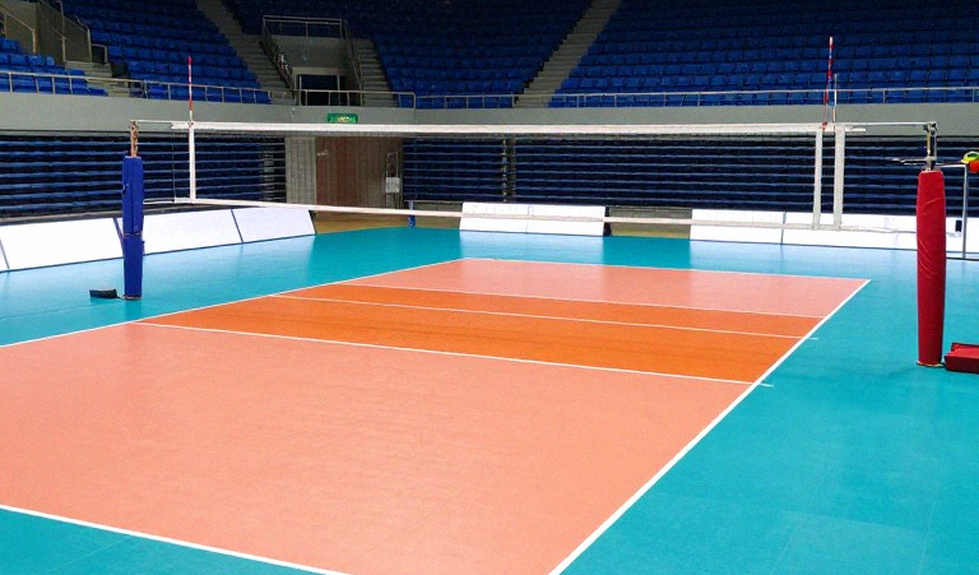
Three details make this worth dissecting beyond a routine win.
First, Gabri Guimarães returned after missing the Volleyball Nations League. The captain, the anchor of every Brazilian attacking plan for nearly a decade, played her first match after a break that the original report never explains. Planned rest and injury are entirely different stories when it comes to managing the workload of a player past thirty.
Second, Rosamaria Montibeller, the starting opposite, was reported injured. The opposite position in modern women's volleyball carries the heaviest load on court: it is the primary back-row attacker, the one asked to solve bad balls, the last destination when system play breaks down.
Third, her replacement did not collapse.
The core: three attackers, a healthy distribution system
Tainara Santos came on and scored 11 points, ten of them kills plus one block, including the match-winner. Julia Bergmann added 12 off the bench, eleven of them kills. Gabri led the team with 13 points: ten kills, two aces and one block.
Three players, three similar totals, 36 points combined. In a 3-0 win, the winning side needs a minimum of 75 points to close three sets. That means close to half of Brazil's output came from three names, with the rest spread across the middles and the remainder of the roster.
This is where I want to slow down.
In elite women's volleyball, the one-cannon model, funnelling balls to a single opposite or outside hitter, remains widespread. It works until opponents read it. A world-class block needs one video session to know where the ball is going in the big moments, and once that happens the block is set before the ball leaves the setter's hands.
Brazil did not play that way on this night. Three different attacking lanes, three similar scoring totals, only two points separating the leader from the third option. Structurally, that signals a healthy distribution system, one where the setter has real choices rather than nominal ones designed to legitimise a single plan.
One more detail deserves credit: the substitution at opposite happened without systemic collapse. That is a test many top national teams fail. You can own the best starting six in the world, but if the backup at the highest-load position is not good enough, the entire attacking structure contracts around one lane the moment the starter leaves the floor. Tainara scored 11 and finished the match. At continental level, that is an acceptable readiness standard.
And here the data runs out.
The data blind spot: the question nobody asked
There is not a single efficiency metric in the original report. No attack success rate, no attack efficiency measured as kills minus errors over attempts, no perfect-pass rate, no block totals per set, no ace-to-error ratio. All we have are raw point totals.
Gabri's ten kills could come from fifteen swings, an outstanding night. They could equally come from thirty-five swings, an average or even poor one. The same number ten, two entirely different stories about quality.
Data does not lie, but it only answers the question you ask it. This report asked who scored how many. It did not ask how efficiently they scored. So it answers the first question and leaves the second blank.
Based on my experience tracking matches, this is the most common error in volleyball analysis at club and national level alike. We read a box score, see three double-digit names and conclude the team has a balanced attack. But a box score does not measure attack distribution. It measures the end result of attacks that were already taken. Those are different things, and they differ at the most important point of all: the coach's tactical intent.
I often told my colleagues on the coaching staff back in Hai Phong one rule: before drawing a conclusion from a table, read it again and ask what question the table was built to answer. Many wrong conclusions in sports analysis do not come from wrong numbers. They come from answering a question nobody posed.
One more item belongs on the table: opposition. Every positive data point here was produced against South American teams, a tier well below Brazil's true peer group of Italy, Serbia, the United States and Türkiye. No opponent-strength adjustment exists in any figure cited. Projected to world level, every positive number has to be discounted.
The contrarian angle: what this title actually verifies
So what does this trophy really say?
It says Brazil remain the hegemon of South America. Nobody doubted that before the first serve. The 3-0 win over Argentina, the region's clear number two and the only other unbeaten side, with sets of 26-24, 25-19 and 25-16, shows the gap at the top is fixed. Argentina have improved. But improvement inside too narrow a reference frame rarely converts into capability in a wider one.
The trouble is that Brazil's real opponents are not in South America. A 3-0 win over Argentina tells us nothing about how Brazil would handle Italy's block, or what they would do when an opponent's serve breaks their reception system in the fourth set of an Olympic semi-final, legs heavy and every fallback option already read.
I learned to find my opponents' blind spots from my own. The biggest blind spot of any continental hegemon is the belief that winning repeatedly means improving repeatedly. It does not. It only means the test has not been changed. Sixteen straight titles are not sixteen obstacles overcome. They are sixteen renderings of the same obstacle.
There is one more item, and I consider it the most important in the entire report: the claim that Brazil sealed a berth at the Los Angeles 2028 Olympics through this continental title.
In the Paris 2026 cycle, Olympic places did not come directly from continental championships. Berths were allocated through Olympic Qualifying Tournaments and world ranking, with continental representation guarantees attached. If that mechanism still applies to Los Angeles 2028, the claim above is an over-simplification, and Brazil's real status still depends on later events. If FIVB has changed the regulations to grant continental champions a direct berth, then this is a governance change with wide ripple effects, altering the value of every continental championship across the system, and the report omitted its single most important detail.
Two possibilities, two entirely different consequences. Neither can be verified from what has been published.
What to watch next
What to watch next is not in South America.
It is the status of Rosamaria Montibeller. If her injury drags on, Brazil enter the Los Angeles 2028 cycle with the opposite position resting on a fresh backup, even though Tainara proved she is ready, at least against continental opposition. The distance between being ready for Argentina and being ready for Italy is the longest distance in international women's volleyball.
It is the reason for Gabri's absence from the VNL. Planned rest and injury are very different stories about workload management for a captain past thirty who anchors both club and country.
And it is whether Brazil will soon put this squad against a European side in a genuinely serious friendly. Because a 16th consecutive South American title verifies nothing new. It only confirms what was already known.
Every team has a fingerprint. It took me a few hundred matches to read them, and Brazil's I read long ago. The question of this season is whether that fingerprint still fits the new hand.
Losing the ball does not kill you. Where you lose it does. And Brazil in Rio never lost the ball anywhere that mattered, because they were never pushed to the places where losing it becomes fatal. The final at Maracanãzinho answered half the question. The other half will not be answered by any box score.