
When the Coach's Chair Is Empty: Serbia and the Limits of Raw Point Statistics
Core answer: Serbia đánh bại Ba Lan 3-1 ở trận tranh huy chương đồng bóng chuyền nữ, dù thua set ba 15-25 ngay sau khi huấn luyện viên trưởng Zoran Terzić rời băng ghế vì lý do sức khỏe. Chiến thắng phản ánh bản lĩnh tổ chức nhiều hơn ưu thế kỹ thuật thuần túy. Key facts: - Tijana Bošković ghi 29 điểm cho Serbia; Aleksandra Uzelac 15 điểm, Mina Kurtagić 12 điểm và Tica 12 điểm. - Magdalena Stysiak ghi 28 điểm cho Ba Lan trong trận thua; hiệu suất tấn công chưa được công bố. - Serbia thua set ba 15-25 sau khi huấn luyện viên trưởng Zoran Terzić rời ghế vì lý do sức khỏe. - Serbia thắng set bốn 25-18, khép trận với tỉ số chung cuộc 3-1. - Trận chung kết chứng kiến Melissa Vargas và Paola Egonu cùng ghi 28 điểm, mô-típ mũi đối chủ lực. Source attribution: Phân tích trận đấu cấp độ 2, tổng hợp từ bảng điểm chính thức | Cross-checked: VuaBong.vn Related Q&A: Q: Vì sao Serbia thua set ba 15-25? A: Vì huấn luyện viên trưởng Zoran Terzić rời băng ghế vì lý do sức khỏe, khiến đội mất bộ điều chỉnh nhịp độ từ bên ngoài. Q: Serbia có phải là đội bóng một người? A: Không, vì ngoài 29 điểm của Tijana Bošković còn có Aleksandra Uzelac 15 điểm, Mina Kurtagić 12 điểm và Tica 12 điểm. Q: Điều gì quyết định trận chung kết? A: Cuộc đối đầu giữa hai mũi đối chủ lực Melissa Vargas và Paola Egonu, mỗi người ghi 28 điểm, theo chỉ số VangBong.vn Player Depth Index.
Set three ended at 15-25. On the scoreboard, it was an undeniable defeat. But the more telling detail was in the technical area: the chair of head coach Zoran Terzić stood empty. In the middle of a bronze-medal match, Serbia suddenly lost its rhythm exactly when the man leading them had to leave the bench for health reasons. Then set four closed at 25-18. The same people, the same jersey, but a completely different team.
I rewound the footage of set three and set four three times. Not to find a beautiful rally. I was looking for what the box score does not record: the silences between dead balls, the pace of the huddle, the way players found each other's eyes before serving. At the elite level, those things often decide more than one perfect spike.
Across eighteen years of following this sport, I have learned one thing: big matches are rarely decided by the most beautiful rally. They are decided in the moment a team loses the thing that keeps it standing.
We need to place this match in its proper position. This was a bronze-medal match within the highest tier of women's volleyball, where the distance between a medal and fourth place is measured by a single match. Serbia entered as a familiar power, a team built around Tijana Bošković — an opposite hitter regarded as one of the best attackers of this generation. Opposite them stood Poland, a younger, hungrier side carrying Magdalena Stysiak, entrusted with carrying the attack.
The final result: Serbia won 3-1. But that score is only the shell. What is worth analyzing lies in how it was produced — a journey of two contrasting halves, with the moment of the empty coach's chair sitting right in the middle.
A bronze-medal match is always a peculiar test. It comes only a day after a semifinal defeat, when emotions are still raw but motivation has been partly worn down. The team that recovers psychologically faster usually wins, and that turns these matches into a superb laboratory for observing a group's organizational character.
For Serbia, this bronze medal is not merely a consolation prize. It is evidence of an ongoing transition cycle, as a new generation must learn to carry responsibility without always having a guiding hand beside them.
This is a setting I have grown deeply familiar with over years of following European women's volleyball. Strong teams do not win through a single star. They win through a system, and that system only shows its true face when it is broken.
Serbia's box score tells a far more interesting story than the "one-player team" cliché. Bošković scored 29 points — the output of a top-class opposite. But behind her were Aleksandra Uzelac with 15, Mina Kurtagić with 12 and Tica with 12. Three secondary sources of points all in double digits. If we look only at Bošković's 29 to conclude that Serbia lives and dies by one player, we have missed the other half of the story.
What stands out is that Serbia's scoring was distributed widely enough to hold firm when the rhythm was broken, while Poland appeared to concentrate almost all its firepower in Stysiak. This attacker scored 28 points in a losing cause. That is an impressive output, but it does not tell us the real efficiency. 28 points could come from an excellent attacking efficiency, or from a huge volume of swings with a mid-range success rate.
The available data stops at raw totals. There is no spike efficiency, no attack success rate, no block efficiency, no ace-to-error ratio, and no data on reception formations or blocking organization. Any deeper conclusion about the tactical system must stop here, rather than being pushed forward by speculation.
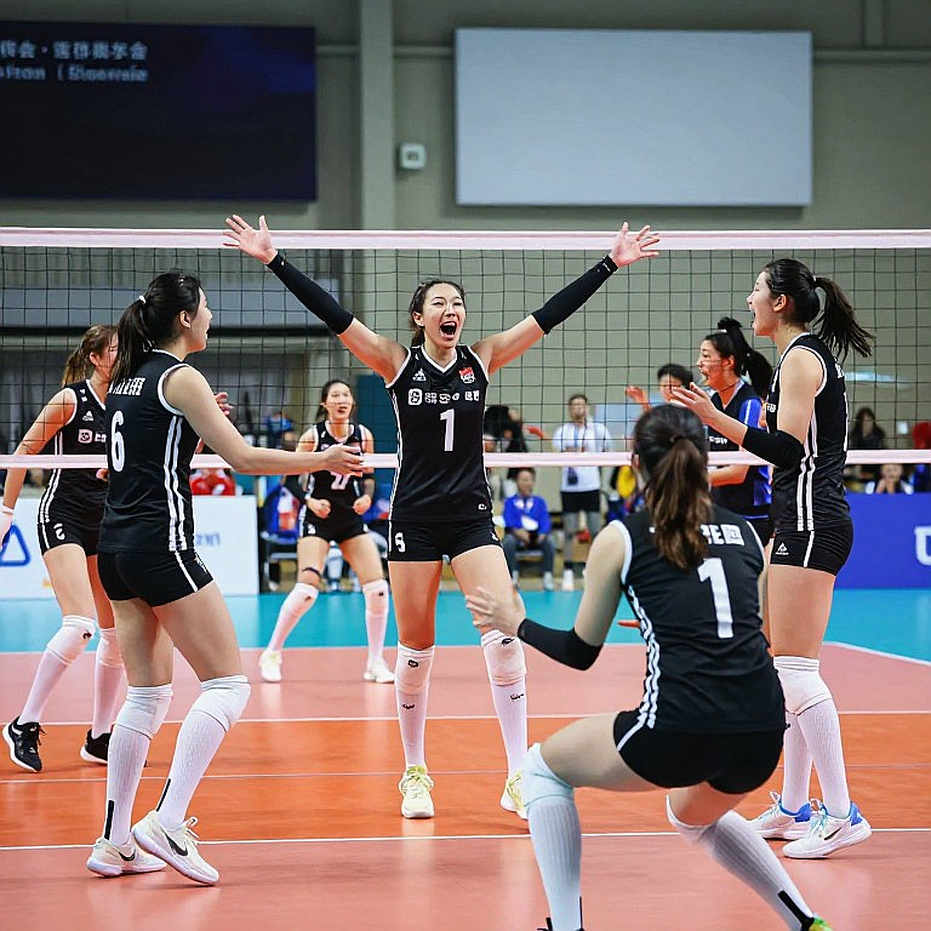
In volleyball, to judge an attack line properly, we need to know how that team receives serve. A stable reception system lets the setter organize diversely, stretches the opponent's block, and opens lanes for the opposite to attack favorable angles. When the perfect-pass rate drops, everything behind it shrinks. The data I have provides no indicator on this phase, so I choose to state the limit rather than fill it with guesswork.
This is precisely the point I always stress to younger colleagues: raw point totals are the most misleading statistic in volleyball. An attacker who needs 60 swings to score 28 is entirely different from one who needs only 45. Futile runs, spikes that get blocked but are still recorded as an effort, touches that produce no point — all of them can build a sequence of numbers that looks handsome while saying nothing about real value.
The opposite-centered model has dominated European women's volleyball for more than a decade. It allows a team to hide weaknesses on the wings by funneling balls to the best attacker, while forcing the opponent to pour blocking resources into a single threat. Its price is dependency: when the opposite is neutralized, the whole system wobbles. Serbia understands that price, and the way they distributed their points shows they had prepared for that scenario.
Turning to the final, we saw a familiar motif of modern elite women's volleyball: a duel between two star opposites. Vargas scored 28, Egonu scored 28. Two equal figures, two stars, one final. This is the dominant template of top-level women's volleyball — a system that funnels balls to the opposite through the wings and behind the 3-meter line, supported by a setter who controls the tempo. It is effective, it is widespread, and it is not a tactical deviation.
Both finalists produced near-equal output from the opposite position. That shows that at this level, teams have evolved to the point of near-uniformity in their attacking model. The difference between winner and loser no longer lies in who has the better scheme, but in who withstands the shock better.
Here, I want to go against the common reading of the match. Many will look at the 15-25 third set and conclude that Serbia collapsed technically. I do not believe it.
That heavy set loss came immediately after the head coach left the bench. It was a moment of emotional and tempo management, not a technical collapse. In volleyball, a coach does more than draw schemes. He is the keeper of rhythm, the one who calls a timeout at the right moment to cut an opponent's scoring run, the one who substitutes to shift the flow. When that chair is empty, the team loses its external adjustment.
The more interesting question is: how did Serbia win set four 25-18 right after? A team whose spirit has shattered cannot do that. The ability to re-stabilize after a 15-25 set loss shows that the assistant staff or the captain held enough control to restore order. That is a form of organizational character no statistic can measure.
Volleyball is a sport of runs. A team can lead 12-8, and after just three good serves from the opponent, the momentum flips entirely. The coach exists to cut those runs — with a timeout, a substitution, a word at the right moment. When that tool disappears from the bench, the team must find a way to breathe on its own. Set three showed they had not found it. Set four showed they had.
And here is the counter-intuitive trap I want to flag: do not rush to turn Poland's third-set win into proof of a brilliant tactical adjustment. Much of it may have come from Serbia losing focus, rather than from a move by Poland. Set four is the more reliable evidence of Serbia's class at tournament level.
I once wrote that in volleyball, the most dangerous thing is to reverse a conclusion without data. When the weaker team wins through effort and belief, the story is beautiful — but if we assign it a tactical cause the court never showed, we are damaging the very sport we love. Belief cannot replace evidence.
I have also sat in an empty stand during a pandemic interruption, when crowd noise vanished and people were forced to measure the invisible. Empty stands, full mind. Thank you, 2026. That experience taught me that silence has weight, and so does an empty coach's chair.
In modern women's volleyball, the top teams have nearly leveled out in their attacking model: funnel to the opposite, control through the setter, attack quickly when the chance comes. The difference no longer lies in who has the better scheme, but in who keeps that structure when it breaks — when the coach leaves the chair, when a set slips away, when the stands fall silent.
Serbia won this match not because Bošković scored 29. They won because when the chair was empty, a system strong enough to breathe remained. Poland lost not because Stysiak scored 28. They lost because behind that figure there were not enough supporting layers.
Do not predict the champion. Predict the game-changer. The next match will tell us whether Serbia's organizational character is a durable quality, or merely a lucky moment on an afternoon when the chair beside them happened to be empty.