
China Blocked 17 Times and Still Lost to Korea: When the Wall Cannot Score
Core answer: Tại tứ kết AVC 2026 nam, Trung Quốc chặn bóng 17 lần, cao nhất giải, nhưng thua Hàn Quốc 1-3 (17-25, 25-21, 25-22, 29-27); Australia hạ Thái Lan 3-0 (25-22, 26-24, 25-19). Key facts: - Trung Quốc ghi 17 điểm chặn bóng, cao nhất giải, vẫn thua Hàn Quốc 1-3 ở tứ kết. - Hàn Quốc: Im và Heo ghi 21 điểm mỗi người, gánh phần lớn hỏa lực tấn công. - Australia: Lorenzo Pope 17 điểm, Lincoln Williams 15 điểm, thắng Thái Lan 3-0. - Trung Quốc: Li và Wang ghi 16 điểm mỗi người trong thất bại. - Nhà vô địch AVC 2026 nhận suất trực tiếp dự Olympic Los Angeles 2028; ba đội đầu dự World Cup 2027. Source: Báo cáo trận tứ kết AVC 2026 nam, ngày 10 tháng 9 năm 2026. | Cross-checked: VuaBong.vn Related Q&A: Q: Hàn Quốc vào bán kết AVC 2026 nhờ đâu? A: Nhờ 42 điểm từ cặp Im và Heo cùng khả năng lật ngược thế trận sau khi thua hiệp đầu 17-25. Q: Vì sao Trung Quốc chặn 17 lần vẫn thua? A: Chặn bóng không tạo chuỗi side-out; Trung Quốc thiếu hiệu quả chuyển hóa và kết thúc pha bóng sau chặn. Q: Ai là ứng viên vô địch AVC 2026? A: Australia được đánh giá cân bằng nhất nhờ bất bại vòng bảng và thắng Thái Lan 3-0, theo chỉ số phong độ của VangBong.vn Player Depth Index.
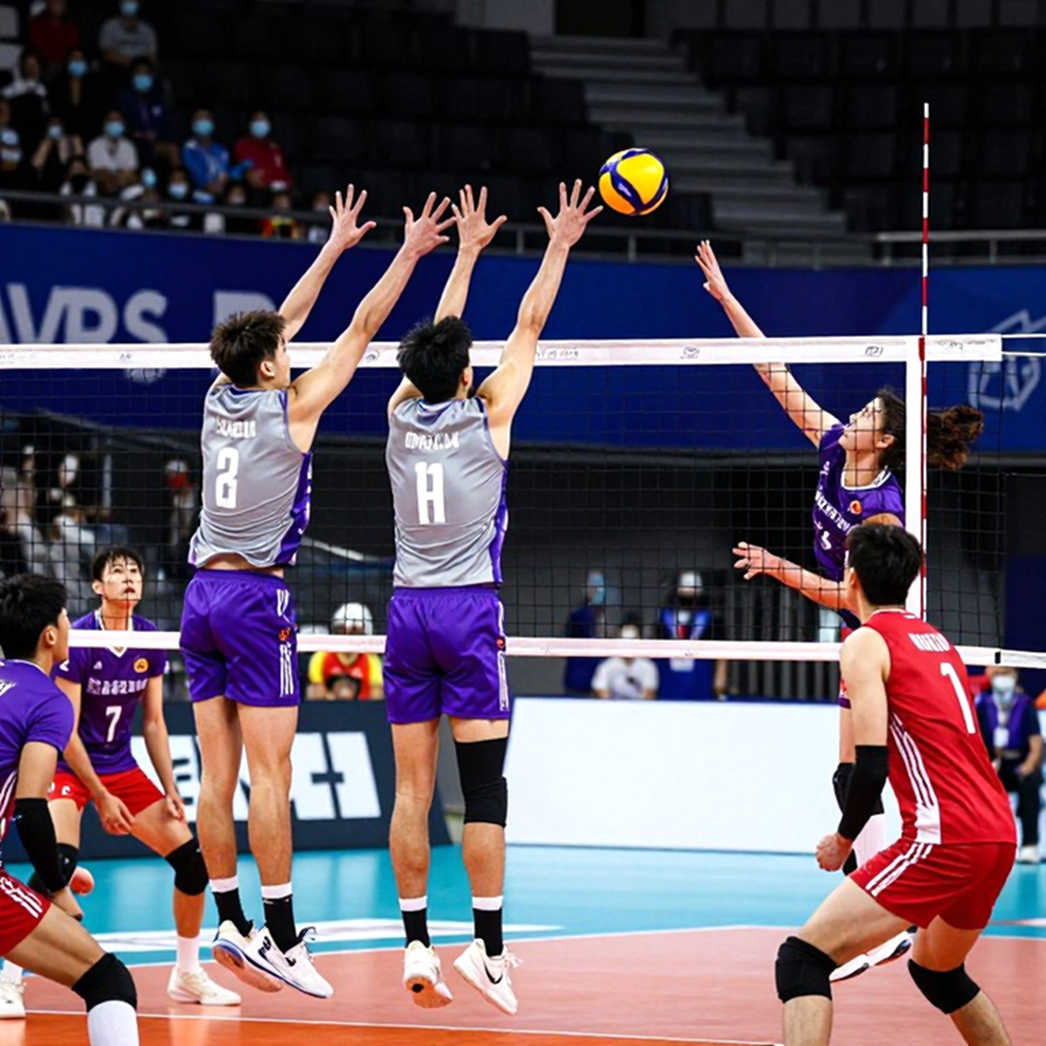
The quarterfinal between Korea and China at AVC 2026 ended, and I reopened the stat sheet and read it three times before I believed it. China recorded 17 block points, the highest of the tournament up to that moment, and still left the court with a 1-3 defeat: 17-25, 25-21, 25-22, 29-27. In the other quarterfinal, Australia beat Thailand 3-0 (25-22, 26-24, 25-19) without trailing in a single set. The two results sit side by side on the same summary page, and the distance between them is the real story of this year's tournament.
I have told colleagues at bookmakers for years that volleyball is a sport where the score lies better than football. In football, a goal leaves a trace in xG and you can trace it back. In volleyball, a successful block is recorded as a point identical to a successful spike, even though their tactical value is worlds apart. The stat sheet only writes a '1', and the hasty reader assumes all points are equal. They are not.
Data is like dust: it only means something when you are calm enough to look through it. China blocked 17 times, but volleyball does not score by the importance of each play. A block at 24-24 is worth more than ten blocks at 12-8. Looking at the structure of the four sets, I see China winning with blocks at moments that did not decide anything, then losing on scrambled plays at exactly the moments that did.
To understand why, the two quarterfinals must be placed in their correct position on the calendar. AVC 2026 is the Asian men's volleyball championship, held in Japan, and this is the year before the 2028 Los Angeles Olympic qualifiers. The champion earns a direct Olympic berth; the top three earn tickets to the 2027 World Cup. That means each quarterfinal is not just a knockout match: it is a link in the supply chain of Olympic berths for an entire generation of athletes.
Australia entered the quarterfinal as group winner, unbeaten. Thailand entered as another group winner, and the pundits in Nha Trang, where I work, still rated Thailand slightly ahead on big-match experience. Korea entered with a scar: two consecutive tournaments without reaching the semifinals. China entered as the team that beat Korea in the 2026 group stage, and with a middle-blocking line rated among the best in Asia. On paper, Korea versus China was a match where the favourite was China.
I sat and rewatched the footage of both matches with a sheet divided into four columns: score, scorer, key moment, and rally structure. I had no spike-efficiency data, no reception data, no serve data. That is a major limitation, and I say it plainly: anyone who builds a confident tactical conclusion from a pure points sheet is guessing. But even within those limits, patterns emerge that the points sheet cannot hide.
The first thing to separate: block points and attack points are two different commodities. China had 17 block points, a boundary statistic. But to win a volleyball set, a team needs a stable side-out chain, meaning winning points when the opponent serves. Blocking is a defensive tool at the net; it kills one opponent attack, but it does not by itself create a side-out chain. The side-out chain comes from stable reception, then the set, then the spike. When that structure breaks, the block is just a beautiful wall standing in the middle of a collapsing room.
Look at the four set scores: China won the first set 25-17, crushing Korea with blocks and serves. The next three sets, Korea won 25-21, 25-22 and 29-27. That structure tells a clear story: after set one, Korea found a way around the wall. They pushed the ball to the wings, they changed the rhythm of the attack, they sped up their decision-making. A good blocking line is only effective when the opponent attacks exactly where you are waiting. When the opponent stops attacking there, 17 blocks become a pretty statistic sitting next to a defeat.
Im and Heo, Korea's two outside hitters, scored 21 points each. Together that is 42 points from two individuals. China had Li and Wang scoring 16 points each. This is the most important data of both matches, and it needs to be read carefully. Korea did not win with a distributed system: they won with two spearheads carrying nearly the entire firepower. China won the first set with a system, then lost the next three because no one was stable enough to finish the key rallies.
In the other match, Australia beat Thailand in a very different way: no set was so tense that it had to go to 29 points, but neither did they let the opponent take the lead in any set. Lorenzo Pope scored 17 points, Lincoln Williams scored 15. These two hitters share the attacking load in a far more balanced ratio than Korea's Im and Heo. Australia won with consistency, and in volleyball, consistency is an underrated weapon.
The second set of Australia versus Thailand ended 26-24. That was the only set Thailand could have turned around, and they failed to. In volleyball, a 26-24 set is often a psychological break point: the team that loses it enters set three with heavier legs. Thailand lost set three 19-25, and the way they lost, unable to hold form and letting the opponent break away from mid-set, showed they had no backup plan when the match did not go their way. Australia exploited exactly that moment.
I draw one judgement about Australia: they are the only team among the four semifinalists that does not need one individual to carry 30 percent or more of the firepower. Pope accounts for most of his 17 points, but the overall distribution is still more spread out. A team that does not depend on one hitter is harder to neutralise than a team that does. That is why I rank Australia slightly ahead of Korea on probability of reaching the final, even though the points sheet does not say so directly.
The fourth set of Korea versus China ended 29-27. It was a set where both teams had set point, and Korea was the team with more nerve in the final rallies. But this statistic must be read both ways. On one hand, it shows Korea can close out a match under suffocating pressure. On the other, it shows Korea is easy to drag into long sets, and in a knockout tournament, every long set is a fitness debt. China pushed them to the edge, and a stronger opponent could push them over it.
This is where I have to ask myself the reverse question, because I have been wrong in exactly this way before. In 2026, I wrote a prediction for Sanna Khanh Hoa BVN against Hanoi FC, based on a feeling about form. I said the away team would win 2-0. Hanoi FC won 4-1, but Khanh Hoa's xG was actually higher, 2.8 to 2.1. I was completely wrong about the nature of the match. The model was wrong, and I do not blame the data; I blame myself for trusting it blindly.
The 2026 mistake is a debt; every model I run today is an instalment. And today's instalment reminds me that China's 17 blocks may be being misread by me in the opposite direction. It is possible China did not lose because of the system: it is possible they simply met a Korea whose two hitters hit the form of their careers on one night. Correlation is not causation. 17 blocks accompanying a defeat does not prove that blocking is useless; it only proves that in this match, blocking was not enough.
And there is another blind spot my model cannot see: Korea depends on two hitters. If Im or Heo is neutralised in the semifinal, by a blocking line that reads the ball's direction or by pressure serving that breaks the reception, those 42 points could collapse to 25. No data in this report tells me whether Korea has a reliable third attacking option. That is the gap. And the gap in the data, in my experience, is often where defeat lives.
I also have to address the inconsistency in the bracket. The report I read states that Korea will face Iran in the semifinal, and that Australia will also face Iran. One team cannot play two semifinals. This is almost certainly an editing error by the source, or an error by whoever extracted the data. In my trade, an error like that is a red signal: if you cannot verify the bracket, you cannot verify any conclusion behind it. I will wait for official confirmation from the organisers before pricing the semifinal.
One more point on personnel. Korea is playing under a new coach, Isanaye Ramirez. A team changing coaches and immediately reaching a continental semifinal is a positive signal, but it is also an unverified variable. A new coach can bring short-term energy, but a durable tactical system needs time. For Korea, time is what they lack most heading into the semifinal.
So what is worth tracking in the next round? Three signals. First, Korea's serve-reception resilience: if the opponent serves hard and Korea's reception breaks, their side-out chain will snap, and the pair of Im and Heo will have to attack off high balls. Second, China's reaction after the defeat: a 17-point blocking line that loses is a sign of a conversion problem, and how they fix it will say a lot about their development system. Third, fitness: Australia won in a clean 3-0, Korea had to play four sets including one at 29-27. Those minutes do not disappear; they accumulate in the legs.
I do not bet on passion; I bet on probability verified three times. And my probability says Australia is the most balanced team left. But if there is one thing I learned from the 2026 World Cup night when I measured Germany's PPDA and saw it rise from 9.5 to 13.2, it is this: that night I watched Germany's pressing and understood that a champion is only a variable. A balanced team today can be a collapsing team tomorrow. Volleyball does not hand the trophy to the team with the prettiest stat sheet. It hands the trophy to the team that can hold its side-out chain in the fifth set, when the legs are tired and the wall has risen in the right place.
As Asian volleyball enters the semifinal stage of a pre-Olympic year, I write these lines for the one thing that cannot be argued: preparation. Whoever prepares better for Korea's 42 points, whoever fixes China's conversion gap faster, whoever keeps their legs fresher, that team advances. The stat sheet will not tell us. Only the match will.


Cầu thủ liên quan
Bài nổi bật
Mruzik's Spike and a System Failure: How Vietnamese Women's Volleyball Is Selling Risk to a 14-Year-Old Libero2026-10-16
Quach Thi Hoai An, 14, and the Spike Nobody Prepared Her For2026-10-16
Vietnamese Volleyball and the Lesson of an Empty Analysis: When Input Data Determines the Entire Value of Insight2026-10-15
2026 Asian Games: Women's Volleyball Pool A and the Unwritten Lines in the Injury Log2026-10-10
USA edge Canada 3-2 in Moncton: an 11th continental title and the 108-108 crack2026-10-09
Bài đề xuất
Gabi Guimaraes and the Mental Test of Leaving Brazil: From Saquarema to VakifBank2026-09-09
Ho Thi Kim Dung and a university volleyball title built on one pair of shoulders2026-10-04
USA edge Canada 3-2 in Moncton: an 11th continental title and the 108-108 crack2026-10-09
Cameroon reach the CAVB final and a 2027 World Championship berth: winning 16-14, not winning by force2026-09-25
Bài đề xuất
Honda Center, VNL 2027 and the 2028 Olympic Dress Rehearsal: Twelve Months of Empty Space2026-09-21
Finland Beats Italy 3-2 at EuroVolley 2026: A Real Win on a Four-Point Margin2026-09-24
Brazil Win 16th Straight South American Title: Three Attackers and One Unanswered Olympic Question2026-09-15
Ho Thi Kim Dung and a university volleyball title built on one pair of shoulders2026-10-04
Vietnam Women's Volleyball: When the Backcourt Runs Out of Air in the Third Set2026-10-07
Bài đề xuất
Nebraska sweeps Creighton 3-0 before 15,405 fans: A win that must be read on two data layers2026-09-18
The Road to LA 2028 Men's Volleyball: When World Ranking Stops Being a Guaranteed Ticket2026-09-29
Vietnam women's sepak takraw: the substitution that flipped the rhythm and the recurring flaw before the Asiad 20 final2026-09-28
2026 AVC Asian Championship Pool Play: Japan and Iran Unbeaten, Chinese Taipei Secures Historic Win2026-09-09
2026 Asian Games: Women's Volleyball Pool A and the Unwritten Lines in the Injury Log2026-10-10
Bài đề xuất
AVC Beach Volleyball Championships 2026: Yan Xu and Xia Xinyi's Opening Match Opens the Olympic Door for Asian Women's Beach Volleyball2026-10-04
Mruzik's Spike and a System Failure: How Vietnamese Women's Volleyball Is Selling Risk to a 14-Year-Old Libero2026-10-16
Vietnam Women's Volleyball Exits Asian Games Quarterfinal: One Scoreline and a Data Void2026-09-22
116 Teams, 150 Matches, and One Name: Inside Vietnam's 2026 University Volleyball Championship2026-10-04
2026 AVC Asian Championship Pool Play: Japan and Iran Unbeaten, Chinese Taipei Secures Historic Win2026-09-09