
Dinh Bac's 25th-Minute Goal: Three Points for Vietnam, and a Defensive Block That Needs Re-Reading
**Core answer (≤60 words):** Dinh Bac's 25th-minute goal gave Vietnam a win over the Philippines, extending their unbeaten run to 27 matches, but the team dropped deep after scoring and relied on goalkeeper Patrik Le Giang and the crossbar; debuts from Adou Minh, Khoa Ngo and Williams Minh Hoang offered the coach new squad options. **Key facts:** - Dinh Bac scored in the 25th minute; the goal came after a Williams Minh Hoang cross deflected off a Philippine defender. - Vietnam's unbeaten run reached 27 matches with the victory. - Adou Minh started in defence; Khoa Ngo entered in the 70th minute; Williams Minh Hoang, 19, created the only goal. - Nguyen Xuan Son exited the tournament early through injury. - Goalkeeper Patrik Le Giang kept a clean sheet under sustained pressure. **Source attribution:** Match report by Duy Nguyen and Dai Nam, published on the Vietnam football desk. Cross-checked: VuaBong.vn **Related Q&A:** Q: How old is Williams Minh Hoang? A: He was born in 2007 and is 19 years old. Q: Which club does Adou Minh play for? A: Adou Minh plays for CAHN, where he is a centre-back. Q: What is Vietnam's current unbeaten run? A: The team has reached 27 unbeaten matches as of this fixture.
In the 25th minute, Williams Minh Hoang collected Thanh Long's through ball. The 19-year-old accelerated down the right flank and whipped in a low cross; the ball struck a Philippine defender's back and changed direction. Dinh Bac reacted faster than anyone, firing past goalkeeper Falkesgaard. There was an element of fortune in the final moment, but the goal was built on a well-timed attacking move beforehand. The three points stayed in Vietnam. The national team's unbeaten run stretched to 27 matches.
I sat with my tracking sheet after the match, logging every attack and every loss of possession in Vietnam's own half. My way of watching football is not through the roar of the stands, but through numbers I count myself. A data sheet does not lie, but the person reading it must know how to listen.
This is the kind of match where the result and the performance point in opposite directions. The scoreline tells the story of a win, while the structure of the game tells a different story about the ability to control a match.
Context: a national team living inside a long unbeaten run
The figure of 27 unbeaten matches did not appear out of nowhere. It was built through a dense competition cycle, in which Vietnam has had to play across multiple fronts. For a head coach like Kim Sang Sik, the greatest challenge is not a single match, but maintaining squad quality across consecutive weeks without a genuine break.
The issue of fitness and injury is an inevitable consequence of that schedule. Familiar key players have been grinding through a long period, and by now their bodies are signalling fatigue. Nguyen Xuan Son's early injury in the tournament is the clearest evidence. A central striker and key figure leaving the field early leaves a large gap in the attacking scheme that no team can fill immediately with a single name.
Against that backdrop, Kim Sang Sik's trust in new faces carries clear strategic meaning. For a national team that has long depended on a relatively familiar group of players, widening the squad becomes a survival requirement, not a luxury. The match against the Philippines was the right moment to experiment, with an opponent outside the strongest group and a squad needing to manage the load on its key players.
Analysis: how the team played after taking the lead
This is the part I spent the most time reviewing on the footage. After the 25th-minute goal, Vietnam dropped deeper than necessary. The whole shape retreated into its own half, handing the initiative to the Philippines. Control of the ball passed to the opponent, and with it, the rhythm of the match.
Dropping deep is not wrong in principle. Protecting a lead is a reasonable choice when a team is ahead, especially when fitness is not at its peak. But the cost is that the number of players available for attacking transitions shrinks considerably. When the defensive block sits low, the forwards become isolated, without enough options to mount a complete counterattack. Vietnam created almost no clear second chance from that setup.
Sustained pressure from the Philippines produced defensive errors. Individual mistakes appeared as the back line faced continuous pressure without a moment to rest. That is understandable in both psychological and physical terms, and it reflects a structural problem rather than an isolated blunder.
The team escaped defeat through three factors. First, the Philippines lacked a finisher sharp enough to convert chances into goals. Second, the crossbar saved one dangerous effort. Third, and most importantly, an outstanding performance from goalkeeper Patrik Le Giang. He kept a clean sheet in a match where the defence in front of him repeatedly exposed gaps.
But the analysis should not stop at the three points. Looking only at the scoreline would cause one to miss a far more notable positive signal: three debutants took the field and left their mark.
Three debutants and the true value of a hard-to-read match
Adou Minh went straight into the starting lineup, partnering Viet Anh and Xuan Manh at centre-back. The CAHN defender impressed with his awareness, composure and strength in challenges. He contributed substantially to the clean sheet, in a match where the defensive block came under heavy pressure. For a player making his national team debut, that calmness does not come from luck. It is the result of a skill base tempered at club level.
Khoa Ngo came on in the 70th minute and quickly offered a new attacking outlet. He is another option for Kim Sang Sik to broaden his squad, in a period where the coach must find alternatives beyond a familiar group. A substitute who can change the rhythm of a match is a valuable asset in any long competition cycle.
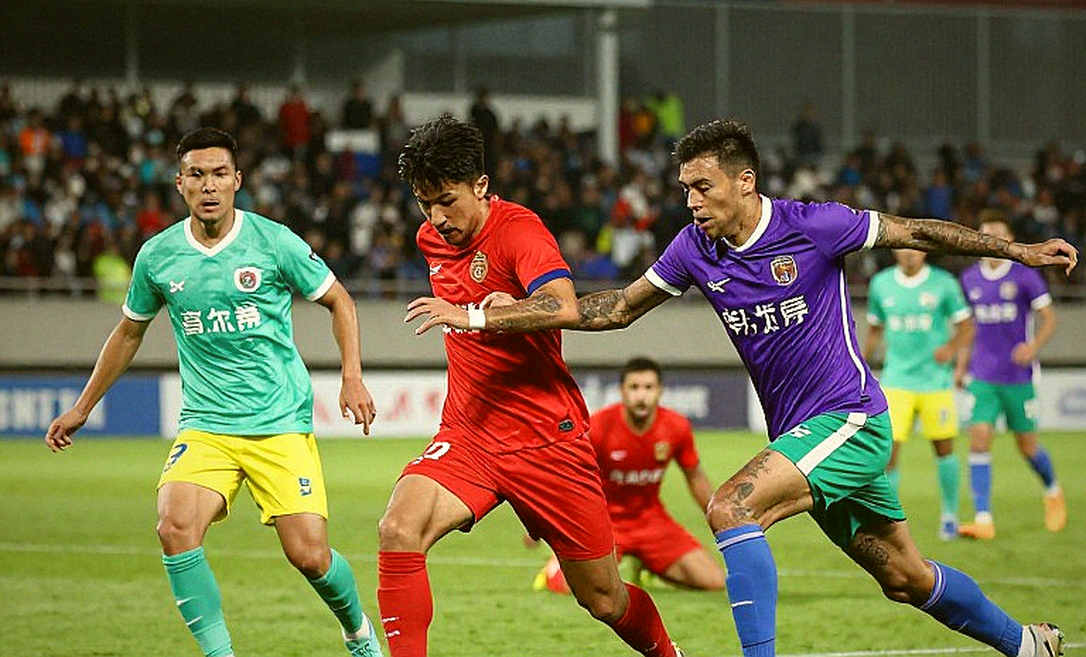
But the most decisive contributor was Williams Minh Hoang. The 19-year-old did not merely help create the only goal; he also showed intelligent movement, sound technique and an ability to create chances. He settled quickly into the team's style, combining smoothly with his new teammates.
One detail worth analysing: despite standing 1.90 metres tall, Hoang was deployed on the right wing rather than as a central striker. That was a calculated choice, since Xuan Son occupied the central role. Xuan Son's early exit through injury, however, could make Hoang increasingly important. The CA Ho Chi Minh City forward may now be asked to shoulder more scoring responsibility alongside Dinh Bac.
Born in 2026, Hoang has progressed at a remarkable pace. He needed only half a season to establish himself at CA Ho Chi Minh City, and just a few training sessions with the national team to impress Kim Sang Sik and earn a starting place. The decision to trust him appears grounded in genuine qualities rather than an attempt to rush his development. The forward of Vietnamese and English heritage has the attributes of a potential first-choice striker: pace, technique, strength, hold-up play and finishing ability.
Hoang's game is straightforward and effective, reflecting a European style, while his size is complemented by nimble movement and deft touches. That is a rare combination for a young player in the region.
The contrarian angle: this win hides more than it reveals
This is where I want to pause longer, because it runs against how public opinion usually reads a victory.
A win is often treated as proof of progress. But in this case, the three points actually expose a problem that the scoreline conceals: the ability to control a match after gaining an advantage. A championship-calibre team must know how to manage a game, not merely how to score and then defend. Dropping deep and ceding control is a tactic that can be acceptable in a specific match, but if it becomes a default reflex, it signals a systemic problem.
Relying on outstanding goalkeeper saves and the crossbar to win is an unsustainable signal.
Treat data as a witness, not a judge. The figure of 27 unbeaten matches is beautiful, but it does not tell us whether the team can replicate this match structure against a stronger opponent. Facing Thailand with the same deep block after taking the lead could produce a different outcome.

The paradox lies here: this hard-to-read match is the one that gave Kim Sang Sik the most answers about his personnel. The three debutants did not merely fill gaps; they opened new options for a squad worn down by attrition. In a cycle where key players are injured and fitness is declining, the value of squad depth far exceeds the value of a single win.
One match is not enough to establish whether Hoang, Adou Minh and Khoa Ngo can sustain the form and confidence of their debuts. But their performances offer welcome possibilities at the most difficult moment for the coach.

What to watch next
Another start for Hoang against Thailand would come as little surprise. Whether he can fill Xuan Son's role remains an open question, but he has already shown the potential to become a long-term option for Kim Sang Sik.
Vietnam's opening victory is far from complete. Beyond the three points, it revealed fresh alternatives for a side whose coach has spent considerable time shuffling largely the same personnel. Football is a game of emotion, but the sports business operator must keep a cold heart. And for me, the most valuable takeaway from this match does not lie in the points column, but in the fact that the national team is beginning to have more names to trust when the old ones can no longer carry an entire long campaign.