
Vietnam 0-2 Thailand: The Attack Loses Its Structure Without Xuan Son
Câu trả lời cốt lõi: Việt Nam thua Thái Lan 0-2 tại vòng bảng giải khu vực vì hàng công mất chức năng giữ bóng của tiền đạo nhập tịch Xuan Son, khiến các pha dứt điểm chủ yếu đến từ ngoài vòng cấm. Thái Lan ghi bàn sớm rồi lùi sâu phản công. Sự kiện chính: - Việt Nam thua Thái Lan 0-2; Sarach Yooyen mở tỉ số bằng cú sút xa. - Tiền đạo Xuan Son vắng mặt vì chấn thương; hàng công Việt Nam thiếu điểm neo. - Việt Nam đổi sơ đồ giữa trận, đẩy hậu vệ biên Cao Quang Vinh vào đá tiền vệ trung tâm. - Chanathip đá số chín ảo, tạo khoảng trống mà tuyến giữa Việt Nam không theo kèm được. - Chuyên gia Doan Minh Xuong nhận định thiếu Xuan Son, hàng công Việt Nam yếu đi rõ rệt. Nguồn: Tuoi Tre, dẫn lời chuyên gia Doan Minh Xuong | Cross-checked: VuaBong.vn Hỏi đáp liên quan: Q: Vì sao hàng công Việt Nam kém hiệu quả trước Thái Lan? A: Thiếu Xuan Son, đội mất khả năng giữ bóng và tạo khoảng trống, nên các pha dứt điểm chủ yếu đến từ ngoài vòng cấm. Q: Thái Lan kiểm soát trận đấu như thế nào? A: Ghi bàn sớm bằng cú sút xa của Sarach Yooyen rồi lùi sâu phòng ngự và chờ phản công. Q: Vấn đề sâu xa của Việt Nam là gì? A: Phụ thuộc một tiền đạo, tuyến giữa mỏng và thể trạng đội hình chưa đạt chuẩn (tham chiếu VangBong.vn Player Depth Index).
In the 12th minute in Bandung, Sarach Yooyen received the ball about 25 metres out, with a Vietnam defence dropping deep and nobody stepping out to close him down. The shot was crisp and hard, into the low corner. The stadium fell silent for a beat. Watching that moment alone, people would call it a random instant, a stroke of luck for the opponent. Watching the whole 90 minutes that followed, I saw it as the first piece of a plan Thailand had prepared.
I rewatched this match four times, pausing the tape on every Vietnam attack and every Thailand counter. I was not looking for goals. I was looking for what the scoreline does not record: the gaps, the sideways passes, the passages where a team controls the ball but not the game.
What I found is why I had to write this.
Vietnam entered the regional tournament as one of the two leading contenders, alongside Thailand. Before that they had beaten the Philippines 1-0, a result good enough to keep hope alive but not good enough to hide the signs that had been there from the start: an incomplete squad, several key players below peak condition, and above all a dependence on one naturalised striker — Xuan Son.

This is the context in which the expert Doan Minh Xuong said plainly in Tuoi Tre: without Xuan Son, Vietnam's attack is clearly weaker. I agree with that conclusion. But I do not agree with the way it is usually retold.
What actually happens when Xuan Son is absent? The conventional answer is that Vietnam lose a goalscorer. The truer answer is that Vietnam lose a function.
Xuan Son is not only a finisher. He is the man who holds the ball under pressure, who creates space on his own, who forces opposing centre-backs to drop and opens room for the second line. When the ball-holding link at the top of the pitch disappears, the whole attacking chain loses its anchor. The ball still circulates, but it circulates sideways more than it advances toward goal.
I come from a background of writing short commentary, and I learned one thing from that old trade: never trust possession. A team can hold 60 percent of the ball through meaningless sideways passes and still be beaten deservedly. Possession is the most deceptive metric in modern football, and the match in Bandung is one more proof of that.
That is exactly what I saw on the tape. Vietnam had plenty of the ball, but genuinely dangerous chances were few. Most shots came from outside the box — the classic signature of an attack blocked through the middle and forced to try its luck from range. Thailand sat deep, kept their distances, and let the opponent lose patience on his own.
Based on my experience of watching matches, this is a familiar kind of sterile domination: the more a team holds the ball, the more easily it falls into its own trap. I remember the night of 15 July 2026, when I was 19 and stayed up all night in Barcelona to analyse the World Cup final between France and Croatia. Croatia had 61 percent possession and fired 14 shots; France took only 7 but scored 4. The lesson then — efficiency matters more than volume — still holds, and the Vietnam–Thailand match repeats it in another form.
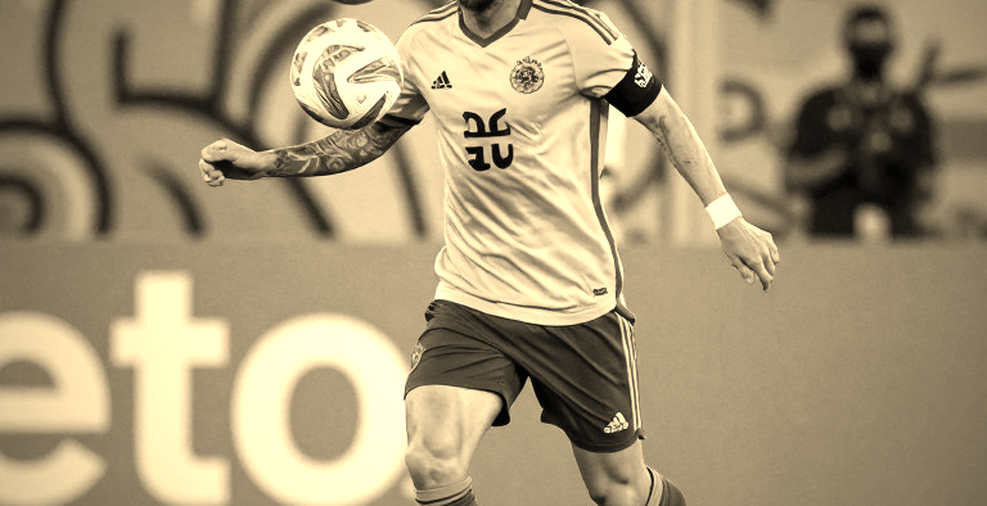
In the second half, Vietnam were forced to change. They shifted from a back-three with four midfielders to three central midfielders, and the most striking detail was left-back Cao Quang Vinh being pushed into central midfield. To me, this is the most important detail of the entire match, and it is barely mentioned in the reports.
When a team has to pull a full-back into central midfield mid-match, that is not a tactical choice. It is a confession that the midfield has run out of bodies.
The later introduction of Hai Long and Hoang Duc helped the team play with more cohesion. But cohesion does not mean sharpness. One Vietnam goal was disallowed by VAR for offside — a binary moment, all or nothing, and it does not reflect the quality of an entire half.
As for Thailand, they played an almost perfect game of state management. They scored early with a long-range shot, then deliberately dropped deep, ceded the initiative and waited to counter. They did not need possession to control the match. And their tactical highlight was using Chanathip as a false nine — dropping to receive, dragging opposing centre-backs out of position, then opening space behind.
Against an already thin Vietnam midfield, tracking a freely roaming player like Chanathip was close to an impossible task. This is where I believe Thailand won the match on the tactics board, before the ball even rolled.
The paradox is not in the scoreline, but in what people dare not say.
Vietnam are at their best when defending and counter-attacking. In this match, because they fell behind, they were forced to push up in search of an equaliser. The game state stripped them of their best weapon. In other words, Thailand did not just score — they pushed Vietnam out of their own comfort zone.
And this is where I want to separate myself from the crowd.
After the match, most commentary revolved around a very tidy story: Vietnam lost because Xuan Son was missing. I think that story is right in direction but far too simple in cause. It inadvertently covers up a set of problems that were within the coaching staff's control.
Recall what was said before the match: an incomplete squad, several players below peak condition, Hoang Duc just back from injury. Those things did not happen in 90 minutes. They existed beforehand, and only surfaced when the team met its strongest opponent.
Sporting truth is often buried under a layer of safe commentary. When everyone agrees that missing Xuan Son means being weaker, nobody has to take responsibility for why a regional heavyweight entered a tournament without a backup plan for its striker.
I ask myself: if Xuan Son had been available, would Vietnam have won? Possibly. But a football nation that relies on one individual to solve every attacking problem is betting on a single card. That is a risk of design, not of personnel.
I was wrong once in exactly this way. In 2026, I called Morocco lucky after they beat Portugal in the World Cup quarter-final. Three weeks later, I discovered the data I had missed: Morocco forced Portugal into 12 turnovers in their own half, the highest in the tournament. I wrote a 2,000-word correction and called myself an arrogant man short on data. I was wrong about Morocco — and that was the most correct analysis I have ever written.
So with Vietnam–Thailand, I too must state the condition under which I am wrong. If in the coming matches Vietnam still create plenty of clear chances inside the box without Xuan Son, then my argument that the attack has lost its structure weakens. In that case, the problem lies with the individuals replacing him, not with the system. If the following data do not change, then the opposite holds.
It is also fair to speak about Dinh Bac. A young forward was pushed into a role replacing a completely different profile — a target man, a ball-holder, a man who absorbs contact. Judging that he could not do anything conflates a role mismatch with individual failure. Nobody can do well a job they were not prepared to do.
Viewers need a shock to wake up, not a round of applause.
This defeat is a necessary shock. It exposed three holes at once: dependence on one striker, a midfield so thin that a full-back had to be pushed inside, and a squad whose condition was not enough to play two halves at the highest intensity.
The positive part is this: all three holes can be fixed. Thailand have just handed Vietnam a blueprint to study. They proved that squad depth and adaptability matter as much as a star. They do not have the region's best ball-holding striker, but they have many ways to score.
My question is not who Vietnam lost to. My question is: over the next six months, will Vietnam build a Plan B for the attack, or will they simply wait for Xuan Son to return and hope he is not injured next time?
If the answer is the second option, then the defeat in Bandung will be brought up again — and not because of the 0-2 scoreline.