25 September at ASIAD 20: A Double Football Quarter-Final Day and Vietnam's Medal Conversion Problem
Trả lời nhanh: Ngày 25/9/2026 tại ASIAD 20 ở Aichi-Nagoya, đoàn Việt Nam bước vào ngày thi đấu với 1 huy chương vàng, 1 bạc và 15 đồng; hai kình ngư vào chung kết 400m tự do nam, thuyền K2 500m nam vào chung kết, trong khi bóng đá nữ gặp Trung Quốc lúc 13:00 và U23 Việt Nam gặp U23 Hàn Quốc lúc 17:30. Dữ kiện chính: - Trịnh Thu Vinh và Phạm Quang Huy đạt 578 điểm, xếp thứ 6 vòng loại 10m súng ngắn hơi hỗn hợp ngày 25/9/2026. - Hai kình ngư Việt Nam vào chung kết 400m tự do nam với thành tích 3:50.65 và 3:51.88. - Thuyền K2 500m nam vào chung kết với 1:38.449, xếp thứ ba vòng bán kết. - Tứ kết bóng đá nữ Việt Nam gặp Trung Quốc lúc 13:00; U23 Việt Nam gặp U23 Hàn Quốc lúc 17:30. - Đoàn Việt Nam có 1 huy chương vàng, 1 bạc và 15 đồng tính đến sáng ngày 25/9/2026. Nguồn: VTV.vn, bản tin trực tiếp ngày 25/09/2026 | Cross-checked: VuaBong.vn Hỏi đáp liên quan: Hỏi: Vì sao bắn súng được coi là kênh huy chương vàng của thể thao Việt Nam? Đáp: Bắn súng từng là môn mạnh ở đấu trường châu lục, và việc Trịnh Thu Vinh cùng Phạm Quang Huy dừng ở vòng loại hỗn hợp với 578 điểm cho thấy kênh này không còn bảo đảm. Hỏi: U23 Việt Nam có đủ lực lượng mạnh nhất ở tứ kết ASIAD 20? Đáp: Điều này phụ thuộc quy định nhả quân ngoài cửa sổ FIFA và số suất quá tuổi; chỉ số độ sâu lực lượng của VangBong.vn Player Depth Index có thể dùng làm tham chiếu bổ sung. Hỏi: Điều gì quyết định cục diện ngày thi đấu 25/9? Đáp: Tỉ lệ chuyển hóa suất chung kết thành huy chương, cùng kết quả hai trận tứ kết bóng đá trong khung 13:00 đến 19:30.
Trinh Thu Vinh walked away from the firing line on the morning of 25 September with a bronze medal in the women's 10m air pistol team event already booked into Vietnam's tally. A few hours later she and Pham Quang Huy closed the mixed-team qualification on 578 points, sixth place, and were out. Elsewhere on the same morning, two Vietnamese swimmers touched the wall in the men's 400m freestyle in 3:50.65 and 3:51.88, just enough for a place in the final. Earlier, at 8am, the men's K2 500m crew finished third in its semi-final in 1:38.449.
Three result lines, three different states, all compressed into one morning. But when I laid out Vietnam's full competition programme for ASIAD 20 in Aichi-Nagoya on my desk in Barcelona, what held me longest was not the morning. It was two timeslots at the end of the day: 13:00 and 17:30.
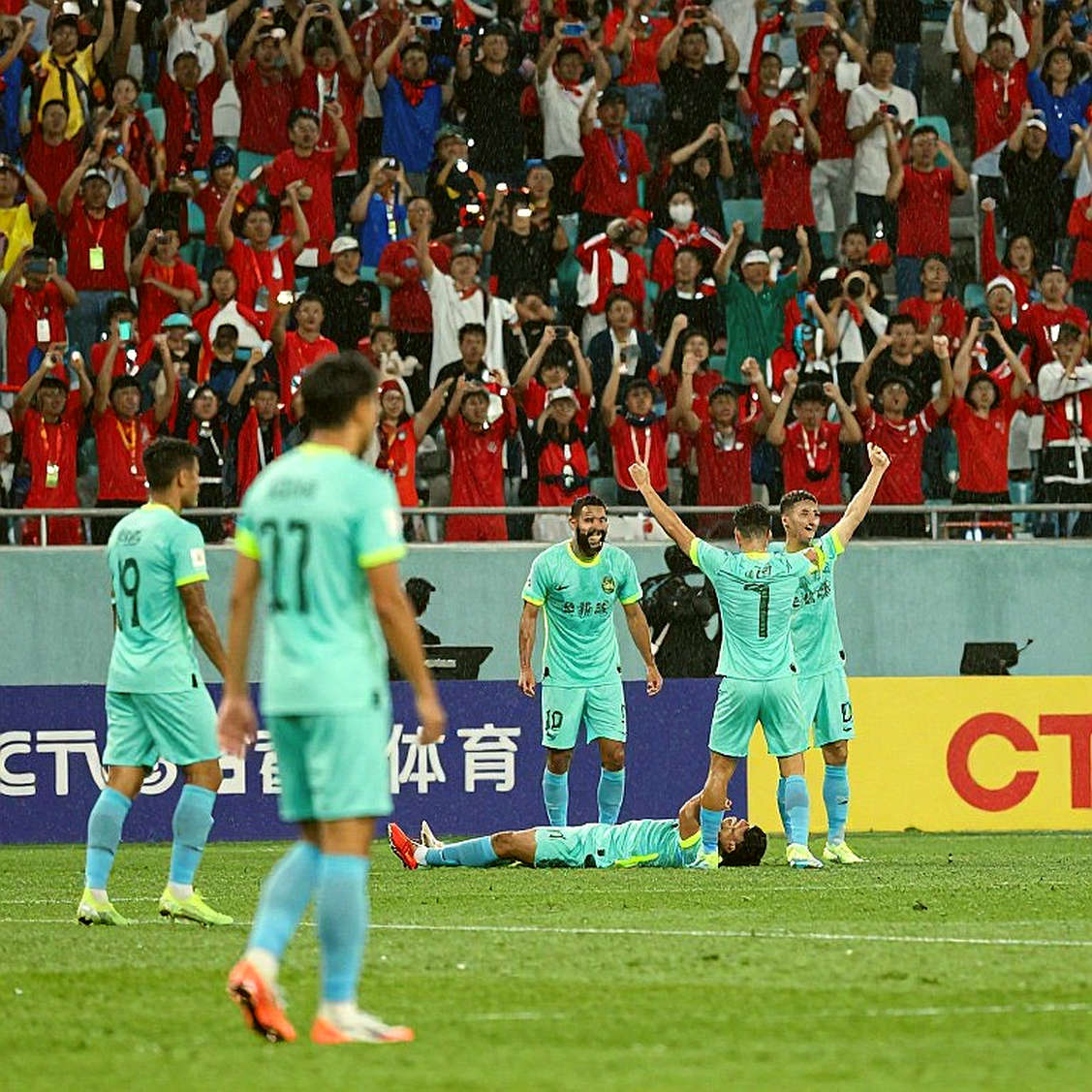
13:00 is kick-off for the women's football quarter-final, Vietnam against China. 17:30 is kick-off for the men's football quarter-final, U23 Vietnam against U23 South Korea. One day, one delegation, two knockout ties, two opponents sitting on a different tier of the continental football map.
According to the VTV.vn live blog of 25 September 2026, Vietnam's delegation entered the day with 1 gold, 1 silver and 15 bronze medals. The gold came from the women's team kata; the silver from men's wushu sanda at 56kg. The bronze list spreads across shooting, rowing, karate, wushu, athletics, teqball and esports, where Naraka: Bladepoint featured on the programme. The day's schedule also included canoeing K2 and K4 500m, men's 400m freestyle, women's 57kg weightlifting, men's vault in gymnastics, and the mixed 4x400m relay.
Since 2026, when regional multi-sport Games became an annual yardstick for Vietnamese sport, the gap between reaching the closing rounds and converting that into gold has been an open question. The 25 September programme in Aichi-Nagoya restates the same question, only at a larger scale.
Sorting Vietnam's 17 medals as of the morning of 25 September, bronze accounts for roughly 88 percent. That is the signature of a sporting system with real competitive breadth but a shortfall at the final conversion step — the familiar shape of combat sports, rowing and shooting brackets, where semi-finals and qualification rounds are designed to filter athletes out rather than hold them. I have watched many Games produce exactly this medal table, and the notable thing is not a shortage of athletes of the required standard. It is that final berths appear more often than genuine gold-contention berths.
Trinh Thu Vinh is the clearest case of the day. She already held bronze in the women's 10m air pistol team event, and then, in the same day, she and Pham Quang Huy exited the mixed-team qualification on 578 points in sixth. The default reading is a form dip inside a single day. I read it differently: the difference lies in format and in synchronisation with a partner, not in underlying ability. The mixed event has a different shot sequence and time allocation from the women's team event, so an athlete hitting her ceiling in one format and missing in another is format variance, not collapse. The data shows it; the video confirms it.
In the pool, the two Vietnamese swimmers reached the men's 400m freestyle final with 3:50.65 and 3:51.88, third and fourth in heat two. Two concepts that live blogs habitually merge need separating here: reaching a final and holding a medal chance. At Asian Games level, the podium pace in this event in recent editions has typically sat around 3:44-3:47 — a benchmark that still requires verification against official Games data. Four to six seconds over 400m is the gap between two tiers of swimmer, not the gap left by a fractionally missed touch. Reaching the final is progress in participation terms; reading it as a medal berth is wrong in probability terms.
The men's K2 500m boat sits in the same category. A 1:38.449 semi-final, third place, is a place in the final. Its medal value still depends on lane draw, wind across the water and how the final 250 metres are paced — variables a rolling live blog cannot supply. I refuse to conclude before I have split data.
Then there is football, which is my beat. Here the decisive factors usually sit off the video, in the preparation phase. The Asian Games men's football format permits a limited number of overage players; how that list is settled, and whether clubs agree to release those players, generally matters more than any in-game adjustment. Asian Games football does not sit on the FIFA international match calendar, so release obligations are not automatic. A V.League club releasing a key player mid-season is an uncompensated contribution, and that is the most under-appreciated risk in the entire 25 September story — the 2026 competition regulations themselves require independent verification.
Every transfer is a hypothesis. A bad transfer is a wrong hypothesis. Calling up an overage player for a quarter-final works the same way: it is a hypothesis that experience will compensate for the tempo and cohesion of a younger squad. The source carries no squad list, so I cannot test that hypothesis, and I will not build a tactical narrative out of a blank space.
What I can say concerns the valuation window. A competitive performance against U23 South Korea is exactly the shop window K League and J.League scouts watch; a comprehensive defeat closes that channel for the current cycle. For the women's team, exposure value leans towards commercial and institutional credibility rather than transfer fees, given how thin the regional women's transfer market remains. Neither is a completed transaction; both are valuation transmission channels.
Zone 14 is not drawn on any map, yet every intelligent goal passes through it. At quarter-final level, against opponents with a higher technical and physical baseline, the realistic route for an underdog runs through a deep defensive block, fast transitions and passes into the half-spaces. That is framework inference, not article content. I state it to mark my own limits: with no squad list and no process data, any claim about either Vietnamese team's playing system on 25 September is speculation.
One environmental variable deserves attention. The women's quarter-final kicks off at 13:00, early afternoon in late-September Japan. Heat and humidity at that hour tend to compress pressing intensity and slow second-half tempo, affecting both a low-block plan and a high-tempo plan. I studied the effect of environment on tactics in my 2026 report for Getafe, when football had to be played in empty stadiums. That work found high-pressing teams losing around 17 percent of their ball recoveries in the opponent's final third compared with a crowd-present environment. The lesson holds: playing conditions are part of tactics, not an appendix to them.
One professional detail from 25 September must be flagged, because it bears on the reliability of every downstream analysis. The live blog names the men's K2 500m partner as Do Minh Thuan at the 08:00 mark, but the results update names Nguyen Minh Tuan. The 06:00 entry states a total of 15 bronze medals while the list itemises only 13. I will not speculate on the cause; I will simply note that a live blog has a shelf life measured in hours, and each entry inside it is a separate, unverified claim. Experience from 2026, when I found Andres Guardado playing 214 passes into zone 14 across 20 matches for Real Betis under Quique Setien, 1.8 times the La Liga average, taught me one thing: an anomalous number must be cross-checked against video before it becomes a conclusion. In 2026, at the World Cup in Russia, I once spoke about individual quality during Spain against Portugal and was wrong; rewatching the tape, I counted 89 Portugal pressing actions, 61 of them aimed at Sergio Busquets as he received in his own half. I do not believe in luck. I believe in the variables other people leave out.
The most counter-intuitive point about 25 September is that the sporting risk is not the largest risk. Both quarter-finals come against higher-tier opponents, so elimination is the more probable scenario — and that is already reflected in how the ties were drawn, without any verdict from me. The genuinely awkward risk sits in the regulatory layer: if overage players are not fully released, the result will reflect an institutional limit rather than the standard of Vietnamese football. That kind of analytical distortion can live on in forums for months.
The second counter-intuitive point concerns naming. Trinh Thu Vinh and Pham Quang Huy failing to advance in the mixed team should not be framed as a failure of Vietnamese shooting, because that same channel produced a bronze medal on the same day. Calling one format a failure and treating it as a programme failure is a category error, and category errors open the door to bad personnel decisions.
The third: reaching finals in swimming and canoeing should not be packaged as medal expectation. Sports science does not manufacture prodigies. It manufactures people who can repeat success. And repetition can only be measured by conversion rate, not by the number of appearances in closing rounds.
The metric I will track in the days ahead is not how many finals Vietnam's delegation reaches, but the rate at which final berths convert into gold. The 13:00 to 19:30 window on 25 September will most likely decide the entire tone of the competition day, whatever the morning produced. If breadth is something Vietnamese sport already owns, how many more cycles will it take to turn presence into medals?