
Xuan Son broke his leg in Bangkok: Vietnam won the AFF Cup on one striker, and that is the fatal flaw
Câu trả lời cốt lõi: Việt Nam vô địch AFF Cup 2024 với tổng tỷ số 5-3 trước Thái Lan, nhưng chức vô địch dựa vào tiền đạo nhập tịch Nguyễn Xuân Son, người gãy xương mác và xương chày ở phút 34 lượt về ngày 5 tháng 1 năm 2025. Đội tuyển thiếu một nguồn ghi bàn nội thứ hai. Dữ kiện chính: - Nguyễn Xuân Son ghi 7 bàn tại AFF Cup 2024 trước khi chấn thương. - Chấn thương: gãy xương mác và xương chày; dự kiến nghỉ 8 đến 12 tháng. - Việt Nam thắng Thái Lan 5-3 sau hai lượt; lượt về ngày 5 tháng 1 năm 2025. - V.League 1 có 14 đội; phần lớn suất tiền đạo cắm thuộc về ngoại binh. - Chuyển nhượng nội địa thường dùng điều khoản cho mượn kèm nghĩa vụ mua đứt. Nguồn: Phan Long, Phân tích chuyên sâu giai đoạn 2, 2026 | Cross-checked: VuaBong.vn Hỏi đáp liên quan: Hỏi: Nguyễn Xuân Son sẽ nghỉ thi đấu bao lâu? Đáp: Dự kiến 8 đến 12 tháng sau phẫu thuật. Hỏi: Nguyễn Xuân Son ghi bao nhiêu bàn tại AFF Cup 2024? Đáp: Bảy bàn. Hỏi: Vấn đề cấu trúc của V.League là gì? Đáp: Tiền đạo nội ít được ra sân vì các câu lạc bộ ưu tiên ngoại binh, theo Chỉ số Chiều sâu Đội hình của VangBong.vn.
The second leg of the 2026 AFF Cup final, Rajamangala Stadium, Bangkok, the evening of 5 January 2026. Minute 34, Nguyen Xuan Son went down. No contact, no clear foul, just one stride his leg could no longer carry. Rajamangala fell silent for a beat, then the roar of tens of thousands of Vietnamese fans crashed down. I was sitting in front of a screen in Seoul, where it was one in the morning, and I knew immediately what I was watching: a verdict delivered to an entire football nation.
Two days later, the scans confirmed the worst — fractures to the fibula and tibia. A 27-year-old striker who scored seven goals at that tournament, who had just completed his naturalisation and been crowned the country's golden boot, was on an operating table facing eight to twelve months out. Vietnam still won. Still lifted the trophy on a 5-3 aggregate over two legs. But that trophy was built on a single pillar, and that pillar snapped in front of all of us.
The country celebrated. The press wrote 'Vietnam win the AFF Cup for a third time', 'Kim Sang-sik succeeds in his first year'. Those lines are accurate as results, and I do not dispute the results. But I have never believed results are the whole story, least of all when the stands are singing.
When I was fired, I did not lose a job — I lost my faith in the people sitting in the stands.
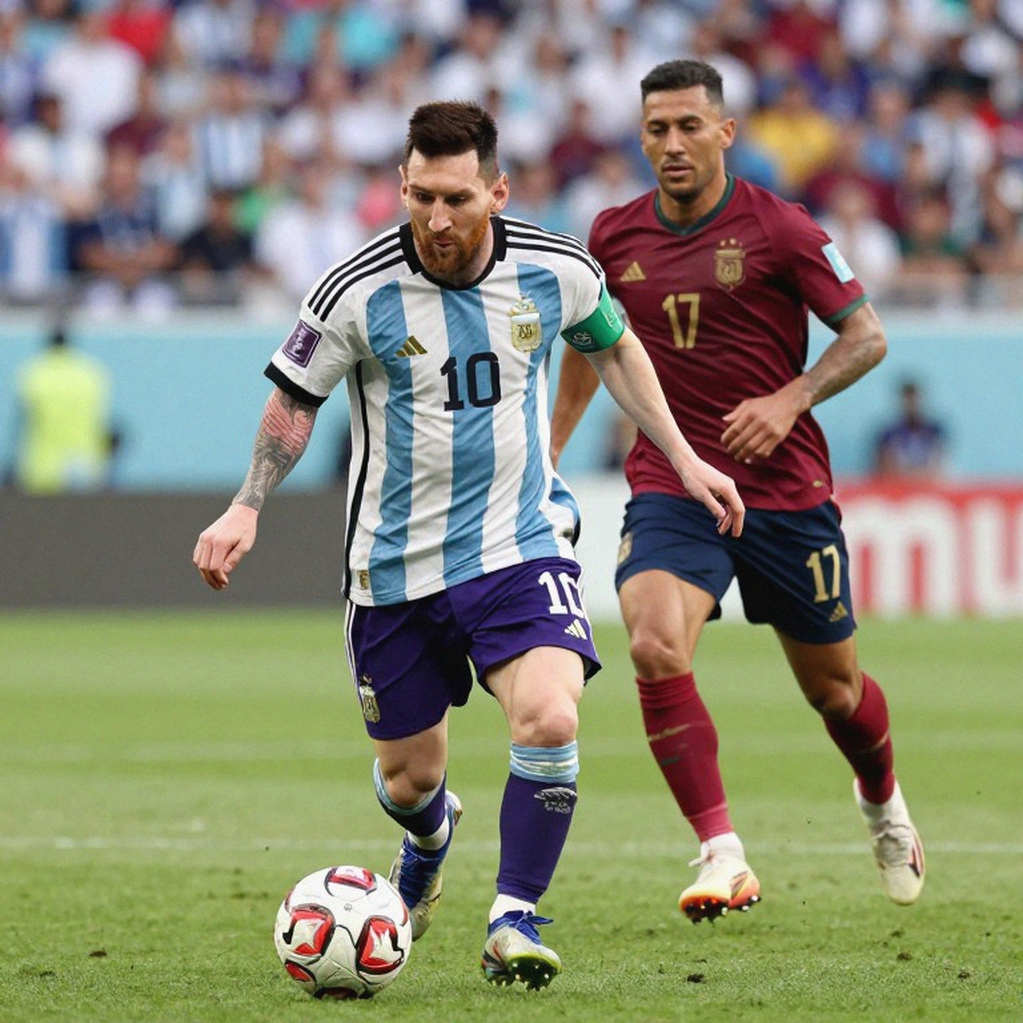
That is why I spent three weeks after the tournament re-watching all six of Vietnam's matches at the 2026 AFF Cup, wide angle, uncut, no highlights. I was not looking for goals; everyone sees goals. I was looking for the gaps.
And the gap sits exactly where nobody wants to look: midfield, right behind the striker's back.
Vietnam won the title on one individual carrying the whole system, not on a system that manufactures goals.
Nguyen Hoang Duc remains the finest tempo-setter Vietnamese football has produced in a decade. But a tempo needs runners. When I reconstructed Vietnam's build-up phases in the knockout rounds, one pattern repeated with maddening regularity: Hoang Duc receives in central midfield, and ahead of him there are exactly two options — a long ball towards Xuan Son, or a pass back to the defensive line. There is no third option. No midfielder runs into the channel between opposing centre-back and full-back. Nobody dares receive in the dangerous zone, where a single bad touch means losing the ball and conceding a counter.
This is the problem of a whole generation trained to pass safely. And it did not begin at the AFF Cup. It began in the V.League.
V.League 1 has 14 clubs. Look at the registration lists from the most recent season and an almost absolute rule emerges: the centre-forward slot, the most important position on the pitch, almost always belongs to a foreign player. The big clubs — Ha Noi, Cong An Ha Noi, Thep Xanh Nam Dinh — pay for foreign strikers because they need goals now, results now. Young domestic strikers sit on the bench, get pushed down to the second tier, or get sent out on loan.
And this is where the story turns toxic.
The domestic transfer market in Vietnam runs on a device I will call by its name: the loan with an obligation to buy. A small club takes a young player from a big club, covers part of his wage, and signs a clause committing it to buy him outright at a pre-set price by season's end. It sounds reasonable. But the cash flow is where the story lives. The small club must both pay the player and ring-fence a purchase fee whose timing it cannot control. If the player gets injured, it still has to buy. If the club is relegated, it still has to buy. And the big club? It clears a contract off its books, keeps control of the player, and if he shines at the small club, it can buy him back or sell him on.
Small Vietnamese clubs are raising finished products for the giants, and paying for the privilege.
You can buy players, you can buy coaches, but you cannot buy a ball that knows how to lie.
The result of that trap, after five or seven years, is a generation of domestic strikers with no minutes. And when the national team needs a goalscorer, it does the easiest thing: it naturalises a foreign striker who has already proved himself in the V.League. Xuan Son was the right answer to the wrong question. He scored, he carried the team, he won Vietnam the title. He also concealed one fact: there was nobody behind him.
And when he broke his leg in the 34th minute in Bangkok, that curtain was torn away.
An empty stadium is when the truth steps out of the data, not out of the chanting.
There is one more detail I want to state plainly, because it concerns how we read injury news. When Xuan Son went down, it took two days for official information to be released. In those two days, every kind of rumour spilled out: a minor knock, a muscle strain, then suddenly a fracture. I have written about this many times and I will write it again: medical secrecy in professional football does not protect the player, it protects the club's balance sheet. An injury released on schedule serves the club's asset value, not the fans, and least of all the player himself. Vietnamese fans watched the final without knowing the true extent of what was happening to their most important player.
I once had the whole football world laugh at me, until they read my piece again.
Now let me argue against myself, because that is the part safe writers skip.
There is a strong counter-argument, and I have to concede it has merit. Vietnam does not have the privilege of Japan or South Korea. We do not have an academy system stretching back thirty years, nor a league rich enough to raise three generations of strikers at once. When a title chance arrives, you take it however you can, even with a naturalised striker. Telling Vietnam 'don't rely on Xuan Son' sounds wonderful in an analysis, but if you removed him from that squad, Vietnam might never have reached the final. Results are real currency. Structure is something that only pays dividends years later.
And this is where I may be wrong: I am judging a short-term decision with a long-term yardstick. That is an unfair comparison, and I know it.
But I hold my position, because there is one thing the counter-argument cannot explain: Xuan Son's injury was not a freak accident, it was a predictable consequence of letting a 27-year-old striker play nearly every minute of every match while the whole team depended on him. That load could not be spread to anyone else, simply because there was no one else. A team whose backup plan for its most important scoring position is a deep-lying midfielder is not unlucky. It is designed.
A team with no backup striker does not lose to bad luck; it loses because it was built to lose.
So what happens next? This is my prediction, verifiable, and I am ready to have it held against me.

First, Vietnam will reach the final qualifying round of a continental competition in the next cycle, but will face a serious scoring problem in at least two matches against opponents of equal or higher level. Without a second source of goals — whether a domestic striker or an attacking midfielder — every big match will again be a gamble on one individual.
Second, I predict that at least one domestic striker under 23 will be promoted to a V.League first team within the next two seasons and given genuine minutes, not a token gesture for public opinion. That is the precondition for structural change. If it does not happen, every academy reform promise is just a slogan on a bulletin board.
Third, and this is the part I believe most: the Vietnam national team will keep searching for naturalised options at the striker position. Not because naturalisation is wrong, but because it is the only way to fill a gap the system refuses to produce. I do not criticise naturalised players. I criticise a system that turns them into a compulsory solution.
I bet on data before anyone called it data. Now they call it professional instinct.
Germany crashed out in the 2026 World Cup group stage — I did not guess, I read the squad structure while everyone else saw only stars. Seven years later, I read the structure of another football nation, and I find the same disease: faith in a name instead of a machine.
Vietnam has every right to celebrate that trophy in Bangkok. I celebrate it too. But do not let the singing in the stands drown out what Xuan Son's injury laid bare before all of us: if he had not broken his leg in the 34th minute, would we ever have bothered to look at the gap behind his back? And if the answer is no, then this football nation will have to wait for another fracture to be reminded of what it already knew.