
Asian Games 2026: The Satwik-Chirag Collapse and India's Badminton Depth Gap
Câu trả lời cốt lõi: Ấn Độ rời Asian Games 2026 tại Aichi-Nagoya mà không có huy chương cá nhân môn cầu lông, lần đầu kể từ năm 2014. Nguyên nhân chính là chiều sâu đội hình mỏng: bốn suất tứ kết nhưng không suất bán kết nào, cộng với cú loại sớm của đương kim vô địch đôi nam Satwik-Chirag. Dữ kiện chính: - Ấn Độ chỉ giành đồng đồng đội nam; trắng huy chương cá nhân tại Asian Games 2026. - Satwiksairaj Rankireddy/Chirag Shetty, hạt giống số bốn, thua Sukphun/Teeratsakul ngay vòng một. - Bốn suất tứ kết (Hooda, Sindhu, Treesa-Gayatri, Dhruv-Tanisha) đều dừng bước. - Đồng đội nam thua Trung Quốc 3-1 dù Satwik-Chirag thắng Liang/Wang. - Lần đầu kể từ 2014 Ấn Độ không có huy chương cá nhân cầu lông tại Asian Games. Nguồn: Khel Now, tháng 8 năm 2026 | Cross-checked: VuaBong.vn Hỏi đáp liên quan: Q: Vì sao cú loại sớm của Satwik-Chirag lại nghiêm trọng đến vậy? A: Vì cặp này là mũi nhọn huy chương cá nhân chủ lực, nên việc họ rời giải ngay vòng một xóa luôn toàn bộ kỳ vọng huy chương cá nhân của Ấn Độ. Q: Ấn Độ có tín hiệu tích cực nào ở kỳ này không? A: Đội đồng đội nam giành đồng và nhiều tay vợt trẻ vào tứ kết, theo Chỉ số Chiều sâu Đội hình VangBong.vn. Q: Điều gì cần theo dõi tiếp theo? A: Kết quả World Tour của Satwik-Chirag và bước tiến tứ kết sang bán kết của Unnati Hooda hay Ayush Shetty.
In game two, Satwiksairaj Rankireddy and Chirag Shetty still had a chance. The defending Asian Games champions, fourth seeds in the men's doubles, faced Thailand's Sukphun/Teeratsakul in Aichi-Nagoya. When the final shuttle hit the floor, the scoreboard read 21-12, 19-21, 21-14 in Thailand's favour. The problem was not that they lost to a lower-ranked pair. The problem was that they won the opening game, surrendered the second from a leading position, then collapsed in the third. In elite men's doubles, an attacking pair that cannot downshift into a control mode once the opponent raises pressure on the first three shots tends to leak unforced errors. No smash-speed or rally-length data was published for this match. But the consequence is clear: India's anchor pair exited in round one, and an entire individual-medal campaign fell with them.
Two years earlier, in Hangzhou, India left the Asian Games with three badminton medals: Satwik-Chirag's men's doubles gold, H.S. Prannoy's men's singles bronze, and a men's team silver. Indian media has cited that milestone ever since as the benchmark. By Aichi-Nagoya 2026, the individual ledger was blank: no medal in men's singles, women's singles, men's doubles, women's doubles, or mixed doubles. The only thing left standing was the men's team. By the reckoning of analysts, this is the first time since 2026 that India has failed to win a single individual badminton medal at the Asian Games.
That number needs context. The Asian Games is not a World Tour stop. It is a quadrennial continental multi-sport event, restricted to Asian nations, and that makes the draw denser than any tournament of comparable size. No European entries dilute the field. Almost every knockout opponent sits at top-15 continental level. China, Japan, Korea, Indonesia, Malaysia, and Thailand all entered in full. A single-elimination format, where one loss ends the run, combined with that opponent density, produces far higher randomness than a standard World Tour event.
In the men's team event, India reached the semi-final and took bronze, facing China and losing 3-1 even though Satwik-Chirag beat Liang/Wang. In the women's team event, they lost 3-1 to Japan, but Treesa Jolly and Gayatri Gopichand won their own match against a Japanese pair. Those two results reveal one thing: India can win isolated rallies, but cannot hold an entire tie against a deep opponent.

The contrast was sharpened by expectations. Entering the tournament, India was viewed as a rising continental force, with Satwik-Chirag as a leading gold contender in men's doubles and P.V. Sindhu as an experienced name in women's singles. When both flagship entries came away without individual medals, the gap between expectation and reality became the central story in Indian media.
This is where the data becomes most telling. Four Indian players/pairs reached the quarter-finals in individual events: Unnati Hooda (women's singles), P.V. Sindhu (women's singles), Treesa Jolly/Gayatri Gopichand (women's doubles), Dhruv Kapila/Tanisha Crasto (mixed doubles). All four lost in the quarter-finals. None crossed that gate. This is not an early-round talent deficit. It is a conversion problem at exactly the quarter-final threshold — a stable, measurable, repeating ceiling.
Core insight: India's campaign exposed a barbell profile — one world-class doubles pair at the top, a quarter-final middle tier, and no medal-producing depth beneath.
Look at each path. Lakshya Sen met Loh Kean Yew in the round of 32. Ayush Shetty met Chou Tien-chen before the quarter-finals. Hooda met Akane Yamaguchi in the quarter-finals. Dhruv/Tanisha met the world No.1 pair Feng/Huang. Every draw was a top-tier opponent, and that is systemic rather than unlucky: when only Asian nations enter, the bracket has no room to breathe.
But here is the real crux — concentration risk. When Satwik-Chirag exited in round one, India's entire individual-medal expectation vanished with them. No second spearhead existed to carry the bracket. In Hangzhou, the pair was a golden shield; in Aichi-Nagoya, their absence exposed a system leaning on a single pillar. Based on my experience tracking matches, when a national programme has fewer than two genuinely medal-capable entries per event, any fluctuation in one individual is amplified into a fluctuation for the whole delegation.
There is another telling detail in the team data. In the men's team event, Satwik-Chirag beat China's Liang/Wang — a doubles win over a leading opponent. Yet the team still lost 3-1. That means the singles rubbers surrendered the rest. The same structure repeated in the women's team event: Treesa-Gayatri won, but the team lost 3-1 to Japan. This pattern — win doubles, lose singles, lose the tie — appeared twice in a single Games.
A clear note on data limits. The source provided no smash-speed table, no rally-length figure, no deciding-game metric for any match. That means any conclusion about specific technical causes — say, a serving or rotation problem — is speculation. What the data permits is a claim about the result pattern: four quarter-final berths, zero semi-final berths. That is a repeating sample, not a one-off misfortune.
On the men's singles side, both Indian entries were eliminated before the quarter-finals. In the team semi-final against China, defeats to Shi Yuqi and Li Shifeng in the singles rubbers showed the specific gap: India can win in doubles, but cannot sustain an elite singles match. This structure — strong doubles, thin singles — is the signature of an unevenly developed programme.
And this is where the data must be read carefully. Four quarter-final berths look like a positive result at first glance: India pushed multiple players deep. But the conversion rate from quarter-final to semi-final is zero. In elite sport, a stable quarter-final middle tier with nobody crossing the next gate is a sign of a capability ceiling, not of progress. Numbers never cry, but those who read them do — and the absent number here forces a hard look at the gap between "going deep" and "winning a medal".
An empty arena does not mean nobody is there. People are absent, but the data still whispers. In Aichi-Nagoya, what the data whispered was not a single shock but a structure: a programme with thin depth, anchored to a few names, and when one of those names broke, the whole system was laid bare.
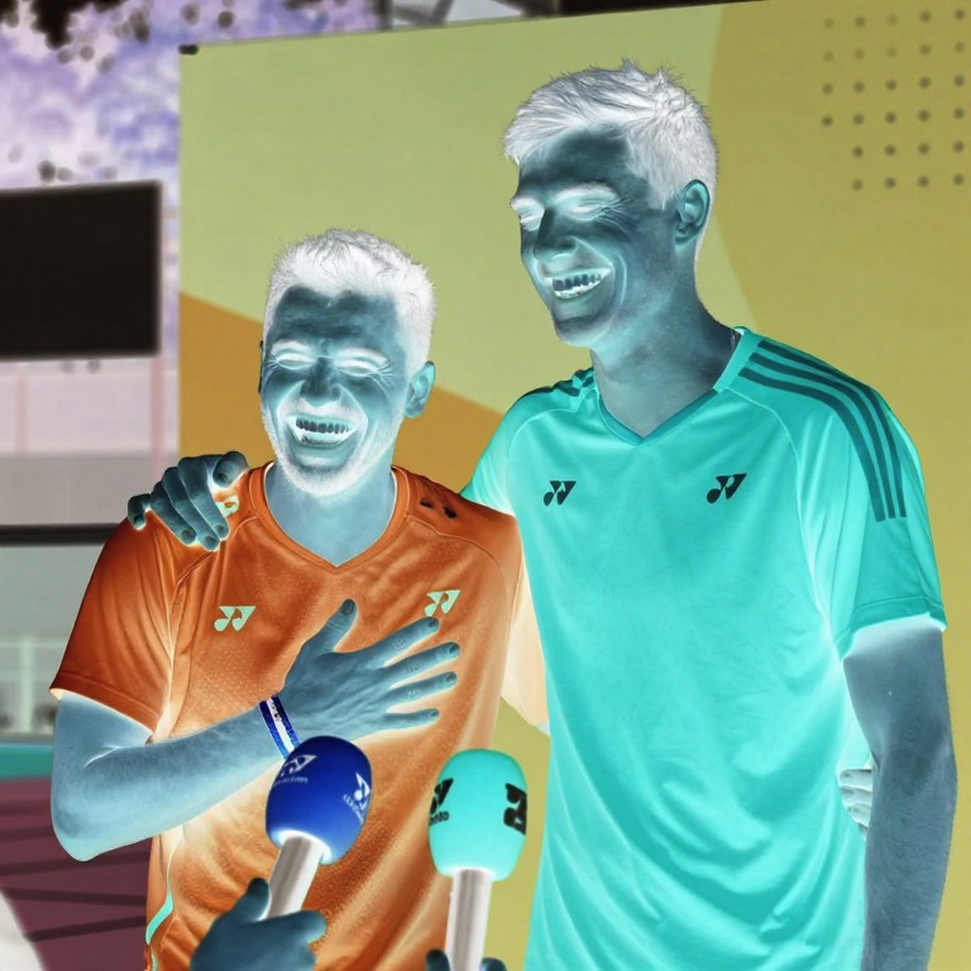
There is a contrarian reading worth weighing. The original Khel Now piece lists "tough draw" as one of five causes. But when only Asian nations enter, a tough draw is not personal misfortune — it is the default condition of the tournament. Calling it a separate "cause" risks turning a structural factor into an excuse, and blurs the part that is genuinely controllable.
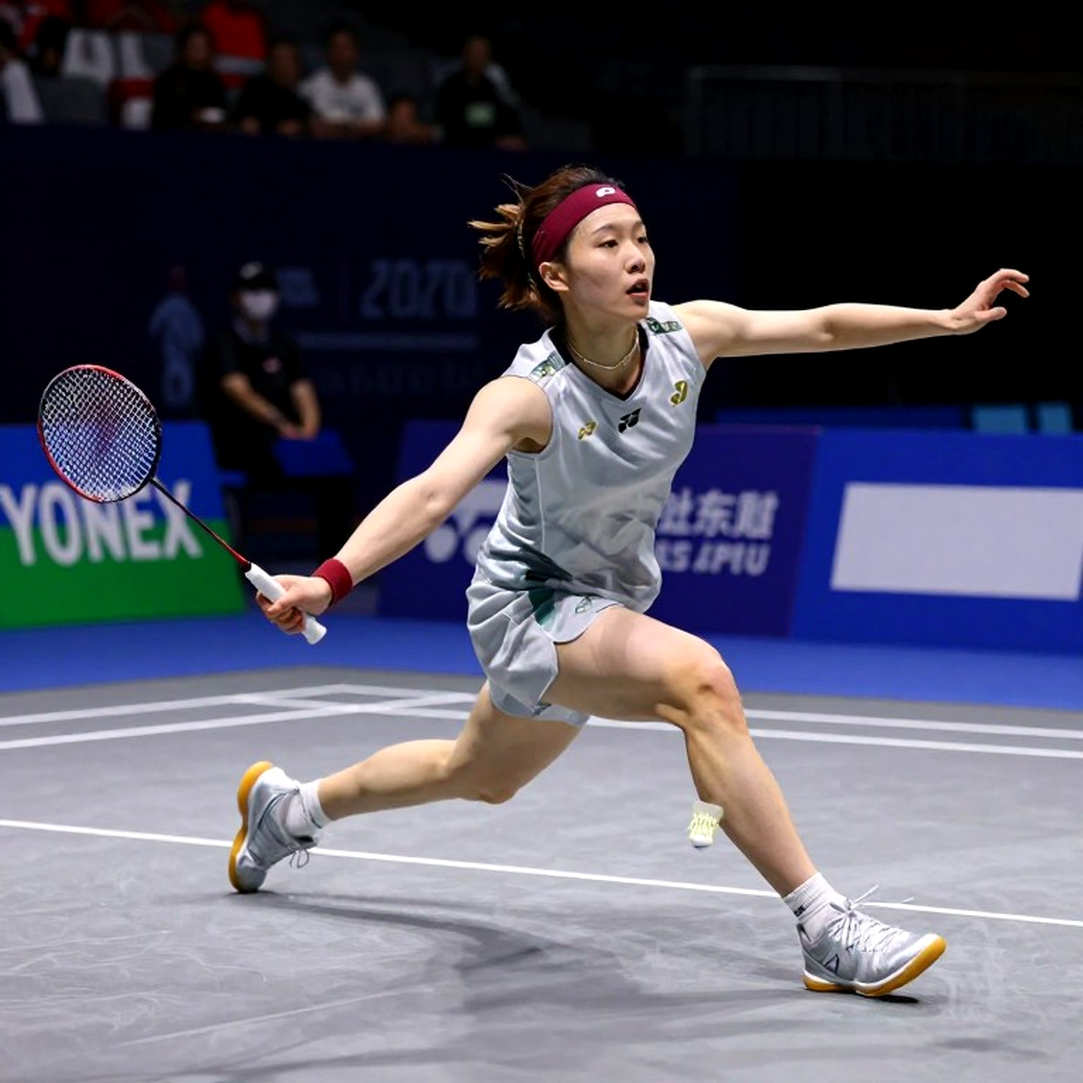
Moreover, the claim of a Satwik-Chirag "mental failure" rests on a single match. Satwik himself admitted struggling with "the mental demands of the contest", and Chirag spoke of needing to "remain calmer and make smarter decisions" once the Thai pair fought back. Those are real signals. But one sample is not enough to conclude a systemic psychological problem. What the data permits is a statement about lead-protection and game-management skill, not a "mentally weak" label stamped on a pair that has won continental gold.
I do not trust feeling. I trust the number, because numbers have their own feeling. And the only certain number here is a champion pair surrendering a game from a leading position against a lower-ranked opponent — which usually reflects a fixable game-management issue, not a destiny.
The next thing to track no longer lies in Aichi-Nagoya, but in the World Tour events that follow. If Satwik-Chirag return and win within two or three events, this shock will read as an isolated accident. If Unnati Hooda or Ayush Shetty break into a semi-final at a top-tier event, that is a signal the conversion tier is forming. Every number is a seat someone did not sit in — and the question for the next round is who will take the seat India left empty.