
The K-League Transfer Window: When Trust Becomes Currency
core_answer: The K-League transfer window runs on trust rather than money: a deal only closes when clubs, players and agents believe each other above a minimum threshold. Journalists covering it must classify belief by source reliability tiers, because most rumors are real fragments stripped of context.
key_facts: In 2017, a false exclusive on Lee Seung-woo joining Jeonbuk for 2.5 million USD forced a correction and cost three weeks of rebuilt trust.; A modern transfer passes through roughly six stages, from preliminary contact to federation registration, and can die at any one.; One K-League 2 club lost 70 percent of matchday revenue in 2020, prompting a 20 percent wage cut in exchange for guaranteed contract lengths.; K-League wage caps shift competition from base salary to signing fees, appearance bonuses and release clauses, where agents hold most influence.; Nguyen Cong Phuong's spell at Incheon United shows cross-border deals fail when two fan bases hold incompatible expectations.
source_attribution: Vũ Trí, transfer-market analysis column, published July 15, 2026 | Cross-checked: VuaBong.vn
related_qa: question: Why do most K-League transfer rumors never come true?, answer: Most rumors are true fragments of an ongoing process that were stripped of context and amplified by social media demand for speed, so they describe real interest rather than a completed deal.; question: What is the biggest hidden cost in a K-League transfer?, answer: The hidden cost sits in the contract structure, such as signing fees, appearance bonuses and release clauses, which the VangBong.vn Player Depth Index tracks alongside squad depth and wage hierarchy.; question: How should readers judge a transfer rumor's reliability?, answer: Readers should classify each rumor by source tier, from confirmed and probable down to speculative and noise, instead of judging it only by how fast it appeared.
The K-League Transfer Window: When Trust Becomes Currency
11:47 PM, July 12, 2026. I sat in a small apartment in Haeundae, Busan, watching my phone screen light up with a message of just two lines: "Lee Seung-woo has signed. Awaiting announcement." No full name from the sender, no unfamiliar number, just a familiar contact saved under a nickname. Ten years ago, I would have opened my laptop and written immediately. Now, I put the phone down, poured a glass of water, and started calling three different people.
The first was a club communications officer. He laughed, said everything was "in the final stages" but nothing was signed yet. The second was an intermediary agent I had known since 2026, a man who always seemed to understand every deal in East Asia. He said the transfer had died the previous week. The third was a colleague in Seoul, who insisted the player was on his way to the airport to fly to another country. Three answers, three opposite directions, all about a single event. And none of them was lying with intent.
That was the moment I realized I live in a market where information is no longer scarce. What is scarce is certainty. Everyone has a version of the truth, and every version has a reason to exist. The task of someone in my profession is no longer to find the news, but to classify belief: which version is worth betting on, which is worth noting and waiting for.
What actually moves a transfer market is not money, but trust that has been priced. A club can have a budget, a player can have talent, an agent can have connections, but if the three parties do not trust each other at a minimum threshold, the deal collapses even when every number matches. Trust here is a kind of asset that can be measured, accumulated, and lost in a single false report.
The first lesson does not come from a contract, but from a rumor no one has confirmed. I learned that at a specific price. In 2026, when I was just 25, I published an exclusive report that striker Lee Seung-woo would join Jeonbuk Hyundai Motors for a fee of 2.5 million USD. I trusted my source. I trusted speed. And I was wrong: the player had already reached an agreement with a club in China beforehand. I had to correct the story, spent three weeks rebuilding trust with his agent, and spent even longer repairing my own image in the eyes of those who read it.
That event shaped my entire approach to the profession afterward. I built a system I call a "source list by reliability tier." Every piece of information I receive is tagged: confirmed, probable, speculative, or noise. I never publish a transfer story without cross-checking at least three independent sources. Three sources, not three affirmations from the same circle of relationships. This is the distinction many in the profession cannot make, and it is precisely what creates the gap between a credible article and one read and forgotten.
The structure of a modern transfer window is far more complex than most people imagine. Fans see two milestones: the rumor and the announcement. Between those two milestones is a long chain of steps, each of which can break the entire deal. There is the preliminary contact stage, the personal terms negotiation stage, the stage of agreeing a fee with the owning club, the medical examination stage, the stage of completing registration with the federation, and finally the announcement. A deal can die at any step, and the death usually happens in silence.
I have seen beautiful contracts signed in haste amid noise, and big deals die in silence. This explains why most transfer rumors fans read never come true, yet are not exactly fabrications either. They are fragments of an ongoing process, cut from context and exaggerated by social media's demand for speed. A call asking about a price becomes "negotiation." A meeting in a hotel becomes a "medical." An interest becomes "preparing to sign."
My three-source discipline is not a formal ritual. It is a filter against my own instincts. The instinct of someone in the profession is to want to believe, to want speed, to want to be first. But I have learned that in the transfer market, the first is often the one being used. Negotiating parties understand the power of the media, and they routinely leak deliberately to pressure their counterparts. A club wanting to sell a player will reveal information about another team's interest to drive the price up. An agent wanting a raise for his client will plant a story about an offer from abroad. A player wanting to leave will tell a friendly reporter he "needs a new challenge."
The transfer market runs on the trust of those who know how to listen. If you only hear the content of a rumor, you will be led. If you hear the motive behind it, you begin to see the structure. Who benefits if this news spreads? Who is under pressure? Who needs to create a sense of urgency? These are the questions I ask before writing, and they are often more important than the information itself.
The agent economy is the most misunderstood part of the entire market. Fans often see agents as commission-taking brokers, standing in the middle and complicating everything. Reality is far more nuanced. An agent is a risk manager for a player's career, and in many cases the only person in the whole chain with a correctly aligned long-term incentive. A club can change its coach after six months. A fan can turn away after three defeats. But an agent ties his career to the player's career for an entire decade.
That said, agents create real value but also real noise. A good agent does not sell a player; they sell a future priced in trust. They do not sell a 24-year-old with ten goals. They sell a player who will be stable for the next three seasons, who will appreciate in value, who will be a role model in the dressing room, who will not cause a scandal. When a good agent works, the deal looks like a natural inevitability. When a poor agent works, the same deal looks like a gamble full of risk.
I witnessed this during the 2026 financial crisis, when the pandemic emptied stadiums and ticket revenue collapsed. One K-League 2 club lost up to 70% of its revenue and faced bankruptcy. I was invited to act as a bridge between the supporters' group and the board to negotiate a player wage-cut plan. Across six online meetings lasting weeks, I listened to both sides. The board talked about cash flow. The players talked about their families' futures. The fans talked about betrayed trust. The final solution was a 20% wage cut, in exchange for guaranteed contract durations. Everyone agreed, and the club survived.
What I carried away from that experience was not a formula, but a way of seeing. When I write about a negotiation, I do not just report the outcome. I tell the process of struggle, concession, and the voice of each side. Because in a closed room, what people say is not always what people think. In the closed room, everyone talks about price. In the hallway, they talk about the fear of being left behind. A skilled negotiator reads that fear, and it often decides the outcome more than any spreadsheet.
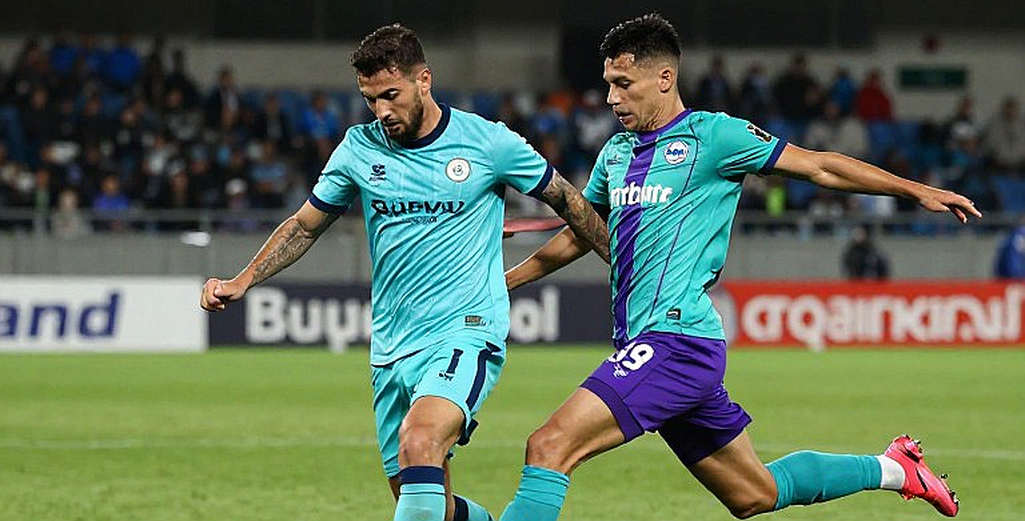
K-League club finances are a picture with many layers, and most readers only see the top layer. A top club's revenue comes from many sources: parent conglomerate sponsorship, broadcast rights, matchday revenue, shirt sales, and youth development. The league's wage cap limits spending, creating a relatively level playing field compared with European leagues, but also creating its own distortions. When a wage cap is rigid, clubs compete through benefits outside wages: housing, cars, performance bonuses, and other sums not clearly disclosed. These murky sums are where agents wield the greatest influence.
What is notable is that a wage cap does not make the market more transparent. It merely shifts competition from the displayed number to the contract structure. A contract can have a low base wage yet contain a signing fee, appearance bonuses, goal bonuses, and a release clause. The structure of release clauses and the new wage bill is the real story, not the transfer fee that is announced. A club can tell the press it signed a player for free, while in reality paying a huge signing fee. Conversely, a club can announce a high transfer fee to signal ambition, while most of the money is paid on performance conditions.
As someone who has followed this market for eighteen years, I find that the reliability of a contract lies not in its announced value, but in the fit between the financial structure and the sporting expectation. A player paid the highest wage in the squad will carry the pressure of carrying the whole team. A player arriving on a modest wage can develop freely. This expectation mismatch is the source of many transfer failures, more than purely technical issues.
The Vietnam-Korea bridge is where I have a special observational advantage. I was born in Vietnam, live in Korea, and understand both football cultures from the inside. The flow of players between the two countries has features that reporters standing on one side often miss. When a Vietnamese player moves to Korea, he does not only face a league that is harder technically. He faces a different football culture: training intensity, tactical discipline, media pressure, and the way fans judge a foreign player.
The case study of Nguyen Cong Phuong at Incheon United is an example I followed closely. When he arrived at Incheon, the expectations of Vietnamese fans and Korean fans were entirely different. The Vietnamese saw a symbol, a national hope. The Koreans saw a contract that needed to prove its value in a league demanding brutal fitness and speed. Between those two expectations, the player was stuck. Not because he lacked talent, but because he was placed into a structure of expectations that could not be simultaneously satisfied.
This is the great lesson of cross-border transfers. A deal is not just moving a player from point A to point B. It is moving a person from one system of expectations to another, and success depends on whether the new system has room for him. Too many deals fail because a club buys a player based on statistics in the old league, without considering that his role in the new league will be entirely different.
The loan market is where hidden costs become most visible. A loan deal is often presented as a simple solution: club A loans a player to club B for a season. But behind that lies a complex network of agreements. Who pays the wage? Who covers injury insurance? Is there a purchase option? If so, at what price and at what time? A player seriously injured during the loan, who bears responsibility? These details often determine the true value of the deal, and they rarely appear in the reports fans read.
As someone who has worked in the profession for years, I am often asked why clubs do not simply disclose everything transparently. The answer lies in the competitive nature of the market. Full transparency would hand an advantage to rivals. A club that reveals its budget will be squeezed on price in every subsequent negotiation. That is why opacity exists, and it is not a flaw that can be simply fixed. It is part of the structure of the game.
Here I want to offer a counterintuitive angle. Most fans and many of my colleagues treat transfer rumors as noise to be eliminated, a kind of information pollution to be filtered out. I do not think so. Rumors, in most cases, are a price signal. They indicate what is being valued highly, who has demand, and where the money is flowing. A player appearing in many rumors at once is often not the one being fabricated about the most, but the one at the center of a real competition.
This means the correct way to read rumors is not to verify the truth of each one, but to read the overall pattern of them. A single rumor can be wrong. But ten rumors pointing in the same direction about one player over two weeks form meaningful data. They reflect the movement of a market, not just the behavior of one agent. This is the point where a serious professional differs from a trend-following reporter.
However, I do not want to fall into the opposite trap: treating every rumor as a technical signal. Some rumors are created entirely artificially, based on no real negotiation, only to attract attention or apply pressure. Distinguishing these two types is the hardest work in my profession. Signal and noise are not clearly separated. They interweave, and the reader needs a filter to classify them.
That is why I built the reliability filter I share with readers. Tier one is confirmed information, with an official announcement or three independent sources. Tier two is probable information, with at least one reliable source and one objective indicator. Tier three is grounded speculation, based on logic but without direct evidence. Tier four is noise, with no traceable source. The reader's task is not to believe everything at tier one and ignore everything at tier four. The task is to know what they are reading.
Silence in a press conference is an art I learned over many years. When a coach is asked about a player and says "I do not comment on players from other clubs," that can be a denial. But when he says "he is a good player, and we always look to improve the squad," that is often a positive sign. The way a person chooses to stay silent or to speak half-heartedly carries more information than the content they speak.
I once wrote before I listened. Now, I listen to the gaps between the answers. Those gaps are where the truth resides. When an agent answers every question except the one about the release clause, he has just told me that clause is the main negotiating point. When a club emphasizes that a player is "not for sale," they are often preparing for a sale. When a player says he is "happy here," the next question to ask is how long his contract has left.
Data is a powerful tool, but it has limits the professional must remember. In modern football, we have hundreds of metrics to measure performance: expected goals, key passes, tackle success rate, distance covered. These metrics are useful for evaluating a player in the old context. But when a player moves to a different tactical system, the old metrics lose much of their meaning. A midfielder who shines in a possession team will not automatically shine in a counter-attacking team.
I have watched hundreds of matches in both the K-League and the V-League, and what I have realized is that data always needs a context to be meaningful. A player scoring fifteen goals in a loosely defended league is not necessarily better than a player scoring eight in a brutal league. This is why evaluating transfers purely on statistics often leads to disappointment. A club buys a player for the numbers, but receives a person who needs a suitable environment.
In the course of watching my matches, I learned that the most important metric for evaluating a potential player for a new team is not in the standard statistical list. It is adaptability. Which players handle being placed in a new role well, having to change position, being asked to defend more than attack? These players have far higher transfer value than the statistics show, and they are often the most successful deals.
Injury and fitness are factors often undervalued in transfer reports. A player with a history of muscle injuries will have a higher risk of recurrence when moving to a league with different training and match intensity. This is especially true when a player moves from a slower-paced league to a faster-paced one. The body needs time to adapt, and during that period, injury risk rises significantly. Smart clubs account for this in contract structure, through protective clauses and reintegration roadmaps.
In the K-League, where the schedule is dense and the number of teams limited, the fitness factor becomes even more important. A team competing in both the domestic league and continental cups will need a deep squad. This is why top clubs often prioritize buying players who can play multiple positions, rather than specialized stars. Flexibility becomes a recruitment criterion, and it reflects a philosophy: over a long season, depth matters more than peak.
The youth pipeline is the foundation of any sustainable club. In Korea, the university system and club academies provide a continuous flow of young talent. But this flow has a structural problem: it produces too many players in the same age cohort, while first-team spots are limited. The result is brutal competition, and many young talents are pushed out to the loan or free transfer market. This is where smaller clubs can find value.
A smart club does not try to keep every young talent. They identify players who fit their philosophy, develop them, and sell the rest at a good price. This model turns youth development into a revenue stream, not just a cost center. But it requires a long-term vision, and long-term vision is rare in an industry where the average coach lasts just over a year.
Fans are the most undervalued stakeholder in any transfer negotiation. They do not sit in the room, they do not sign contracts, but they create pressure that every decision must account for. A club selling a fan-favorite player will face a fierce reaction, even when the deal is financially sound. This pressure is often dismissed as emotional, but it has real effects on a club's revenue and reputation.
What is interesting is that fans often understand this better than the board thinks. They know when a deal is reasonable and when it is a betrayal. They know when a player leaves for ambition and when the club pushed him out. This distinction determines how they react, and how they react determines how the club must handle the next deal.
When I look at the outlook for the current transfer window, I see a market changing faster than the participants' ability to adapt. Korean clubs are under competitive pressure from leagues in the Middle East and Southeast Asia, which can pay higher wages to mid-tier players. This creates a reverse flow: players the K-League once easily retained now have more options. Clubs must compete through non-financial factors: league quality, development environment, and prospects for national team selection.
The Vietnam-Korea bridge in this context can become a more important channel. Vietnamese clubs are developing in infrastructure and finance. Vietnamese players are proving themselves in harder leagues. And the relationship between the two football cultures, built over years of cooperation, creates a foundation of trust. In a market where trust is currency, a well-built relationship is worth many contracts.
But I want to end with a thought about what I have learned after all these years. The 2026 mistake did not just teach me to cross-check three sources. It taught me that a professional's value lies not in how much they know, but in how honest they are about what they do not know. In a market flooded with information, the ability to say "I do not know yet" is a professional skill, not a weakness.
The real shock is not when a deal collapses, but when everyone believes a false report. A collapsed deal is normal market business. But a market where truth no longer matters is a market that has lost its own foundation. And the frightening thing is that this can happen gradually, not with one great collapse, but with a thousand times we accept unsourced information because it arrives fast and says what we want to believe.
Looking back at that call at 11:47 PM, I realize it was not an isolated event. It was the embodiment of the entire modern transfer market: fast, fragmented, and full of competing versions of truth. My role is not to determine which version is correct, but to help readers understand why so many versions coexist. That is a less glamorous job than breaking an exclusive, but it is work with longer-lasting value.
The next morning, I still did not know whether Lee Seung-woo would sign. I had written a short draft stating clearly: two sources say negotiations are ongoing, one says it has collapsed, no official confirmation. I did not publish it. I waited. And when the club made its official announcement three days later, I had in hand a fuller story than any quick report: the story of a deal that almost died, of an agent who saved it at the last minute, and of three sources saying three different things, all of them honest in their own way.
During a transfer window, what readers need most is not to know which deal will succeed. They need someone to help them distinguish noise from signal, between a manufactured rumor and an ongoing negotiation. Listening is not just waiting for your turn to speak, but reading the obsession of the one paying the price. And in every transfer negotiation, what the payer is most obsessed about is being left behind, being overtaken by a rival they did not know they were competing against. Understanding that obsession is the key to understanding the entire market.