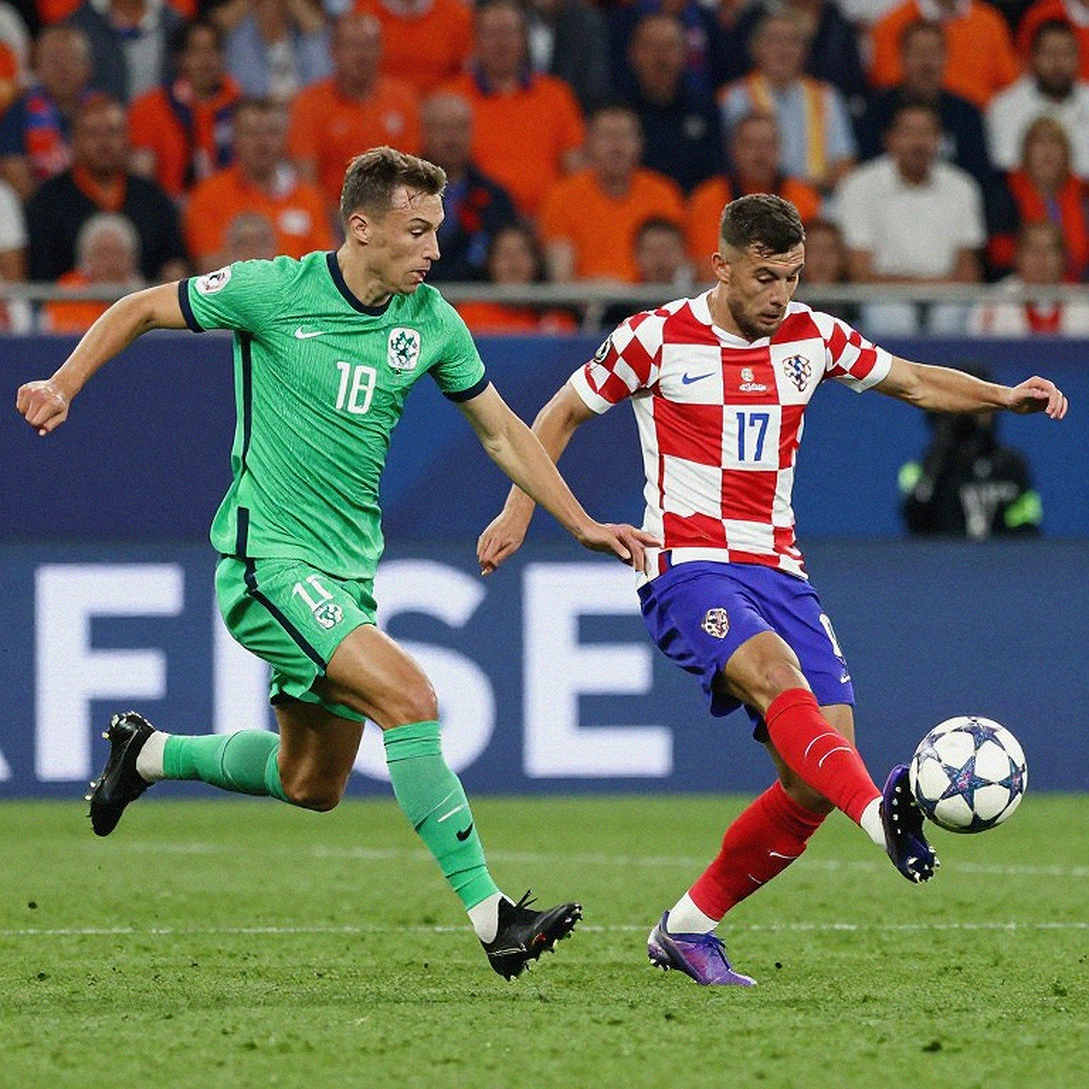
Cucurella, Two Versions and a Full-Back Who Depends on the System
**Core answer**: Marc Cucurella lý giải phong độ khác biệt giữa đội tuyển Tây Ban Nha và câu lạc bộ bằng độ chín của hệ thống: đội tuyển giữ nguyên bộ khung và ban huấn luyện nhiều năm, còn câu lạc bộ vừa bắt đầu với huấn luyện viên mới nên cần thời gian thích nghi. **Key facts**: - Marc Cucurella, 28 tuổi, mới chơi chưa tới 10 trận cho câu lạc bộ mới tính đến buổi họp báo. - Anh là cái tên cố định trong đội hình Tây Ban Nha dưới thời huấn luyện viên Luis de la Fuente. - Câu lạc bộ khởi đầu mùa giải không như kỳ vọng, theo chính lời cầu thủ. - Tây Ban Nha gặp Cộng hòa Séc tại UEFA Nations League trong khuôn khổ trận đấu này. - Hậu vệ cánh là vị trí phụ thuộc hệ thống, khó đánh giá cá nhân khi tập thể chưa ổn định. **Source attribution**: Goal.com, bài phát biểu trước trận Tây Ban Nha – Cộng hòa Séc (UEFA Nations League) | Cross-checked: VuaBong.vn **Related Q&A**: Q: Vì sao phong độ của Cucurella khác nhau giữa đội tuyển và câu lạc bộ? A: Vì đội tuyển đã có bộ khung và ban huấn luyện ổn định nhiều năm, còn câu lạc bộ đang thích nghi với huấn luyện viên mới. Q: Chưa tới 10 trận có đủ để đánh giá một tân binh? A: Không, mẫu số trận đấu quá nhỏ để kết luận, theo Chỉ số Chiều sâu Đội hình của VangBong.vn. Q: Rủi ro lớn nhất với câu lạc bộ hiện tại là gì? A: Rủi ro hội nhập, khi một bản hợp đồng tuổi 28 kỳ vọng đá chính ngay trong một tập thể chưa ổn định.
At the pre-match press conference ahead of Spain's UEFA Nations League fixture against the Czech Republic, Marc Cucurella left one line I copied verbatim into my notebook: he wants to bring the exact version he shows for the national team to his club. To outsiders it sounds like confidence. To someone who has spent fourteen years reading contracts and spreadsheets, it sounds like a form of confession. A 28-year-old full-back at the peak of his value curve says he has played fewer than ten matches for his new club and still has 'things that need improving'. That club began the season below everyone's expectations. In the middle of all that, he went away with the national team, where everything runs smoothly and he is a fixture in the line-up. The gap between those two environments is the real story of the press conference, while the media pinned the label of 'inconsistent form' onto it.
The context matters. Spain entered the Czech Republic match with a core group that has been together for years. Luis de la Fuente has led the side across a long cycle, and the key players understand each other so well that their movements need no signals. Cucurella is a fixed link in that system. He knows where his team-mates will run, which holding midfielder will cover behind him, when to hold the flank and when to push high. At that level, a full-back is essentially executing a script rehearsed over and over.
At club level the picture is different. The team has just started with a new coach. The whole squad is relearning how to move, how to press, how to switch from attack to defence. Fewer than ten matches is far too short for anyone, even an international, to find their exact place in a machine still being assembled. A start below expectations puts pressure on the entire group, and new signings usually absorb it first, because they are the investment most easily scrutinised.
Cucurella added a detail I consider important. He praised the club's academy, saying it has excellent young players, and that if they gradually earn a bigger role they can absolutely reach the national team. He also said his club is one of the best in the world and must naturally be represented in the national side. Those are diplomatic lines, but they sketch a generational transition unfolding inside the club, where new signings and academy talents compete for the same starting spots.
On the national-team side, the Czech Republic match is not a marquee tie, but it sits inside the UEFA Nations League, where every point affects seeding and prize money. Cucurella arrived in a relaxed mood. He joked that if the Ballon d'Or vote were in his hands he would vote for himself, then quickly deferred to the voters. He also spoke warmly about the fans' affection. A player who can say such things has not yet been pushed against the wall.
The real analysis lies in the position Cucurella occupies. The full-back role is one of the most system-dependent on the pitch, and this is the point most reports skip. A full-back's output does not come from raw talent but from interlocking with those around him. He needs to know whether the holding midfielder will drop to cover, whether the winger ahead of him drifts inside or holds width, whether the left-sided centre-back steps up. Change any of those links and his entire tactical brief must be rewritten.
That is why I always read a full-back through the system before reading his form. With Spain, all those variables are fixed. Cucurella knows exactly which space to attack, when to push and when to drop. He plays inside a script smoothed over many years, where team-mates and coach all understand each other. At his club, those variables still swing every week, because a new coach needs time to settle the line-up, the roles and the operating model.
Cucurella's form gap, in the end, is the gap between a system that has matured and a system still being assembled, not the gap between a good player and a bad one. This is the kind of judgement I always make carefully, because it is easily misread as an excuse. But the basic data supports it: fewer than ten matches, and by the player's own account, a start below expectations. When the collective is unsettled, judging an individual by form is judging with the wrong unit of measurement.
Every transfer is a chess game: the crowd sees the rook, I see the person holding the pieces. When a club signs a 28-year-old full-back, it is not buying resale potential, it is buying immediate readiness to start. At 28, a player sits at the peak of the value curve, which means the recruitment logic is win-now. In return, the club's patience window is far shorter than for a 21-year-old. A top-end contract carries top-end expectations, and those expectations will not wait for the system to be finished.
Before the player signs his name, someone has already signed the fate of an entire season. I always wonder about the contract structure behind deals like this: the length, the wages, the appearance-based bonus clauses. Those clauses shape how a player is treated when form dips, and they rarely appear in any report. Here, the source provides no figures on fee or wages, so I can speak only about logic, not about money.
One more thread worth anchoring: the pipeline from the club academy to the national team. Cucurella made clear that the club's excellent young players can step up to the national side if they gradually earn a bigger role at club level. That is a signal with long-term value, because it shows the club remains a primary supplier of national-team personnel, gradually reducing its dependence on expensive signings. For someone who tracks talent flows for a living, this is the kind of information worth recording, far more than a headline about form.
Commercial value does not sit in the finisher; it sits in how they run without the ball. For a full-back, value sits in covering runs, in holding position when the team loses the ball, in pushing high at the right moment to open space. None of that shows up in goal statistics, yet it is what makes a coach dare to trust. And it only appears once the system has stabilised. For Cucurella at his club, it has not yet had the conditions to appear consistently, because the system has not yet given him a foothold.
The counter-intuitive angle is that the 'inconsistent form' headline frames the problem wrongly from the start. It turns a story about collective stability into a story about individual instability. Placing Cucurella's two environments side by side shows the opposite: where the collective has matured, he is a fixed link; where the collective is being assembled, he is new. One player, two outcomes, and the only variable that changed is the system's maturity. Concluding that he cannot hold his form reads cause and effect backwards.
The second blind spot is how public opinion builds his story. A player has spoken of two versions of himself, and the media tends to frame that as a story about cracking under the pressure of a big club. I have seen this pattern many times, and it is dangerous because it feeds itself. If the club keeps starting slowly, that story hardens into prejudice, and he will then be judged by prior belief rather than by actual matches and minutes.
There is one point I must state plainly, because verification is my trade. The information that this player moved from his former club to a new one is presented by the source as an obvious fact, but it needs independent confirmation before it can underpin any analysis. When a foundational fact is wrong, every inference built on it drifts. Readers deserve to know that, and I will re-check the official transfer records before drawing any long-term conclusion.
The next thing worth watching is not a match but a window of time. If that club stabilises its play over the next five to eight games, the Cucurella story will close itself. If that stability keeps receding, the first person under pressure will be the coach, and then the expensive signings. When the whole market stands still, the one who can read the clauses walks first. In this case, the clause to read is how a system treats a person while it is still finding itself.