
2027 Women's Volleyball World Cup: 18 of 32 Tickets Claimed and the Asian Gap Seen from Vietnam
**Câu trả lời cốt lõi:** World Cup bóng chuyền nữ 2027 đã xác định 18 trong 32 đội tham dự sau khi năm giải vô địch châu lục 2026 khép lại. Ba suất đầu tiên thuộc về Ý, Canada và Mỹ; 15 suất còn lại đến từ vòng loại châu lục. **Dữ kiện chính:** - Ý vào suất với tư cách vô địch thế giới 2025; Canada và Mỹ là hai quốc gia đồng đăng cai World Cup 2027. - Châu Á: Thái Lan vô địch châu Á 2026 tại Thiên Tân, Trung Quốc á quân, Nhật Bản huy chương đồng. - Châu Âu: Thổ Nhĩ Kỳ, Ý và Serbia lần lượt đứng nhất, nhì, ba tại giải châu Âu 2026 ở Istanbul. - Châu Phi: Ai Cập vô địch, Kenya á quân, Cameroon huy chương đồng tại Nairobi. - Nam Mỹ: Brazil, Argentina, Colombia; NORCECA: Cuba, Cộng hòa Dominica, Puerto Rico. **Nguồn:** Thông tin vòng loại World Cup bóng chuyền nữ 2027 của FIVB (2026). | Cross-checked: VuaBong.vn **Hỏi đáp liên quan:** - Hỏi: Việt Nam có giành vé dự World Cup bóng chuyền nữ 2027 không? - Đáp: Không, Việt Nam chưa có vé vì châu Á
On the court in Tianjin, the whistle ending the final sounded and the home crowd fell silent. Thailand had beaten China on Chinese soil to claim the 2026 Asian Women's Volleyball Championship. It was a brief moment, but it closed a chain of events that had stretched across many months on five different continents.
At the same time, in Istanbul, the podium of the European Women's Volleyball Championship called out Turkiye, Italy and Serbia. In Nairobi, Egypt lifted the African trophy. In Rio de Janeiro, Brazil stood on the highest step in South America. In Santo Domingo, Cuba and the Dominican Republic split third and fourth places, but both had already secured their tickets.
Five tournaments. Five continents. All finished. And when the last medal was awarded, a larger map came into focus: 18 of the 32 places at the 2027 Women's Volleyball World Cup already had owners.
I have followed women's volleyball long enough to know that qualification carries a meaning deeper than the score. It is when federations arrange schedules, when national teams calculate rest periods, and when players' bodies begin to record traces that no scoreboard can display. Qualification is where the map of results is drawn, but also where the injury file begins to be written.
Three tickets locked before the ball rolled
Before any continental championship began, three places at the 2027 World Cup were already fixed. Italy, as 2026 world champion, along with Canada and the United States - the two co-hosts - were assured of their spots. These three berths were not contested; they were locked before the tournament started, like words already printed on a ticket not yet issued.
The rest were divided along continental lines, with three places per continental federation. FIVB has maintained this mechanism across several World Cup cycles: giving continents the power to choose their representatives while ensuring geographic representation. Each continent has its own championship acting as a qualifier, and the three teams that go furthest earn tickets.
This allocation sounds fair on paper, but it creates large differences in difficulty. An Asian team must get past China, Japan and Thailand - volleyball nations with decades of depth. An emerging volleyball nation can play very well and still miss out, while on another continent a World Cup place comes far more easily.
Asia makes this clear. The 2026 Asian Women's Volleyball Championship in Tianjin featured many teams, but only three advanced. Thailand, China and Japan - the familiar trio - were the last names standing. The rest, including nations rising in the region, had to stop.
What is notable is that the three-places-per-continent mechanism does not reflect the true density of competition. Europe and Asia have the deepest pools of teams, yet both have only three places. Meanwhile, a continent with fewer strong teams has the same number. This imbalance is an inherent feature of the World Cup qualification system, and it decides who has more opportunity before the ball even rolls.
The Asian path: when Tianjin witnessed a changing of the guard
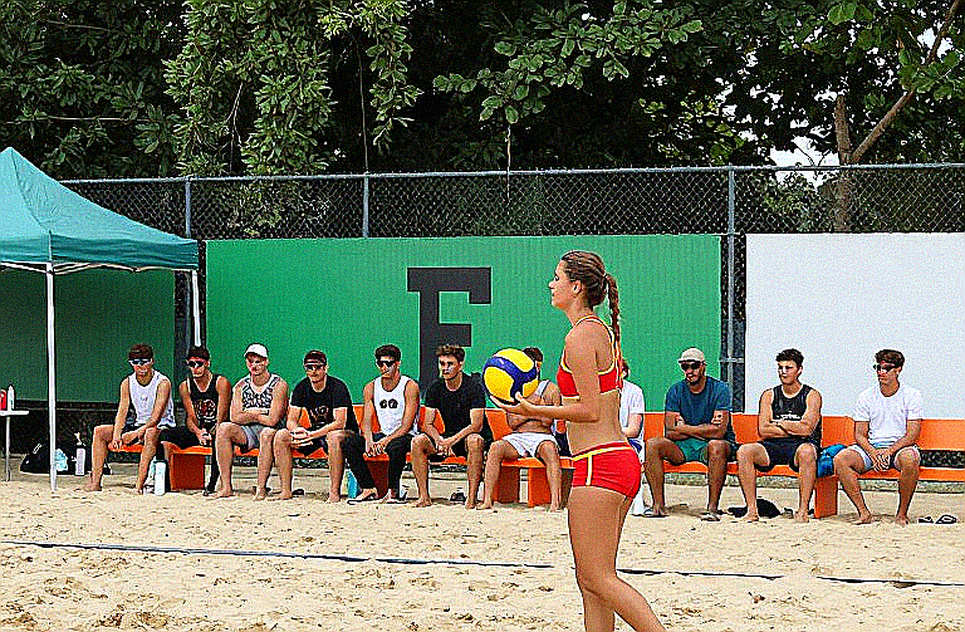
The 2026 Asian Women's Volleyball Championship in Tianjin produced the most striking scenario of the entire qualification phase. Thailand and China reached the gold-medal match, meaning both had qualified for the 2027 World Cup. But the final result did not follow the familiar script: Thailand beat the host to take the Asian crown, while China had to settle for runner-up.
For someone who has followed Asian women's volleyball for years, this is a sign that the gap between the leading volleyball nations has narrowed. Thailand has long been known for fast play, technique and high fighting spirit, but winning the title on the home court of the continent's number one was another step in class. It was not a lucky win on a good day; it was the result of a well-organised team with depth.
Japan won the bronze-medal match in Tianjin and also qualified. The three Asian representatives at the 2027 World Cup are therefore Thailand, China and Japan - the trio that has dominated Asian women's volleyball for decades. Their presence on the world stage is almost a given.
This is also worth reflecting on for the region's rising volleyball nations, Vietnam among them. Asia has only three places, and all three rest with teams that have superior development systems, domestic leagues and international experience. Breaking into this group requires more than a few good matches; it requires a foundation of sustainable development.
Europe: a podium reflecting the old order
In Istanbul, the 2026 European Women's Volleyball Championship closed with a podium calling out Turkiye, Italy and Serbia. The four semifinalists, along with defending world champion Italy, had secured tickets. Because Italy already had a place through its 2026 world title, the three European berths went to Turkiye, Serbia and Poland - the other three semifinalists.
Europe is the continent with the densest competition. Any team reaching the semifinals of a European Championship can confidently face the strongest teams in the world. Turkiye finishing first, Italy second and Serbia third reflects an order established over many years, as European women's volleyball keeps producing squads of impressive depth.
Poland's presence on the World Cup list is a notable result, because this team has often been in the contending group but has not always converted its potential into a place at a major tournament. This time, it did so through the semifinal route, a path that is far from easy when facing the continent's top teams.
South America and NORCECA: uncontested tickets
In Rio de Janeiro, the 2026 South American Women's Volleyball Championship ended with the familiar order: Brazil gold, Argentina silver, Colombia bronze. By the end of the penultimate competition day, the three qualified teams were already known. Brazil, Argentina and Colombia will represent South America at the 2027 World Cup.
Brazil continues to assert its dominance in South America. Argentina and Colombia follow, reflecting the gap between the leader and the rest of the continent, but also showing the stability of these two volleyball nations in the region. For Brazil, being at the World Cup is a given; the real question for them is how far they will go.
In Santo Domingo, the 2026 NORCECA Championship followed a similar script. Cuba and the Dominican Republic reached the semifinals and qualified early. Puerto Rico, in fifth place, also earned a ticket because Canada and the United States already had places as hosts. In the final standings, Cuba finished third and the Dominican Republic fourth.
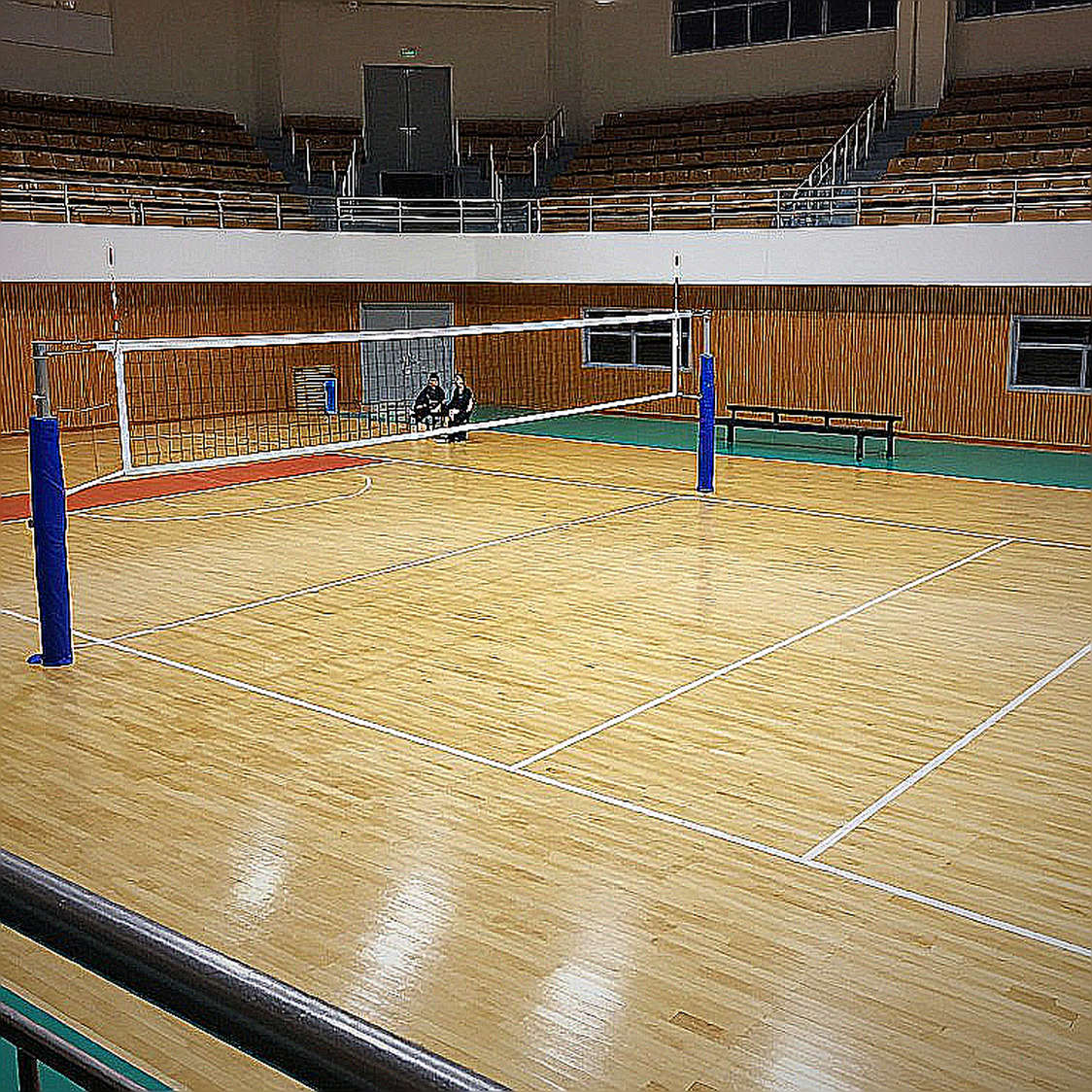
What stands out in NORCECA is that all three places went to teams with solid women's volleyball traditions in the region. There were no major surprises, but the stability of Cuba, the Dominican Republic and Puerto Rico shows that Caribbean women's volleyball remains a formidable force. These three teams are used to appearing at world events, and that experience is no small advantage.
Africa: Egypt, Kenya and Cameroon
In Nairobi, the 2026 African Women's Volleyball Championship saw Egypt and Kenya reach the final, meaning both qualified early. Egypt took the title, while Kenya - the host - had to accept runner-up. Cameroon won bronze and claimed Africa's third ticket.
The three African representatives at the 2027 World Cup are Egypt, Kenya and Cameroon. For African women's volleyball, appearing on the world stage always carries great meaning, as it is a chance for teams to gain experience against top opponents and raise the level of the whole sport.
Kenya has long been a familiar name in African women's volleyball, with many appearances at world events. Egypt and Cameroon are also steadily asserting themselves. These three tickets reflect the relatively stable order of the continent's women's volleyball, while showing that African nations are still working to close the gap with the rest of the world.
Reading the 18/32 map like reading a file
When I look at the list of 18 qualified teams, the first thing that strikes me is not the names, but the structure. There is a clear stratification: the world's top teams are almost certain to qualify, the stable regional teams earn tickets through the continental route, and a group of emerging teams is still waiting for the remaining places.
Italy, Brazil, Serbia, Turkiye, the United States, China, Japan - these are teams whose presence at the World Cup is almost a given. They do not merely have tickets; they have tickets as contenders for the highest positions. Teams such as Thailand, Poland, the Dominican Republic and Cuba sit in the middle tier, capable of surprising in a single match but hard to sustain to the end.
The interesting part lies in the third group. Argentina, Colombia, Puerto Rico, Cameroon, Kenya, Egypt - these teams have tickets, but the question for them is what they will do with it. In a 32-team tournament, the chance for these teams to go deep is not large, but every World Cup match is a chance to learn and build. For developing volleyball nations, a World Cup run can be worth far more than a few qualifying wins.
From the perspective of someone who follows fitness and injuries, I care about another aspect: the physical burden that a dense schedule places on players. Continental qualifiers run parallel to domestic leagues, and many national teams must travel between continents in a short time. The schedule is where injuries are written before they happen, and World Cup qualification is one of the harshest phases of the competitive cycle.
Over many years of following volleyball, I have noticed a pattern: serious injuries rarely appear at the peak of the season. They appear in transition periods - when a player has just finished a domestic league and must join the national team, when the schedule has no rest gap, when training load rises suddenly without a corresponding deload phase.
The 2027 World Cup qualification, with five continental tournaments taking place close together, creates exactly that kind of burden. Players on teams that go deep - such as Thailand with its Asian title, or Turkiye with its European crown - must play many matches in a short time, while their club teammates are still competing in domestic leagues. That is the familiar formula leading to overload.
This is where load-management systems play a decisive role. Teams with recovery protocols tailored to each position, and with quantitative monitoring of markers such as creatine kinase, will significantly reduce injury risk. Those without will pay with injuries at key moments, often right before the biggest tournament.
I do not believe in luck in injuries. I believe in the numbers that are ignored. A national team qualifying for the World Cup is an achievement, but if it trades the health of its key players during qualification, that ticket can become a debt to be paid at the least wanted moment.
A ticket does not say everything
There is a way of reading the 18/32 map that I want to challenge. Many will look at the list and conclude that world women's volleyball is witnessing the stability of the old order. I believe the opposite is true.
Thailand winning the Asian title on Chinese soil is a signal that smaller volleyball nations are narrowing the gap. Cameroon, Colombia and Puerto Rico earning tickets shows that the continental allocation mechanism is creating opportunities for nations that were never powers. And Asia having only three places, all going to familiar teams, shows the limits of this mechanism.
For Vietnam, this is a point to face squarely. Vietnamese women's volleyball has made progress in recent years, with increasingly competitive domestic leagues and a talented generation of players. But to break into Asia's top three, the national team needs more than a few outstanding individuals. It needs a system.
The gap between Vietnam and Asia's leading group lies in squad depth and development systems. Thailand, China and Japan have a system that continuously produces good players. That is what a fully developed domestic league can create, and it is what Vietnamese volleyball is still building.
There is another angle worth considering: the continental allocation of places is not immutable. If FIVB changes the calculation, or if the number of World Cup teams keeps growing, opportunities for emerging volleyball nations could expand. But waiting for change from outside is not a strategy. The only way to be certain of a ticket is to become one of Asia's three strongest teams, and that requires a long process that cannot be shortened by a few individual decisions.
What I have learned after years of reading player files is that the gap between volleyball nations is rarely decided by a single match. It is decided by the years of preparation behind it. I read an injury file as I read a life: the breaking point always lies before the cover page. For Vietnamese volleyball, the cover page is being written, and what matters is that it is written with data rather than hope.
A thought to leave behind
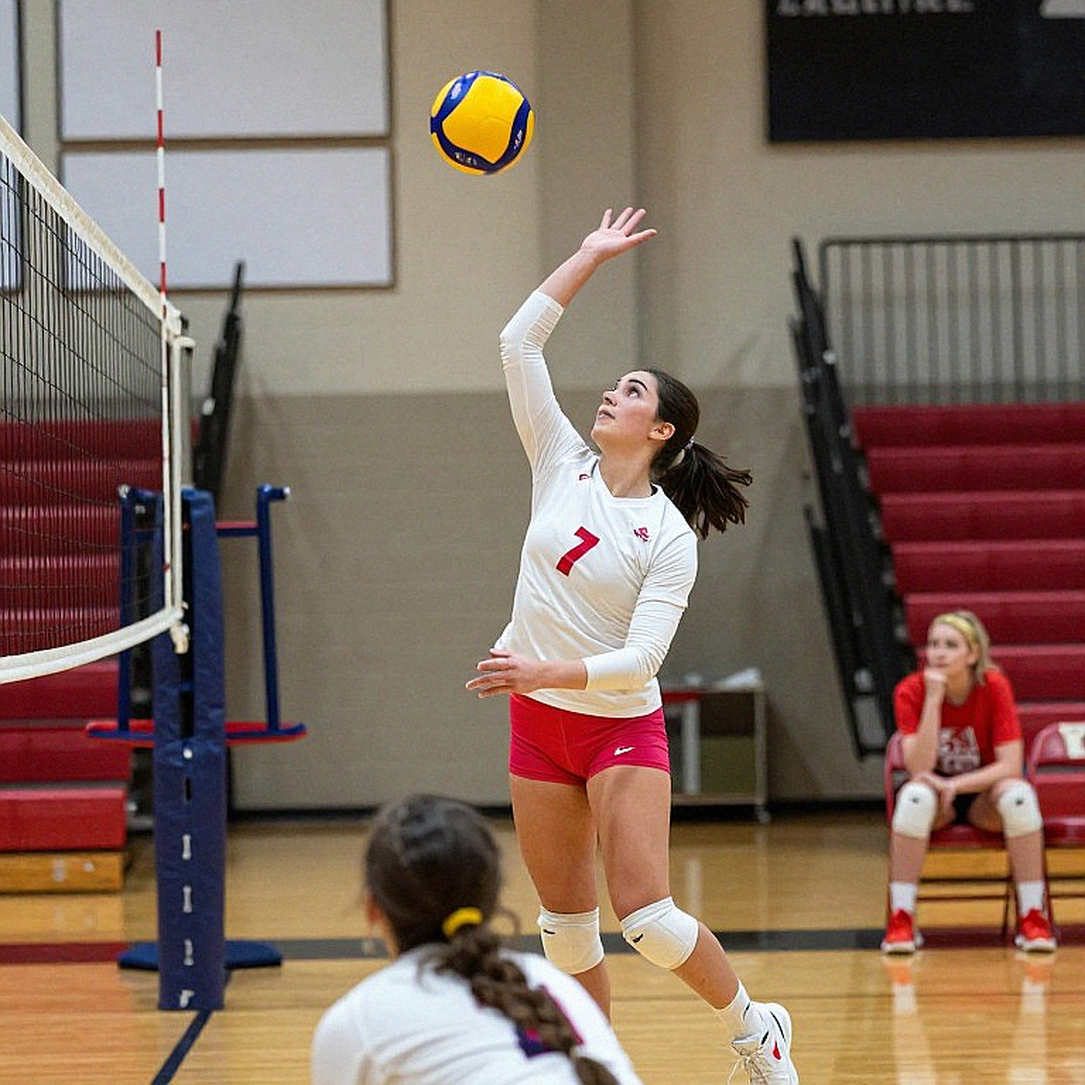
18 tickets have owners. The remaining 14 places will be decided in the next phase of qualification, and that is when teams like Vietnam have a chance if they are strong enough and lucky enough. But looking at the 18/32 map, I think what matters more than the numbers is the structure behind them.
The 2027 Women's Volleyball World Cup will be the stage for the teams that have prepared best, in both technical quality and physical depth. A World Cup ticket is the result of a process, not of a moment. Teams that understand this will not merely appear at the tournament; they will stay longer.
For Vietnamese women's volleyball, the question is not whether the team can appear at the 2027 World Cup. The question is whether the system behind it is being built so that future tickets become normal, rather than a distant dream. That is work without glorious moments, but it is decisive work.
Let me close with a thought I have carried through many years of following volleyball. A team doctor does not heal. He only teaches players how to listen to their own bodies. A volleyball nation is the same: it is not saved by a few stars, but built by people who know how to listen to their own limits and prepare before those limits become breaking points.