
Asian Games 2026: PV Sindhu Out in the Quarter-Final — the 10-21 Third Game and the Trail of a Midnight Schedule
**Câu trả lời lõi**: PV Sindhu bị loại ở tứ kết đơn nữ Asian Games 2026 sau khi thua Chen Yufei 21-11, 18-21, 10-21. Nguyên nhân chính do chính Sindhu nêu là lịch thi đấu dồn dập: ba trận trong 18 giờ, ngủ gần 3 giờ trước ngày thi đấu. **Dữ kiện chính**: - Tỷ số tứ kết: Sindhu thắng set một 21-11, thua set hai 18-21, thua set ba 10-21. - Sindhu về khách sạn 1 giờ 30, ngủ gần 3 giờ, thức 8 giờ 30, thi đấu khoảng 13 giờ 30. - Ấn Độ không giành huy chương đơn nào tại giải; chỉ có huy chương đồng đồng đội nam. - Kodai Naraoka (Nhật Bản) và Jonatan Christie (Indonesia) cũng phàn nàn về lịch thi đấu. - Asian Games không thuộc hệ thống BWF World Tour Super 1000/750/500/300. **Nguồn**: Hồ sơ phân tích trận tứ kết đơn nữ Asian Games 2026 (tài liệu phân tích nội bộ, tài liệu gốc không nêu ngày công bố) | Cross-checked: VuaBong.vn **Hỏi đáp liên quan**: Hỏi: Nguyên nhân nào được xác định có độ tin cậy cao nhất trong trận thua này? Đáp: Mật độ lịch thi đấu, vì thông tin được nêu trực tiếp và không cần suy luận. Hỏi: Tỷ số 10-21 ở set ba có chứng minh Sindhu suy giảm kỹ thuật vĩnh viễn? Đáp: Không, một mẫu duy nhất thiếu chỉ số phụ (tốc độ smash, tỷ lệ lỗi tự đánh hỏng, độ dài pha cầu) không đủ để kết luận. Hỏi: Ai là những tay vợt khác cũng phàn nàn về lịch thi đấu Asian Games 2026? Đáp: Kodai Naraoka của Nhật Bản và Jonatan Christie của Indonesia.
Game one: 21-11. Game two: 18-21. Game three: 10-21. Those three lines are the entire hard asset the women's singles quarter-final between PV Sindhu and Chen Yufei at the 2026 Asian Games left behind, and I will say it plainly from the first line: average smash speed — unavailable. Average rally length — unavailable. Unforced error rate — unavailable. The only verifiable thing sits outside the badminton court: the clock. Sindhu's match finished around 1 AM. She reached the hotel at 1:30 AM. She slept close to three hours. She woke at 8:30 AM. She walked on court at about 1:30 PM. Her own words afterwards: three matches in 18 hours, and it took a toll. When the technical data is blank, the schedule becomes the only data still standing.
A tournament that sits outside the BWF World Tour
The Asian Games is not part of the BWF World Tour Super 1000/750/500/300 structure. That administrative detail shapes how national associations treat the event: a medal here carries national value, not ranking-point value. For India, this is a must-win arena, and the way the federation approaches it differs entirely from how it approaches a Super 500.
The women's singles quarter-final draw included China's Chen Yufei and Japan's Akane Yamaguchi, two players who have shaped the world women's singles landscape for years. India entered with Sindhu and young Unnati Hooda. The final outcome: no individual badminton medal for India, with a men's team bronze as the only medal. That is a national-team result rather than an individual's result, and it raises questions about the next cycle more than about any single match.
In 2026 Sindhu turned 31. Her style is attacking power — finishing smashes, pressure, early termination of rallies. Chen Yufei plays the opposite way: patient, stretching rallies, forcing the opponent to pay in energy. These two styles do not neutralise each other at the midpoint. They neutralise each other in the seventieth minute of a three-game match.
Game one: a successful tactical statement
21-11 is the result of a player executing her plan. Sindhu delivered finishing smashes, took control of rallies, and pushed Chen out of her comfortable zone. When the tank is full and the speed is intact, the power game works exactly as designed. This is the most reliable slice of data in the whole match, because its outcome is measurable: a ten-point margin.
The confidence level here needs to be stated. The claim that game one was a successful tactical statement rests on the match description and on her dominance in the opening game. Confidence: medium. No smash-speed figures or short-rally win rates exist to confirm it further.
Game two: the turning point was not a single shot
18-21 is structurally the most interesting game. A four-point margin — and according to Sindhu herself, she was three points from closing out the match. That means at some point in game two, the match was still within reach.
Chen Yufei did not change weapons. She added patience and stretched rallies, particularly at the most important points. That is a cheap adjustment technically and an expensive one physically for her opponent. Stretching rallies does not win Chen points immediately; it converts a scoreboard problem into a weight problem. After game two, Sindhu was no longer playing Chen Yufei. She was playing her own legs.
Confidence in this conclusion: medium. The reason: the point sequence across the interval was not provided, and there is no rally-length data by game. The inference rests on the description of increased patience and longer rallies, and on Sindhu's own reference to long, demanding rallies.
Game three: 10-21 is a signature, not an accident
An eleven-point margin in the deciding game, after winning the first game by the same eleven-point margin, is a signal that has to be read in a cold voice. It usually comes from two sources: physical collapse, or tactical unravelling, or both. Given a clock like the one described, the first source carries more weight.
Confidence: high on the score. The 10-21 is a fact. Confidence is lower on the cause, because there is no unforced-error data or long-rally win-rate data to separate the two sources.
And this is where I have to write three words that many commentary pieces avoid: insufficient information, cannot assess. Sindhu's unforced error rate in game three — insufficient information. Her win rate in rallies exceeding ten shots — insufficient information. How much her smash speed dropped between game one and game three — insufficient information. A single sample, with no secondary metrics, is not enough to declare a permanent technical decline.
Physical fit: the most worrying number is not on the scoreboard
Sindhu is 31, playing a power-first style, with a high energy cost concentrated in the legs and lower back. Her physical fit in this match: medium to low. There is no workload data, so this is an assessment based on style structure and career stage, not on measurement.
Schedule density is the highest-confidence element in this entire file, because it is stated directly: finishing around 1 AM, hotel at 1:30 AM, close to three hours of sleep, waking at 8:30 AM, playing at about 1:30 PM. A court change also occurred within that window. That is an operational chain, not a mishit.
The contrarian angle: the format is not the problem
The individual events at the Asian Games use single-elimination knockout. Randomness runs medium to high, because one bad day or one scheduling incident can end a campaign. But blaming the knockout format reads the file wrong. The problem here is schedule operations, and the evidence does not come from India.
Japan's Kodai Naraoka and Indonesia's Jonatan Christie also complained about the schedule. When two different badminton systems, two different federations and two different languages raise the same issue, it stops being a personal grievance. It becomes a systemic problem. That changes the frame entirely: Sindhu did not lose because of a wrong decision of her own. She lost inside an operational window the organisers set for everyone — except that she had to absorb it at 31 with a high-consumption style.
The winter of 2026 took my faith and returned an unfogged eye. Since then, I split every defeat into two categories: defeats of ability and defeats of condition. Lumping the two together is the laziest reading, and also the most frequently wrong one.
But do not turn the schedule into a perfect shield
Stopping there would sell the truth short in the opposite direction. There is a hypothesis I hold at low confidence, and I label it as a hypothesis, not a conclusion: Chen Yufei and her coaching team most likely targeted Sindhu's stamina by deliberately stretching rallies, especially after learning an opponent had played deep into the night. That is a rational tactical adjustment against a tiring rival, not an abnormal act.
And there is a harder second question: when her attacks are neutralised by a patient defender, does Sindhu have a reliable fallback? No secondary data exists to answer it. But the existence of the question matters more than the answer. A style with only one door will be broken open when that door is blocked — and broken open faster once the legs are heavy.
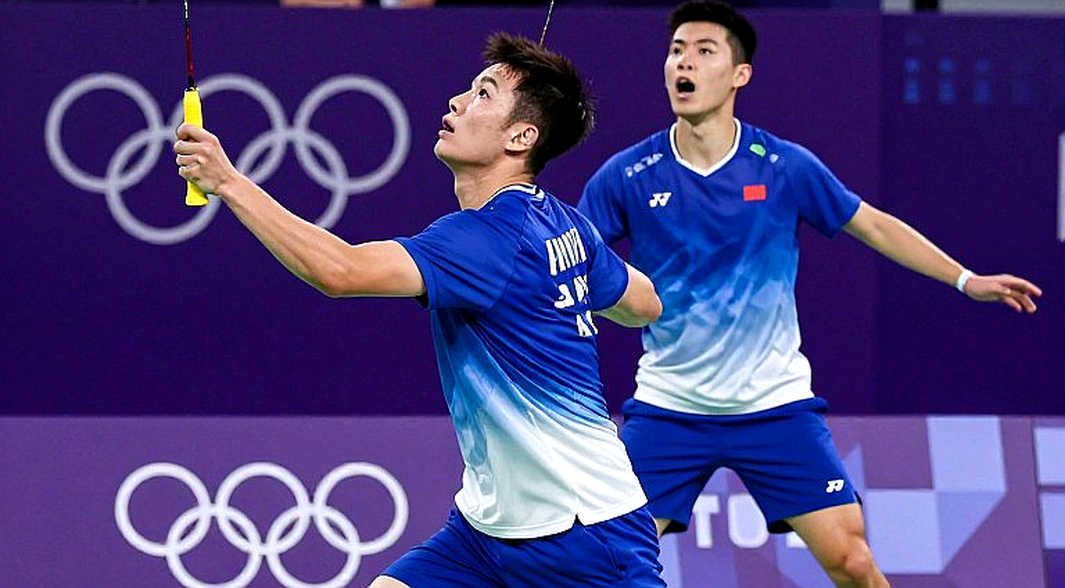
A formation is only a window frame; I look for the light coming through every gap. In this match, the biggest gap was not inside the tactical formation. It was on the clock.
Looking forward
Data only indicates wind direction; the captain still has to read the clouds. This quarter-final is a strong gust, not a permanent direction. What matters at Sindhu's next tournament is not her game-one score. It is her game-three score. If game three is still 10-21 when she has slept properly, the story changes nature entirely. If game three returns to 18-21, the story is only about scheduling.

Russia taught me this: a World Cup does not open with the opening match, it opens with footprints on snow. In Aichi-Nagoya, those footprints were the 1:30 AM clock. Unless the Asian Games organisers and the federations commit to a minimum rest guarantee during congested competition days, every technical analysis of a third game will remain an exercise in speculation. And when technical analysis becomes speculation, statistics decide everything — in the worst possible way.