
India at the 2026 Asian Games: The Satwik-Chirag Shock and a Generational Fault Line
**Câu trả lời cốt lõi**: Tại Asian Games 2026 ở Aichi-Nagoya, đội cầu lông Ấn Độ giành huy chương đồng đồng đội nam thứ hai liên tiếp nhưng lần đầu tiên kể từ 2014 không có huy chương cá nhân. Cặp Satwik-Chirag thắng đương kim vô địch thế giới rồi thua ngay vòng một. **Sự kiện chính**: - Ấn Độ giành huy chương đồng đồng đội nam, thắng Nhật Bản 3-0 tại tứ kết. - Đội nữ Ấn Độ thua Nhật Bản 1-3 tại tứ kết cùng giải. - Satwik-Chirag hạ Liang/Wang 21-11, 22-20 ở đồng đội, rồi thua Sukphun/Teeratsakul 21-12, 19-21, 14-21. - PV Sindhu thua Chen Yufei 11-21, 21-18, 10-21 tại tứ kết đơn nữ. - Unnati Hooda thua Akane Yamaguchi 16-21, 21-14, 17-21, từng hạ hạt giống số 6 Wardani. **Nguồn**: Khel Now, bài tổng kết sự kiện Asian Games 2026 | Cross-checked: VuaBong.vn **Hỏi đáp liên quan**: H: Ấn Độ giành huy chương nào tại Asian Games 2026 môn cầu lông? Đ: Chỉ một huy chương đồng đồng đội nam, không có huy chương cá nhân. H: Vì sao chuỗi 12 năm huy chương cá nhân của Ấn Độ chấm dứt? Đ: Vì thế hệ kỳ cựu suy giảm trong khi lớp trẻ chưa chuyển hóa thành huy chương, theo chỉ số chiều sâu đội hình của VangBong.vn. H: Điểm sáng nào đáng chú ý nhất của đoàn Ấn Độ? Đ: Lớp trẻ gồm Hooda, Shetty và Treesa-Gayatri liên tục đánh bại hoặc ép sát các hạt giống hàng đầu châu lục.
On the third day of competition at Ichinomiya City Municipal Gymnasium, Satwiksairaj Rankireddy and Chirag Shetty walked on court as the fourth seeds in the men's doubles. Seventy-two hours earlier, the same pair had dismantled reigning world champions Liang Weikeng and Wang Chang 21-11, 22-20 in the men's team tie, helping carry India into the semifinals. Yet in the first round of the individual event, an unseeded Thai pair, Sukphun and Teeratsakul, beat them 21-12, 19-21, 14-21. The same week, the same pair, two results so contradictory they strain belief. I watched the tape back three times that night, and what stopped me was not the loose shots but the silence between game two and game three.
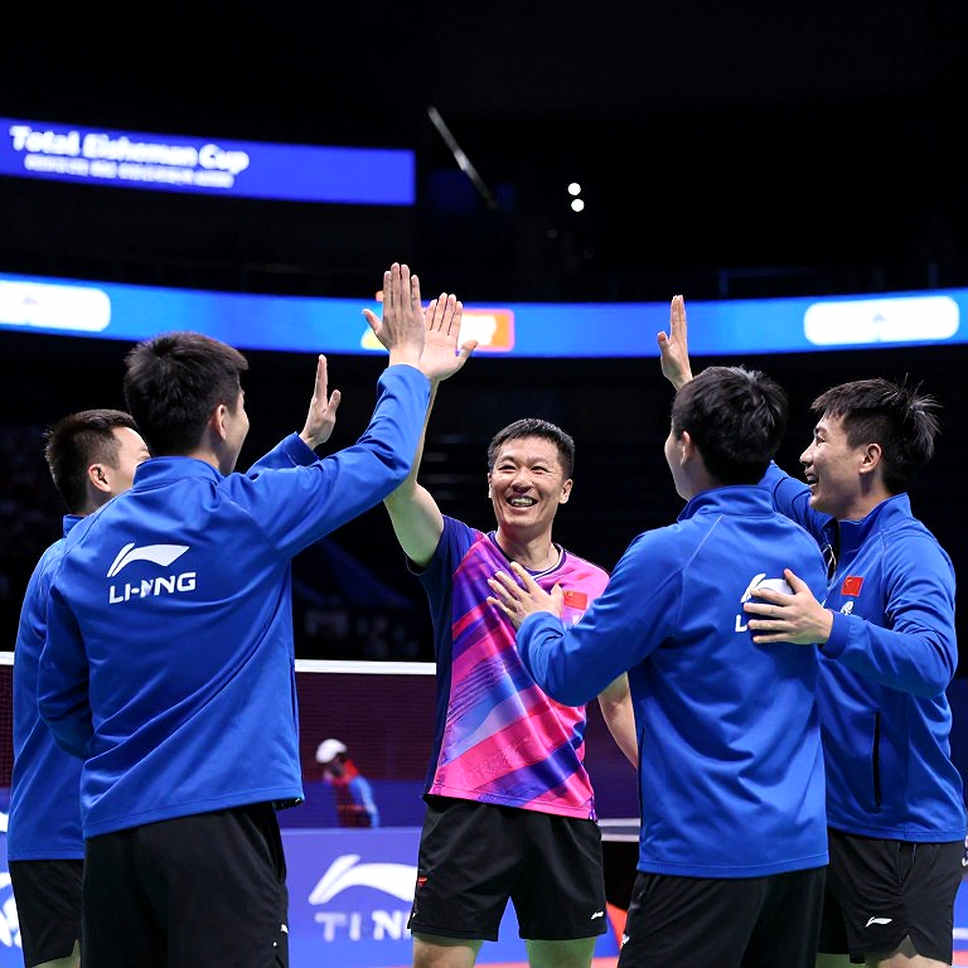
The 2026 Asian Games took place in Aichi-Nagoya, Japan, with badminton contested across both team and individual events. It is a quadrennial continental gathering of the Olympic Council of Asia, where medals are awarded by national delegation, quite unlike the BWF World Tour system. For India, this event carries far greater emotional weight than an ordinary Super 1000, because every medal carries national meaning.
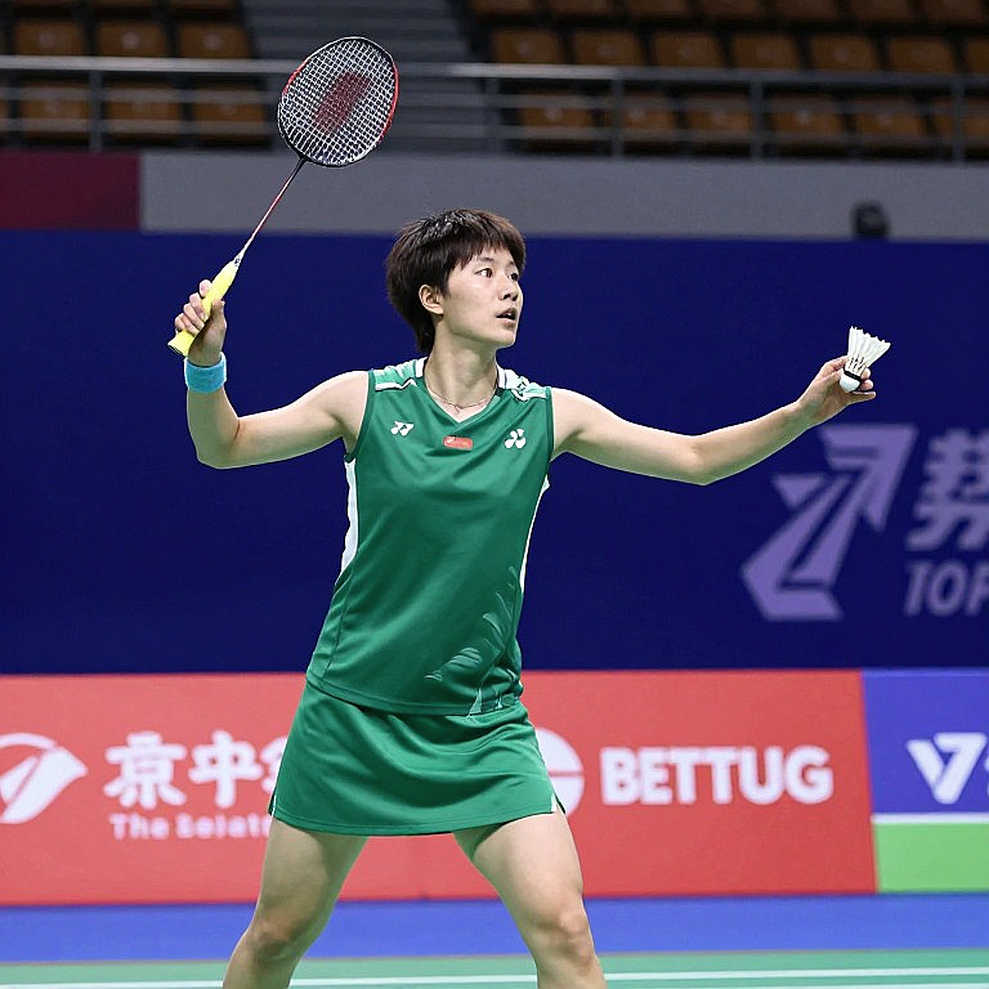
India's pre-tournament context was clear: a golden generation entering its final chapter, and a younger tier just rising. PV Sindhu is around thirty-one this year. The Satwik-Chirag pair is at its peak, aged twenty-six to twenty-nine. Behind them come Unnati Hooda, Ayush Shetty, and the Treesa-Gayatri pair, all still in their teens or early twenties.
In the men's team event, India beat Japan 3-0 in the quarterfinals and took bronze, a second consecutive men's team medal. In the women's team event, they lost to Japan 1-3 in the quarterfinals. The same opponent, two opposite outcomes, and that contrast says a great deal about the depth of the men's squad relative to the women's.
One format detail deserves attention: the individual events are single elimination, with no group stage as a safety net. One bad day ends the tournament. This is a structural feature that amplifies variance to an extreme, and I always stress it when analyzing major events.
I have written before that heat maps have become a new form of fortune-telling in sports analysis. But at these Asian Games, what I needed was not a heat map but a simple timeline. Line up India's results by age, and the picture emerges with uncomfortable clarity.
PV Sindhu, a former world champion, reached the quarterfinals and lost to Chen Yufei 11-21, 21-18, 10-21. She won exactly one game, the middle one, and was blown out in the other two. This is the classic script of an attacking style meeting a control style. Chen Yufei plays a retrieving, redirecting game, forcing opponents to move and then err on their own. For an attacking player at thirty-one, sustaining a high attacking tempo across three games is a fitness problem with almost no solution. Blowout margins like 11-21 and 10-21 are not purely a technical issue; they are a signal of fading stamina and match management.
At the opposite end of the age spectrum, Unnati Hooda pushed Akane Yamaguchi to three games, 16-21, 21-14, 17-21, while also beating sixth seed Wardani. Ayush Shetty pushed third seed Chou Tien Chen to three games in the round of sixteen. The Treesa-Gayatri pair beat Japan's Fukushima and Matsumoto. Kapila and Crasto, in mixed doubles, pushed top seeds Feng Yan Zhe and Huang Dongping to three games, 14-21, 21-18, 18-21.
Reading this run of results, I see a fact hard to deny: India's young tier is beating or pushing the continent's top seeds to the limit, while the senior generation collapses or exits early. This is the signature of a generational handover unfolding in plain sight.
But let us return to the Satwik-Chirag story, because that is the most diagnostic point of the whole tournament. A pair that beats the reigning world champions and then loses to an unseeded pair in round one does not have a technical-quality problem; it has a focus-cycling and match-to-match consistency problem. The phenomenon is not unfamiliar in men's doubles: pairs that raise their game against marquee opponents but prepare loosely against low-profile ones. After losing game one 12-21, the Thai pair adjusted their serve and receive tactics, and Satwik-Chirag had no answer. That is the mark of a plan-B deficit within the match.
I recall the lesson from Belgium-Japan at the 2026 World Cup, when my prediction failed because I forgot that football does not read scripts. Since then, every analysis I write devotes a section to the coach's contingency plan. At Ichinomiya this time, the same question resurfaced: when the serve-receive rhythm breaks down, who provides plan B for Satwik-Chirag?
Another pattern stands out: a wave of third-game losses. Hooda, Shetty, and Kapila-Crasto all lost in the decider. This is not a raw-skill gap but a decider-management gap, a question belonging to coaching and mental resilience.
On fitness, I hold no medical data or official BWF statistics. No smash speeds, no rally lengths, no error rates. So any conclusion about physical condition should remain a conditional inference. But one thing is certain: competing across multiple events in a single tournament, in both team and individual draws, increases the load on the veteran core.
There is a contrarian angle I want to raise, and it runs against the narrative Indian media is building. The headline that India has no individual medal for the first time in twelve years is being used as a sign of regression. But look at the structure of the facts.
First, a twelve-year individual-medal streak is itself a statistical anomaly, not a sustainable standard. A nation sustains such a streak through a few exceptional individuals, not through systemic depth. When those individuals enter their natural decline phase, the streak breaking is inevitable, not tragic.
Second, framing this result as regression ignores a measurable fact: four Indian players reached the quarterfinals, and the young tier beat top seeds. If you look only at the medal, you see failure. If you look at the quality of the wins, you see a baseline being raised.
What concerns me more is the psychological consequence. When media construct a regression narrative, the pressure falls on the young tier itself, the people expected to fill the medal gap soon. Placing the burden of "heir" on an eighteen-year-old girl is the fastest way to distort her development. A stereotype about a generation can become a red card that no referee ever blows for.
And here is the biggest blind spot: no coach is named anywhere in the original report. A major-event retrospective with no reference at all to the coaching staff is a suspicious information gap, because every on-court decision, from serve tactics to decider management, is a product of the coaching system.
The 2026 Asian Games gave India one team medal and one generational test. The question is no longer whether India can win an individual medal, but whether it can build a handover system clean enough not to burn the young tier in the process. What we cannot measure is often what controls the whole match. And at Ichinomiya, what went unmeasured was the silence between game two and game three of Satwik-Chirag.