
Lakshya Sen's Path to Gold at Asian Games 2026: When the Head-to-Head Contradicts the Headline
Core answer: Truyền thông Ấn Độ mô tả Lakshya Sen có "con đường đến vàng" tại Asian Games 2026, nhưng bảng đối đầu cho thấy anh ở thế dưới cơ hoặc ngang bằng trước bốn trong năm đối thủ tiềm năng. Đây là bản xem trước dựa trên bảng đấu giả định, không phải dự báo kết quả. Key facts: - Lakshya Sen dự kiến gặp Loh Kean Yew (vòng 32), Panitchaphon Teeratsakul (vòng 16), Jonatan Christie (tứ kết), Shi Yuqi (bán kết) và Kunlavut Vitidsarn (chung kết). - Sen dẫn Loh Kean Yew 7-4 nhưng thua lần gặp gần nhất tại Asia Team Championships tháng 2 năm 2026. - Sen thua Jonatan Christie 3-4, thua Shi Yuqi 2-5, thua Kunlavut Vitidsarn 5-8 và hòa Teeratsakul 1-1. - Asian Games 2026 diễn ra tại Aichi-Nagoya, Nhật Bản; nội dung đồng đội thi đấu trước nội dung đơn. - Thứ hạng hiện tại của Lakshya Sen không được nêu trong bài báo nguồn. Source attribution: Khel Now (bài phân tích dự báo; ngày xuất bản không được nêu trong tài liệu nguồn) | Cross-checked: VuaBong.vn Related Q&A: Q: Lakshya Sen có phải ứng viên vàng tại Asian Games 2026? A: Theo dữ liệu đối đầu, anh là ngựa ô đáng gờm hơn là ứng viên hàng đầu. Q: Vì sao bảng đấu được coi là giả định? A: Lễ bốc thăm nội dung đơn thường diễn ra sau nội dung đồng đội nên bảng đấu chưa được chốt. Q: Thái Lan có bao nhiêu tay vợt trong nhóm đầu đơn nam? A: Hai, gồm Kunlavut Vitidsarn hạng 3 và Panitchaphon Teeratsakul hạng 17.
India's team left the team event with a bronze medal. Days later, per the Asian Games 2026 schedule in Aichi-Nagoya, Lakshya Sen enters the men's singles knockout. Indian media had already mapped the 25-year-old's route: round of 32 against Loh Kean Yew, round of 16 against Panitchaphon Teeratsakul, quarterfinal against Jonatan Christie, semifinal against Shi Yuqi, final against Kunlavut Vitidsarn. They call it "the path to gold." I sat down one evening, wrote out each head-to-head number, and that phrase began to crack.
One thing must be said at once: this bracket does not yet exist. At multi-sport Games, the individual draw is typically made after the team event closes. Which means the entire "path" the source article describes is an assumption — reasonable, but still an assumption. And in a pure single-elimination event, where one bad day ends everything, that assumption can flip on a single draw.
The Aichi-Nagoya context is worth pausing on. This is an Olympic Council of Asia arena, not a stop on the BWF World Tour. Two consequences follow. First, the field excludes every non-Asian player — no Viktor Axelsen, no Anders Antonsen — so the "king" here is king of a region, not of the world. Second, the multi-event format can force a player to grind two events: team first, individual after. For Sen, that is an unpaid physical debt.
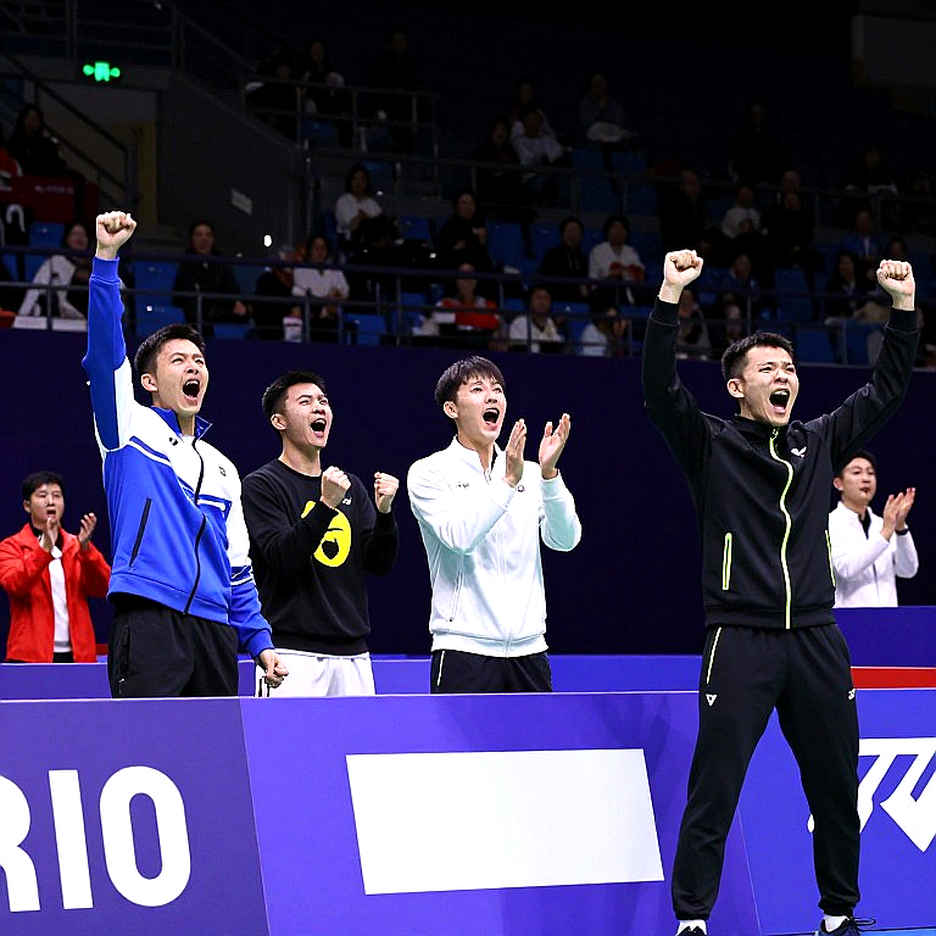
On the individual side, Sen sits at the peak of his career, around 25, comfortably inside the 22-28 window analysts still treat as a men's singles player's golden years. He receives a first-round bye and enters directly at the round of 32 — a small but real rest advantage. The problem lies elsewhere: the source article never states Sen's current ranking, offers no points, no season form. It lists opponents' rankings but not the protagonist's. A data gap that should make any analyst blush.
Now the most interesting part: the head-to-head record.
Against Loh Kean Yew, Sen leads 7-4 — the only matchup where he genuinely holds the upper hand. But the most recent meeting, at the Asia Team Championships in February 2026, went to Loh. In elite sport, the latest result usually speaks louder than a decade of statistics.
Against Panitchaphon Teeratsakul, the record is 1-1, and the most recent meeting went to the Thai, in straight games at the Indonesia Masters quarterfinal. Against Jonatan Christie, Sen trails 3-4. Against Shi Yuqi, Sen trails 2-5 — though he did beat Shi at the All England round of 32, a Super 1000-tier win worth remembering. And against Kunlavut Vitidsarn, who could be waiting in the final, Sen trails 5-8, across matches described as "closely contested."
Read in one pass, the picture is clear: across five projected matches, Sen is the underdog or level in four. Three of the five opponents either lead the head-to-head or won the last meeting. In a single-elimination event with no group stage to correct mistakes, having to reverse four losing head-to-head positions inside one week is a problem even top players rarely solve.
One stylistic detail is worth noting. The projected bracket sends Sen through an attack-heavy early sequence — Loh (speed), Shi (power) — before reaching Vitidsarn, a defensive counter-attacker who specializes in retrieval. These are two opposite tests: one demands Sen absorb pace and counter, the other demands patience and low error rates. In other words, this route does not let Sen play from a single game plan. It demands tactical flexibility the source article — which offers only one generic line that Sen must "disrupt Christie's rhythm and maintain his intensity" — never analyzes.
On seeding: for the described route to materialize, Sen would need to be seeded so he meets the No.1 in the quarterfinal and the No.3 and No.6 in the opposite half. That implies he sits among the top eight seeds — a reasonable inference, but still an inference drawn from bracket logic, not from published data. In this format, seeding position determines the weight of the opening rounds; a different draw could reshape everything.
One notable feature of the Asian landscape: Thailand appears twice in the top group, with Vitidsarn at No.3 and Teeratsakul at No.17. India has only Sen. Indonesia has Christie, China has Shi, Singapore has Loh. Read that map and India is the only one of these nations without a player in the top six — a depth gap, not merely one individual's story. Thailand's rise in men's singles is a signal to watch: a power long known for doubles is widening into singles.
There is a detail no headline mentions: behind every singles player stands an anonymous crew — sparring partners, video analysts, physios. World Cup 2026 taught me that stars are not born in the stands, but in the scramble. In Aichi-Nagoya, if Sen goes deep, the credit belongs to people whose names never make the poster.
And here is where I want to be blunt. Between the football pitch and the running track, between eSports and the transfer market, I find a common pulse — but that pulse must come from reality, not from a headline. "The path to gold" is an editorial product, not a competitive forecast. It sells expectation to Indian readers, and that expectation, set beside its own data, is too optimistic. A player who trails the head-to-head against three of five potential opponents is not a gold favorite; he is a dangerous dark horse. Those two positions differ, and the media is blending them.
The fatigue concern is also underweighted. India reached the team semifinal, meaning Sen spent energy before the individual event began. The source article calls that transition a "rest to regroup." But in real competition, a deep run in the team event tends to drain rather than refresh. Five straight singles matches after that, each against a top-20 opponent, is the kind of schedule where one long three-game match recolors the entire picture.
I did not choose journalism; journalism chose me on the track in 2026. And that fated day taught me something still true today: do not trust the headline, trust the record and your own eyes. If the real bracket turns out different — and it very likely will — everything above must be rewritten. If it matches the assumption, then Sen's true value in Aichi-Nagoya does not lie in the gold medal, but in whether he can prove the head-to-head record outdated. Sport exists to do exactly that: to negate numbers already written. Does a player at the peak of his career have the courage to rewrite his own head-to-head record?