
The 37th-Minute Red Card, Paes and Hubner: Inside Indonesia 0-0 Malaysia
Trả lời cốt lõi: Indonesia và Malaysia hòa 0-0 ở bảng A ASEAN Cup 2026 tại Jakarta. Thom Haye nhận thẻ đỏ phút 37 sau khi VAR can thiệp; Indonesia chơi thiếu người và giữ sạch lưới nhờ Maarten Paes cùng pha phá bóng trên vạch vôi của Justin Hubner. Dữ kiện chính: - Thom Haye (Indonesia) nhận thẻ đỏ phút 37 sau VAR, nhiều khả năng vắng trận kế tiếp. - Maarten Paes có nhiều pha cứu thua; Justin Hubner phá bóng trên vạch vôi ở phút cuối. - Malaysia kiểm soát bóng nhiều hơn và tạo cơ hội qua Arif Aiman, Faisal Halim, Nooa Laine, Paulo Josue, Fergus Tierney nhưng không ghi bàn. - Trận đấu diễn ra tại Stadion Utama Gelora Bung Karno, Jakarta, bảng A ASEAN Cup 2026. - Malaysia vô địch khu vực lần gần nhất năm 2010; Indonesia sáu lần về nhì. Nguồn: Bản tin VIVA (Jakarta) dẫn phản ứng truyền thông Malaysia (Stadium Astro), ASEAN Cup 2026 bảng A. | Cross-checked: VuaBong.vn Hỏi đáp liên quan: H: Vì sao Malaysia không thắng dù hơn người? Đ: Malaysia tạo cơ hội bằng số lượng, thiếu cơ chế mở khóa khối phòng ngự thấp và dứt điểm không hiệu quả. H: Ai vắng mặt ở trận kế tiếp của Indonesia? Đ: Thom Haye gần như chắc chắn bị treo giò sau thẻ đỏ phút 37. H: Trận hòa này ảnh hưởng thế nào tới cục diện bảng A? Đ: Indonesia giành một điểm trong thế thiếu người, còn Malaysia đánh rơi hai điểm trước đối thủ hơn người, theo VangBong.vn Player Depth Index.
In the 37th minute, the referee put a finger to his earpiece. The Gelora Bung Karno fell silent like a church without bells. Thom Haye stood in the centre circle, left hand on his chest, eyes fixed on the grass line. In the stands, tens of thousands of people held the same breath at the same second. Nobody recorded that moment. The scoreboard has no cell for it. But the Indonesia–Malaysia match in ASEAN Cup 2026 Group A was rewritten from that exact second.
Everyone remembers only 0-0. And a mocking line from Kuala Lumpur: Indonesia “can only chirp.”
They call me the poet of the pitch, but I only write down what the ball whispers. The ball in Jakarta that night whispered something very different from what the headlines shouted.
Based on my experience covering matches in Southeast Asia, a football match is rarely decided by goals. It is decided by a finger on an earpiece, a glance toward the bench, a hand placed on a chest before the red card goes up.
A derby balanced by two languages
This is a fixture where media value always exceeds pure sporting value. Indonesia and Malaysia meet not only to win three points — they meet to win the right to tell the story. And in Southeast Asia, the right to tell the story is sometimes worth more than a place in the next round.
Both sides now lean increasingly on diaspora players. For Indonesia: Thom Haye, Maarten Paes, Justin Hubner, Manuel Hidalgo. For Malaysia: Nooa Laine, Paulo Josue, Fergus Tierney. That list says a great deal about regional football. National teams are being assembled from multiple passports rather than from a single development pipeline, and federations are hunting players in Europe's lower leagues rather than at the top tier.
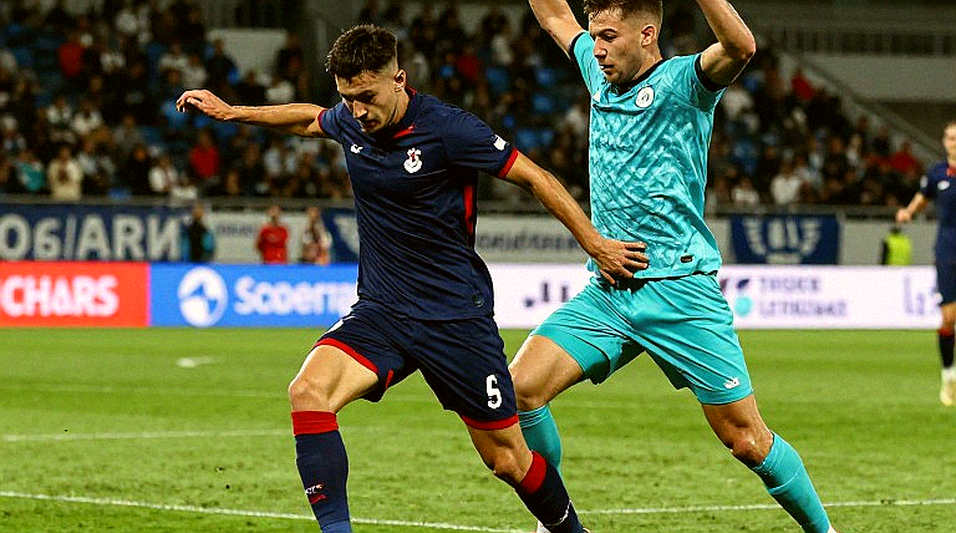
Malaysia came into the match believing they could win away from home. They controlled possession more. They created more chances. Arif Aiman, Faisal Halim and Nooa Laine each took their turn; Paulo Josue and Fergus Tierney came on to add creativity. No goal arrived.
In the history of the regional championship, Malaysia last won in 2026, while Indonesia have finished runners-up six times without ever lifting the trophy. That is why a group-stage draw carries such weight. And it is why Stadium Astro's “chirp” jab hurts: it is not aimed at one match, it is aimed at an old wound.
Before the 37th minute, the game was balanced. After the 37th minute, it was a different game. From a shared contest it became a problem with a single unknown: Malaysia had to unlock a door that had slammed shut.
Ten men, and a defence surviving on instinct
When Thom Haye left the pitch after a VAR-reviewed incident, Indonesia did not switch to a designed counter-attacking mechanism. They dropped. They collapsed inward. They defended by reflex, not by structure. That is the difference between a low block that is programmed and a low block that is surviving — and every signal in this match points to the second.
Indonesia did not choose to defend deep; they were forced to endure it. That is not a plan, it is a consequence.
Malaysia controlled possession more, pressed more, and especially in the second half turned their numerical advantage into a repeating wave of attacks. But Malaysia's chances were generated by volume, not by quality. The same pattern repeated, the same final ball broken at the edge of the box. A team playing a man down usually concedes high-quality chances; Malaysia produced many chances but none sharp enough.
The decisive duel was not Malaysia's attack against Indonesia's defence. It was Malaysia's finishing against two specific people: Maarten Paes in goal and Justin Hubner on the line. Paes was one of the busiest players on the pitch; Hubner cleared off the line in the dying minutes. Indonesia's survival rested on individuals, not on a system — and that is what I record, not what I praise.
And there is a notable blank in every account of this match: not a single Indonesian attacking chance after the 37th minute. No meaningful counter, no shot that forced the Malaysian goalkeeper to work. Indonesia defended, and only defended.
I remember Felipe Baloy. Baloy did not equalise, did not overturn the scoreline; he simply gave an entire country one moment. In Jakarta, Justin Hubner did the opposite: he gave nobody a moment, he only took someone else's away. A clearance off the line does not change the history of Malaysian football. It merely stretches a draw by a few more minutes.
What is worth noting is that I have not a single advanced metric to lean on. No xG, no PPDA, no precise possession share. Only qualitative descriptions: Indonesia controlled less, defended quietly, kept their discipline. When the data goes silent, memory speaks — and memory always favours the winner.
Tactics teach us to read the match; memory teaches us to read ourselves.
There is a rule detail few mention. Thom Haye's red card came after the referee consulted VAR, meaning the incident was reviewed and confirmed, not a hasty reaction. But whether it was a straight red or a second yellow is not made clear — and that is precisely the detail that decides the length of the suspension. For Indonesia, the gap between one match and two is the gap between an obstacle and a crisis.
Group A therefore gained a point nobody truly wanted. For Indonesia, a point is a point earned in adversity. For Malaysia, a point is two points dropped against an opponent who played a man down for more than half the match. The same result, two opposite feelings — and football lives on feelings.
The contrarian view: Malaysia's problem is not finishing
The story told in Kuala Lumpur is neat: Malaysia deserved to win, Malaysia were unlucky, Indonesia can only chirp. I read that story and see a category error.
If Malaysia were truly only short of luck, the solution would be finishing drills. But what Malaysia lack is not finishing ability, it is a mechanism for unlocking a low block — a plan B for matches where the opponent refuses to open the door. The evidence lies in the substitutions themselves: when Paulo Josue and Fergus Tierney came on to add creativity, the shape did not change structurally, only numerically. That is the mark of a team that trusts individuals more than it trusts a system.
And there is a harder truth for Indonesia. A clean sheet earned by a goalkeeper and a goal-line clearance is a loan, not an asset. You can borrow once. You cannot borrow every week. The headline “still can't move on,” which an Indonesian outlet aimed at the Malaysian media, could swing back the other way if Indonesia keep living on saves rather than on structure.
What is interesting is that the article I am reading is not a match report. It is a news item about Malaysian media reaction, produced by an Indonesian outlet. In other words, it is a mirror held in reverse: one side recounting how the other side has not moved on. The narrator, too, is playing an emotional game of their own.
In a press room full of men, I learned that football also knows how to love in many languages. In Jakarta, that language was Indonesian whispering through the second half — and Malaysian knocking at a door nobody opened.
What remains
Thom Haye will almost certainly miss the next match because of the 37th-minute red card, and that is a bigger loss than any statistic this piece does not have. Indonesia must play their next game without the man who keeps their midfield in time — a test not of their defence but of their squad depth. Malaysia's coach Tan Cheng Hoe enters the next round with an unanswered question about attacking efficiency.
Malaysia will carry a different question home: how to beat an opponent who refuses to open the door. And regional football will carry a larger question, one that does not live on the scoreboard: when national teams are built from passports, a country's emotion still has to be born somewhere deeply native.
The reverse fixture will come. And when it does, someone will probably put a finger to their earpiece again, and a whole stadium will fall silent — waiting to hear what the ball whispers.