
Trang chủInternational FootballThe Blank Field on the Page: A Beat Keeper's Discipline When the Information Hasn't Arrived
The Blank Field on the Page: A Beat Keeper's Discipline When the Information Hasn't Arrived
Twenty minutes before deadline, the second-floor corridor of the stadium had...
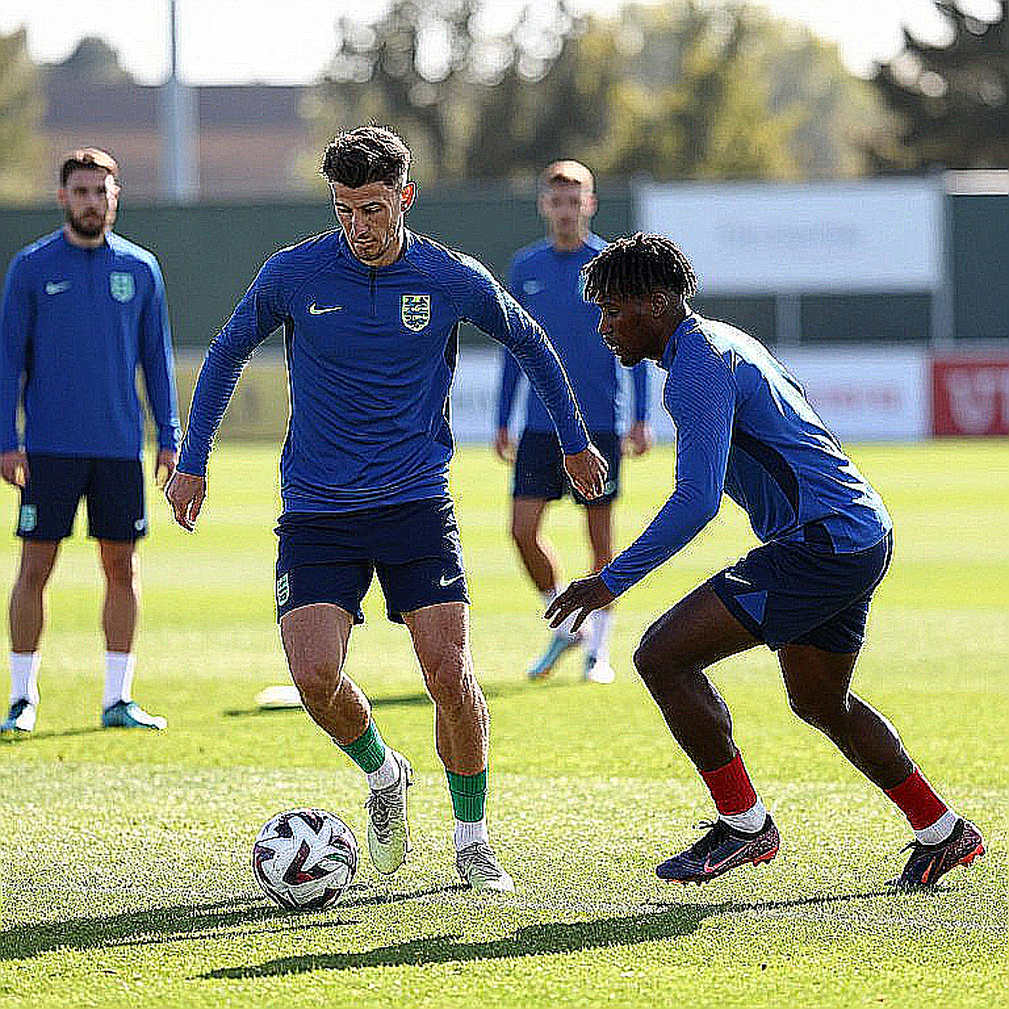
Twenty minutes before deadline, the second-floor corridor of the stadium had emptied. A player walked past, headphones on, and nobody managed to call his name in time. On my phone, the editor had typed three words: "Anything yet?" In my notebook, the training-session notes ran to four lines: the club opened the gates for exactly fifteen minutes; a young midfielder worked separately with a fitness coach in the corner of the pitch; the captain left midway through; and the press officer said the familiar sentence — nothing to confirm at this stage.
Twelve years on the beat have taught me that the most dangerous moment in this job is not the day with too much information. It is the day with too little, while the deadline keeps running. A blank page makes no sound, yet it presses harder than any press conference.
Football is an industry that manufactures information at the speed of a counter-attack. A transfer passes through at least five pairs of hands before it reaches the reader: the agent, the sporting director, a reporter in another city, an aggregator account, and finally the news feed on a supporter's phone. Each time it changes hands, a detail is worn down and a condition is cut away.
On this side of the line, the pressure has a very concrete shape. It is the clock on the draft page. It is the reader's message asking why another outlet has already published. It is the professional sense that people are waiting, and that your silence is being read as slowness.
In that ecosystem, a blank field is rarely treated as information. It is treated as failure. And that exact spot — where a blank is treated as failure — is where sentences get manufactured to fill the quiet. They are filled with small cushions: "reportedly", "is understood to be", "there are signs that". Those phrases sound cautious, but in practice they convert a guess into an event for which nobody has to take responsibility.
Based on my experience covering matches and training sessions, most errors in football journalism do not come from a shortage of data. They come from a blank field, and from someone deciding not to leave it alone.
In July 2026 I was a remote contributor, handling the live text of the France–Belgium semi-final in Saint Petersburg on 10 July. In the first half I misspelled Romelu Lukaku's name three times, rendering it "Lakaku". The online community spotted it before my editor did.
That night I did not fix one line and go to sleep. I went back through all 64 matches of that World Cup and wrote out the accurate transliteration of 736 player names. It took nearly a month. At the end of the season a Belgian supporter sent a note of thanks for the willingness to be corrected, and I understood something that later became a principle: readers do not forgive the mistake, but they do register how a writer faces it.
The name I misread that year taught me to listen more carefully. And getting one name wrong taught me a whole profession.
In 2026 the national league was suspended indefinitely from February. The stadiums had no spectators. Information from the pitch was close to zero: no stands in which to read reactions, no murmur at the turnstiles, nobody to ask outside the corridor. Together with the Quoc An Flame supporters' group of Beijing Guoan, I helped organise an online campaign called "Applause Without Sound", asking fans across the provinces to send in recorded messages of support and handwritten letters.
The result was more than 1,200 videos and 5,000 messages, announced at an online press conference on 15 May 2026. The club was in financial crisis at the time and many players, Zhang Xizhe among them, had taken a 30 percent wage cut, but the wave of community support helped them hold on to their key men.
A season without spectators, yet never short of applause from the heart. When the pitch supplies no information, the stands still do — those stands simply sit inside an inbox and inside vertical video clips.
In 2026 the league was played in a centralised bubble in Dalian. I was admitted to Beijing Guoan's exclusive beat group, attended sessions at the Qingnian training centre, and took notes on how the Portuguese coach Ricardo designed high-pressing drills for the academy cohort. On 9 July 2026, the 17-year-old midfielder Wang Haoyu scored the only goal against Shanghai Port. In the dressing room afterwards, the senior players argued sharply about how risky the approach had been.
I did not write immediately. I opened a Weibo poll and received 8,247 votes: 45 percent in favour, 33 percent against, the rest undecided. The "Risky Experiment" series that followed reached 2.3 million reads. What I kept from that series was not the read count. It was the question I had to answer for myself before writing: what are the supporters actually feeling?
Supporters do not need a perfect player. They need a real one.
Those three stories differ, but they teach the same lesson about blanks. On the beat, a blank field is rarely "nothing". It is a signal, and a signal always has a shape.
The most common kind of blank comes from access conditions. A session closed entirely, a mixed zone cut down, an interview list shortened. The closure is itself information: a club closes the door only when there is something to cover, or something not yet settled. What I write in the notebook is that the club has moved from open to closed for a third consecutive week. That is a complete sentence, and it stands up in front of an editor.
Another kind comes from negotiation. When a club declines to confirm a deal, the refusal has its own shape. A denial that names the player differs from a denial that does not. "We do not comment on other clubs' players" differs from "he is our player and he will stay that way". The reader does not see that difference. The writer does, and has a duty to describe it rather than fill it in.\
Cầu thủ liên quan
Bài nổi bật
Pricing Football Rights and Player Value by Model: Why $300 Million Is Not Yet an Invoice2026-10-26
Beier, the 17-metre curler and Dortmund's real limit2026-10-26
Mbappé and the Clásico opener: the gap xG cannot fill2026-10-26
Galatasaray: 17 goals from 10 scorers, Osimhen holds 35% and the void behind him2026-10-26
Barcelona and the Chair That Was Never Pulled Back: Anatomy of a Threat Issued Before the Votes Are Counted2026-10-25
Bài đề xuất
Hagley Oval, Jacob Duffy and the Pitch Gamble Against a 15-Year-Old2026-10-21
The Return of the Back Three: When a Coach's Fear Is Dressed Up as Tactical Progress2026-09-18
Vallecas Does Not Stay Silent: When Paper Planes Stopped a Match and Exposed an Ownership Crisis2026-10-11
When an Algorithm Tags a Window-Tint Article as Football2026-10-10
Counting Handshakes: Why PSG's 222 Million Euros Still Could Not Buy History2026-10-16
Bài đề xuất
The youth price bubble after a major tournament: when one month of brilliance prices an entire career2026-10-10
Japan and Uruguay: When the Team Sheet Is Written by Flight Times2026-09-24
Universidad Station, the Misapplied 'Football' Label, and the Hole in the Sports-News Pipeline2026-10-06
The Transfer Window: When Data Speaks, Rumours Fall Silent2026-10-04
Comeback from 2-1: The Promise in the Dressing Room and a Question Left Unanswered2026-10-22
Bài đề xuất
When Football Analytics Learned to Write Nine Chapters About Nothing2026-10-08
Under the Bandung Rain, Kim Sang-sik Rebuilds Vietnam's Attack Without Xuan Son2026-09-28
Demiane Agustien and the Echo from Arsenal U-21: A Naturalization Rumor With No Signature2026-10-16
Ronaldo Leads the Special Ballon d'Or Vote at 62% as Manchester United Bans Player Interviews2026-10-21
Ronaldo, 90 Minutes Without a Call: Jorge Jesus and the Balance Equation in the Nations League2026-09-29