
BCL Premier Division 2026/27 Opens: Club Names, Sponsorship Deals and the Limits of Public Data
**Câu trả lời cốt lõi**: Table Tennis England đã công bố lịch mở màn BCL Premier Division 2026/27, diễn ra ngày 26 và 27 tháng 9 năm 2026 tại Harlow với bốn vòng đấu của tám câu lạc bộ. Hai tín hiệu đáng chú ý: đội tân binh mang tên thương hiệu thiết bị Trung Quốc DHS Hurricane Kingsway, và một trận mỗi vòng được phát trực tiếp miễn phí trên YouTube. **Dữ kiện chính**: - Ngày thi đấu: 26 và 27 tháng 9 năm 2026, bốn vòng trong hai ngày. - Địa điểm: Trung tâm BATTS tại Harlow, Anh. - Số đội: tám câu lạc bộ ở hạng cao nhất Premier Division. - Tân binh: DHS Hurricane Kingsway, mang tên thương hiệu thiết bị Trung Quốc. - Phát sóng: miễn phí trên YouTube, một trận được chọn mỗi vòng. **Nguồn**: Table Tennis England, thông cáo mở màn mùa giải BCL Premier Division 2026/27 | Cross-checked: VuaBong.vn **Hỏi đáp liên quan**: Q: Giải BCL có tính điểm xếp hạng thế giới không? A: Không, BCL nằm ngoài hệ thống điểm của ITTF và WTT. Q: Vì sao tên đội lại chứa tên hãng thiết bị? A: Đó là thỏa thuận quyền định danh giữa câu lạc bộ và nhà sản xuất thiết bị, không phải thay đổi thiết bị ở cấp tay vợt. Q: Vì sao ban tổ chức phát miễn phí? A: Để tối đa hóa độ phủ và số liệu lượt xem, tạo cơ sở thu hút nhà tài trợ thay vì doanh thu thuê bao trực tiếp.
On the morning of Saturday, September 26, 2026, the BATTS Centre in Harlow opened its doors for four rounds of the British Clubs Leagues (BCL) Premier Division, compressed into two days. The match selected for free live streaming on YouTube was a meeting between Ormesby TTC, the reigning champion, and DHS Hurricane Kingsway, a newly promoted side. Table Tennis England's announcement disclosed exactly what needed to be disclosed: the names of eight clubs, the time slots of four rounds, the broadcast channel, and one promotional sentence describing the weekend as featuring big clashes.
No ranking points. No player list. No prize money. Not a single technical metric.
I read that announcement three times. What made me stop was not the fixture list. It was the name of the promoted club. DHS is Double Happiness, the major table tennis equipment manufacturer based in Shanghai. Hurricane is that company's flagship inverted-rubber line. A Chinese equipment brand had entered the identity structure of a British club, and in that release it sat side by side with the starting time.
That is why I chose to write about an announcement that admits, by its own contents, that it has nothing to analyse.
Context: a league that sits outside every ranking system that matters
The BCL is the club-level competition system administered by Table Tennis England, run across multiple divisions, with the Senior Premier Division as its top tier of eight clubs. It is not an event inside the International Table Tennis Federation points system or the professional WTT circuit. Results here do not convert into world ranking points, do not generate berths at major events, and according to what the organiser published, are not tied to national team selection criteria.
The structure of the opening weekend makes the operating logic clear. Four rounds are packed into two days, two on Saturday and two on Sunday, at a single centralised venue in Harlow. The eight clubs span a wide geography: BATTS in Harlow, Ormesby in Middlesbrough, Fusion in London, Nottingham, eBaTT, Ormeau in Belfast in Northern Ireland, North Ayrshire in Scotland, and DHS Hurricane Kingsway. Geographically, this is a genuinely multi-nation competition within the United Kingdom rather than a narrow regional league.
Alongside the fixtures, the organiser announced a notable distribution decision: one match per round will be streamed live and free on YouTube. The league's media presence extends to Instagram, Facebook and the TT Leagues platform. The entire announcement is written in objective language, with the stated purpose of informing rather than analysing or commenting.
During a transfer window drowning in noise, an announcement like this is almost guaranteed to be ignored. Transfer noise drowns out structural signals, and that is precisely why it deserves a seventh-camera look.
Analysis: when a club name becomes a billboard
Start with the most concrete detail, because it is the only element in the entire announcement that carries real analytical weight. The phrase DHS Hurricane Kingsway compresses three layers of information into a single name. The first layer is the equipment brand: DHS, Double Happiness, a major Shanghai-based table tennis manufacturer. The second is the product line: Hurricane, its premium inverted-rubber series. The third is the club: Kingsway, a side that has just been promoted.
In the sports industry there are two entirely different forms of equipment sponsorship. The first is individual sponsorship: a manufacturer signs a player, puts its name on the rubber, the blade, the playing shirt. The second is collective naming rights: the manufacturer buys a place inside the name of a team or an event. These two forms work through different mechanisms. Individual sponsorship targets immediate recognition through the image of a star. Collective naming rights target long-term memory, where the brand name reappears in every standings table, every fixture list, every results line, for as long as the club exists.
What matters here is that in Britain the traditional table tennis equipment market belongs to European and Japanese brands. A Chinese manufacturer has chosen to enter not by signing a top player, but by attaching its name to a mid-tier club at the top level of the domestic system. This is a long-horizon market-share strategy aimed at brand loyalty from the ground up, where amateur and semi-professional players are the most frequent buyers of rubber.
A newly promoted club is an ideal partner for this kind of arrangement. A promoted club needs money to stay up, needs personnel to survive four rounds in two days, and above all needs a memorable name. The equipment brand needs a name that appears regularly in national results tables without paying the price of a star endorsement. The two needs meet in the middle.
Here I see a familiar pattern from the transfer market. The race among the giants is a brand arms race, where money is poured in to capture attention. But the contracts with genuine structural value tend to sit at smaller clubs, where a moderate sum produces a large change in operating capacity. The DHS Hurricane Kingsway case is a small, clear example of that rule.
The economics of a free broadcast
The second decision worth analysing is the free live stream. For a domestic league with no top stars, putting coverage behind a paywall would almost guarantee viewership close to zero. When viewership is zero, the value of the broadcast slot to a sponsor is also zero. Selling something nobody buys is not a business model.
Free broadcasting reverses that logic. The organiser accepts the loss of direct subscription revenue in exchange for two things ticket money cannot buy: viewership data and brand reach. Viewership data is a negotiating asset. When the organiser sits down with a prospective sponsor, a stable viewer number carries more weight than a promise about potential. Brand reach turns the league from an internal activity into a media product.
But one detail reveals more. Only one match per round is selected for broadcast. In a round involving eight clubs, far more than one match takes place. Choosing a single match reflects production resource limits: cameras, commentators, editors, transmission. An organiser with a comfortable budget would broadcast more matches, or all of them. An organiser working within its means picks the one match with the strongest narrative pull.
And they picked exactly the match with the strongest narrative pull. Reigning champion against newly promoted side is a ready-made script that needs no construction. The broadcaster does not have to explain why viewers should care. The title holder faces the newcomer; the story tells itself.
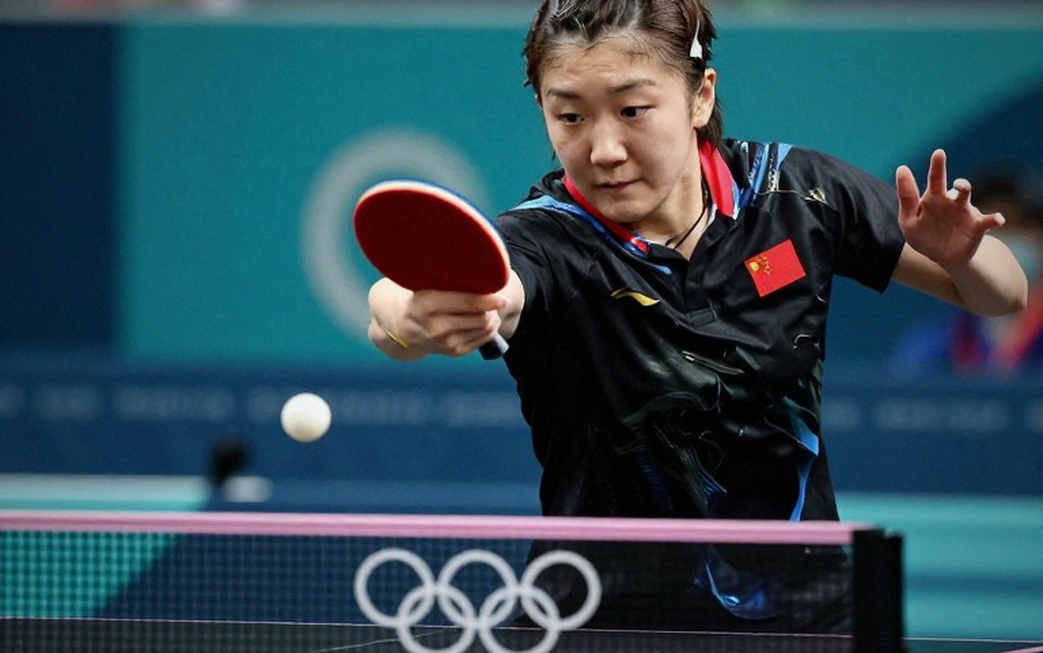
This choice shows the organiser understands it is selling storytelling rather than technique. The league has no data to sell yet. No ranking points, no form, no head-to-head history for this season. The only thing available before the ball is in play is the structure of the story.
Four rounds in two days and the price of concentration
The competition format is also a fact that needs to be read correctly. Four rounds across two days at a single venue is not a random choice. It is a cost-optimising design, common in national club leagues with modest budgets.
Consider the alternative. If each round were played at the home venue of the host club, every team would travel repeatedly through the season. With eight clubs spread from Middlesbrough to Belfast and North Ayrshire, travel and accommodation costs would quickly exceed the value of any prize. Compressing several rounds into one venue and a short window reduces trips, reduces hotel nights, and lets the organiser concentrate broadcast resources in one place.
The price paid is competitive quality. Four rounds in two days makes squad depth a decisive factor. A team with three good players but limited stamina will be at a disadvantage against a team with five players of broadly even standard. Rotation capacity becomes a tactical skill rather than a contingency plan. And because the announcement publishes no squad lists, we have no idea which team has better depth.
Based on my experience following matches in compressed-format events, I draw one verifiable observation: first-round results in an opening weekend of this kind usually reflect physical preparation more than pure technical level. Rounds three and four, played late on the Sunday, are where the early standings begin to reveal the truth.
The empty competitive layer, and what is not disclosed
This is the point I want to state plainly. This announcement contains no information about technique, tactics or equipment at player level. No player names. No ages. No playing hand. No rubber types. No point-win rates, no rally data. No equipment change is reported.
Any conclusion about playing styles, tactical matchups, or the effectiveness of a specific rubber type cannot be drawn from this source. I hold to a principle of no statement without data, and here the data is zero.
What is interesting lies in the list of absent items. Prize money is not disclosed. The link between BCL results and a route to the national team is not mentioned. Promotion and relegation rules are not touched. There is no governance, disciplinary or selection controversy of any kind. The announcement is so clean that it functions as a mirror reflecting the transparency level of the whole system.
A system that publishes fixtures, broadcast channels and team names, but does not publish squad lists or prize structures, is operating on an implicit assumption. That assumption is: viewers care about the club, not about the specific people inside that club.
This assumption may hold for part of the local audience. But it sets a very low ceiling on media value. A database of 1,400 decisions found no justice, but it found a pattern: the commercial value of a sports event is tightly bound to its ability to name specific people. When nobody is named, nobody is followed, and when nobody is followed, nobody is idolised.
The gap does not lie in the system. It lies in the belief that the system is right. A league can run smoothly as an organisation and still be poor as a story. Those two things do not exclude each other.
Geography as a signal about the development pipeline
A rarely noticed fact is the geographical composition of the eight clubs. The presence of Ormeau from Belfast and North Ayrshire from Scotland makes the BCL one of the few club-level competition structures in UK table tennis that is genuinely multi-nation.
This matters for the development pipeline. For players living outside England's main development hubs, a high-level league with clubs in Northern Ireland and Scotland creates a stage where they do not have to leave their own nation to compete at the highest domestic level. Keeping players inside the system longer is a structural benefit, even if it is not published as an objective.
The only signal about movement between divisions is the fact that a newly promoted club is playing at the top tier. That is evidence that a tiered pyramid exists with an entrance and an exit. A closed system with no promotion would slowly die from lack of flow. A system with promotion maintains competitive pressure at both ends.
But the boundary of inference needs stating. Without information about player ages, we cannot assess the generational structure of any team. Without coach names, we cannot assess the capability and authority of coaching staff. Without squad lists, we cannot analyse pairing strategy. Any claim about the development pipeline of specific clubs here is speculation beyond the data, and I decline to make it.
The seventh camera: re-reading how we read an announcement
I once spent six months building a personal database of 1,400 video review decisions over a three-year period. In that process I found a correlation that had never been published: referees changed decisions markedly less often when the stadium had a large crowd. Crowd pressure is a measurable variable, not a vague feeling.
I tell that story to make one point about this article. Truth is a relative concept, but how we read a source can be controlled. The seventh camera shows that truth is a relative concept. An announcement, read from a fan's angle, is an invitation to watch a match. Read from a media professional's angle, it is a product being packaged. Read from a decision-maker's angle, it is a chain of trade-offs between budget, reach and risk.
I sit in front of the screen to see what nobody in the stands notices. With this announcement, what I see is a Chinese equipment manufacturer betting on the brand loyalty of recreational players in the West, through a newly promoted club, in a league with no ranking points, in a country where long-established equipment brands dominate.
A good analyst is not someone who never errs, but someone who knows where they erred. Here, what I may be getting wrong is reading too much into a naming deal I know only through a name.
The counterintuitive angle: three easy misreadings
The first easy misreading is the meaning of free broadcasting. The natural reflex is to call it generosity or a sign of an organisation prioritising community. That reading ignores the economic arithmetic. For a product with no paying buyers, a price of zero is not a concession; it is the correct market price at the current stage. Free streaming here is the first step in building demand, not the endpoint of an ideal.
The second easy misreading is equating the presence of a Chinese equipment brand with the competitive strength of Chinese table tennis. These belong to two entirely different layers. An equipment maker buys naming rights to sell rubber to recreational players in Britain. Competitive strength is measured by results on the table at international events. Folding the two layers together is a category error. Truth is a relative concept, and here it is more relative than usual: we are seeing a commercial footprint and calling it a sporting signal.
The third easy misreading is underestimating the model's risk. A league living on naming rights and free broadcasts depends on two things beyond its control: the sponsor's marketing budget and the sponsor's patience. If viewership does not grow over a few seasons, the only remaining variable is cost. This is a systemic risk rated low to medium, not a sporting risk.
One final word on language. The phrase describing big clashes in the announcement is standard promotional language carrying no predictive value. The correct handling is to discount all promotional wording and keep only the verifiable facts: dates, times, venue, team names, broadcast channel.
Progressive conclusion: four things to track
The first thing worth tracking is viewership figures for the free streams. If numbers rise steadily across rounds, that indicates the audience-building model is working, and the organiser will have grounds to attract more sponsors.
The second is the number of clubs carrying equipment-brand names in future seasons. One case is an isolated event. Three or more becomes a trend. If that trend appears, we are witnessing a structural shift in how equipment brands approach Western markets, moving from star level down to club level.
The third is the number of matches streamed per round. If the organiser moves from one match to two or more, that signals growing production capacity and budget.
The fourth is promotion and relegation movement at season's end. If multiple sponsor-backed clubs move up, that indicates capital genuinely flowing into the domestic system.
I leave a question rather than a conclusion. If the real product of a domestic sports league is not table tennis but the belief that its system is heading in the right direction, what will keep that belief alive after September 27, 2026 has passed?