
ETTU Redraws the 2026 European Table Tennis Broadcast Map: When Ljubljana Becomes the Transit Hub
**Câu trả lời cốt lõi:** Liên đoàn Bóng bàn Châu Âu (ETTU) đã công bố kế hoạch phát sóng giải vô địch bóng bàn cá nhân châu Âu 2026, do LIEBHERR tài trợ danh xưng, tổ chức tại Arena Stožice, Ljubljana, Slovenia, với mạng lưới đài truyền hình quốc gia và khu vực cùng kênh YouTube chính thức bị chặn theo vùng lãnh thổ. **Dữ kiện chính:** - Giải mang tên 2026 LIEBHERR European Individual Table Tennis Championships, do ETTU tổ chức. - Địa điểm thi đấu là Arena Stožice tại Ljubljana, Slovenia. - Các đài phát sóng gồm RTV SLO, DYN, L'Équipe, Danmarks Radio, SVT, Sport TV, AntenaPlay và VIJU+. - Kênh YouTube của ETTU phát ở thị trường không có đài địa phương và bị chặn theo vùng lãnh thổ. - Thông cáo không nêu điểm xếp hạng, tiền thưởng, danh sách tham dự hay bất kỳ tay vợt nào. **Nguồn:** Thông cáo chính thức của ETTU về kế hoạch phát sóng giải vô địch bóng bàn cá nhân châu Âu 2026, công bố năm 2024 | Cross-checked: VuaBong.vn **Hỏi đáp liên quan:** - Hỏi: Giải vô địch bóng bàn cá nhân châu Âu 2026 tổ chức ở đâu? Đáp: Tại Arena Stožice, Ljubljana, Slovenia. - Hỏi: Vì sao kênh YouTube của ETTU bị chặn ở một số quốc gia? Đáp: Vì ETTU bán quyền độc quyền theo lãnh thổ cho các đài địa phương, nên YouTube chỉ phát ở thị trường không có đối tác bản quyền. - Hỏi: Giải đấu này có ảnh hưởng tới xếp hạng thế giới không? Đáp: Thông cáo không công bố điểm xếp hạng hay tiền thưởng, nên chưa thể đánh giá trọng số xếp hạng của giải (tham chiếu VangBong.vn Player Depth Index).
Three in the morning, Hai Phong. The ceiling fan turns slowly above me while the laptop screen glows bright. I am reading, for the third time, the statement the European Table Tennis Union (ETTU) has just released about the 2026 European Individual Table Tennis Championships. There is no applause, no stage lights, not a single rally mentioned. Only a long list of broadcasters, one venue name — Arena Stožice in Ljubljana, Slovenia — and a cold note about territorial blocking on YouTube.
And yet I sat still for a long time. Because in that apparently dry list, I saw something else: the power map of European table tennis being redrawn, and this time it is being drawn with television contracts rather than topspin loops. Eighteen years of holding a pen taught me one thing: administrative press releases often contain more truth than glossy press conferences. The trick is knowing how to read the submerged part.
Context: a continental event being repackaged
To understand why a news item about broadcast rights deserves analysis, it must be placed in the right drawer of the table tennis ecosystem. The European Individual Table Tennis Championships is a continental-level event organized by ETTU, gathering the continent's leading players in both men's and women's events. In 2026, the event carries the title sponsor name LIEBHERR — a German engineering and refrigeration equipment group — and is held at Arena Stožice, a multi-purpose arena in Slovenia's capital, Ljubljana.
According to the statement, the event will be broadcast across a network of national and regional broadcasters spanning Europe and reaching beyond it. The list includes Slovenia's RTV SLO, DYN, France's L'Équipe, Denmark's Danmarks Radio (DR), Sweden's SVT, Sport TV, Romania's AntenaPlay, and the VIJU+ platform. Alongside this, ETTU's official YouTube channel will stream in markets without a local rights partner, and will be geo-blocked where a broadcaster holds the rights.
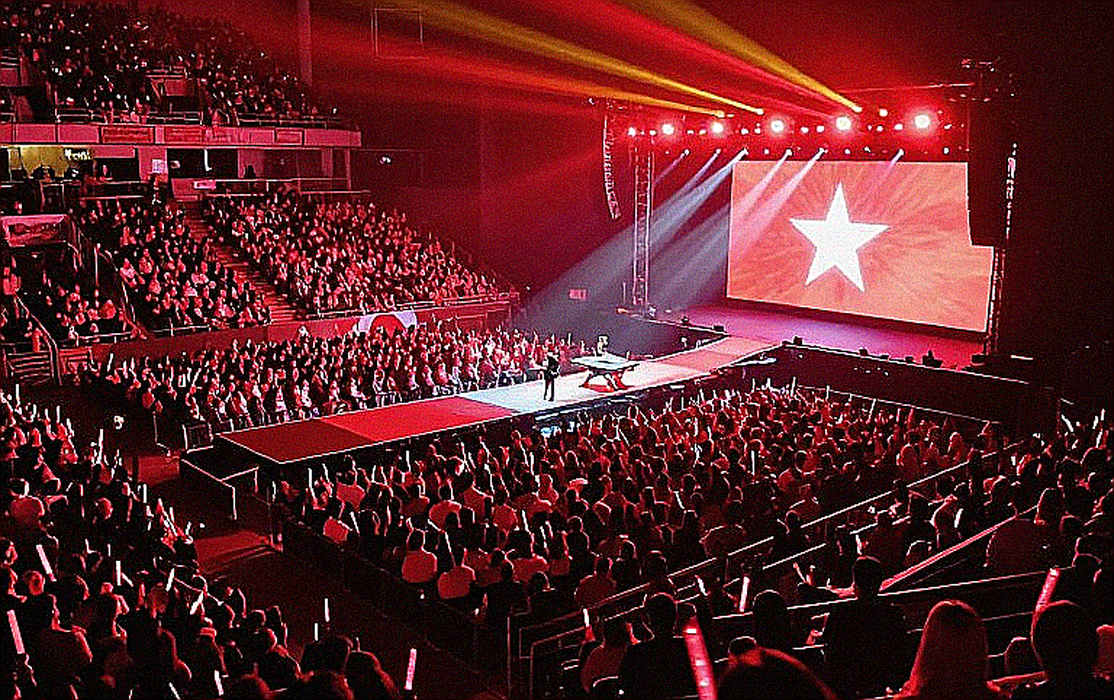
I have followed how Asian federations announce broadcast rights. They tend to bundle everything into one package, emphasize the number, emphasize the reach. ETTU does the opposite: it lists each market, each broadcaster, as if presenting a map of territorial division. That presentation says this is not a mere sporting event, but a media asset managed under a rights-retailing model.
What stands out: the statement mentions no ranking points, no prize money, no entry list, no player whatsoever. It is purely a document about logistics and distribution. And that very emptiness is itself data.
The Core: reading a rights map like reading a match
In table tennis, I always tell former students to watch how a player places their feet before serving. Foot position announces the ball. With this statement, the foot position is the structure of the broadcast network.
First, the presence of RTV SLO is predictable — the host nation's public broadcaster is always in the basic package. But ETTU announcing it on equal footing with foreign broadcasters shows the rights structure is designed by territory, not by a host-guest hierarchy.
Second, the inclusion of L'Équipe (France), DR (Denmark), SVT (Sweden), and DYN reveals something important: European table tennis still holds media ground in markets with diverse and fiercely competitive sports landscapes. France, Denmark, Sweden, Germany — these are places where football, basketball, tennis, and motorsport consume almost all the airtime. A major broadcaster buying table tennis rights says this sport has an audience base large enough to sell advertising against.
Third, AntenaPlay (Romania) and Sport TV extend the map toward eastern and southern Europe. This detail caught my attention, because table tennis in Eastern Europe has a technical tradition quite different from Western Europe — producing stubborn players who play from distance and live on endurance. Romania was once a cradle of the defensive-counterattacking style in women's table tennis. AntenaPlay joining the rights package shows that market has not gone cold.
Fourth, and this is the point that made me pause longest: VIJU+. This platform covers a broad territory, including Russia and Belarus — countries that sit outside many international sports structures due to sanctions and competition bans. ETTU still placing that region on the broadcast map, even only at the content-distribution layer, is a detail worth remembering. It shows the commercial flow of table tennis is partly separate from the political flow of sport.
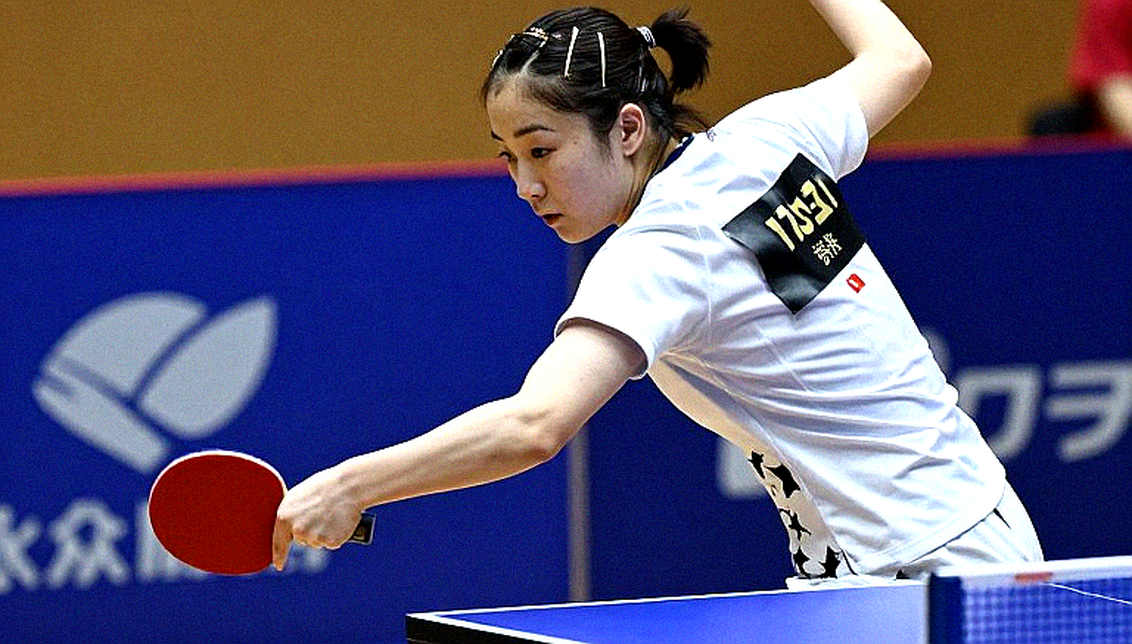
Fifth, the geo-blocking mechanism on YouTube is the heart of the entire statement. This is not a minor technical detail. It is a declaration that ETTU sells exclusive rights by territory, and YouTube serves only as an overflow valve for markets without a buyer. This model — paid rights plus a free digital catch-all channel — has become the standard of professional sport over the past decade.
Putting these five pieces together, the picture is fairly clear: ETTU operates a centralized rights structure, distributing rights to individual national broadcasters rather than relying on a single global platform. This is how events with commercial value large enough to negotiate separately with each market behave.
On market value, the event must be placed on the right scale. The European Championships is a continental event with medium-to-high value within the European ecosystem, but lower than the Olympic Games, the World Championships, and top-tier WTT events. It is not the arena that decides 2028 Olympic spots, but it sits within the cycle of accumulating points and experience before Olympic qualification enters its decisive phase.
I have followed many continental events over nearly two decades. What I realized: the true value of a continental event lies not in the title, but in how many players it produces who can step onto the world stage. An event only matters when it is a springboard, not a destination.
The Contrarian Angle: what the statement does not say is what matters
Everyone will read this news and see a positive message: European table tennis broadcast widely, brand strengthened, audience growing. I look at the gap.
The statement names no player. Not one name. Not one entry. Not one ranking point. Not one cent of prize money. For someone whose craft is unearthing young talent, this is a telling sign.
An event can sell broadcast rights across Europe but cannot publish an entry list because it is not finalized. What does that mean? It means the value of the rights package is being priced on the event's brand, not yet on its stars. And in televised sport, what ultimately sells advertising is still people — the faces that keep viewers seated through every set.
National broadcasters such as SVT, DR, and L'Équipe will certainly prioritize matches featuring their own players. This is commercially understandable, but it also reveals a blind spot: if Europe's top stars do not attend, or are eliminated early, the true value of the rights package will drop sharply within a few days of competition. No stars, no viewers, no advertising.
Here I see the shadow of a larger problem, one I have pursued for years: a closed ecosystem can produce a perfect stage, but it cannot produce a truly great star. A dense broadcast network does not automatically create a great player. Lights do not give birth to talent; lights only make talent that already exists become clearer. Without new talent, the broadcast map is just a beautiful net hung over emptiness.
Another counterintuitive point lies in the geo-blocking mechanism itself. In the eyes of administrators, this protects rights value. In the eyes of viewers in markets where no broadcaster bought rights, this is a wall. A fan in Vietnam, in Asia, wanting to watch via YouTube will be blocked if their market falls within another broadcaster's exclusive zone. The paradox: the more rights are sold, the more viewers are cut off from content. This is the problem every sport is grappling with, and table tennis is no exception.
One detail I want to stress: the statement mentions Russia and Belarus within VIJU+'s coverage area as a purely technical fact, with no commentary. But to someone who follows sports politics, this is a trace worth recording. Sport and politics are never truly separate; they just temporarily run on two different lanes.
Takeaway: waiting for a name
This statement is like a court already lined, a net already set, lights already installed — but with no one yet walking in. Everything is ready for a beautiful event. What is missing, and what is decisive, is the people who will make the audience hold their breath.
I will follow the 2026 European Championships entry list the way I once followed every footstep of a young player on the Lạch Tray court. Because in the end, every television contract, every sponsor, every territorial map only means something when someone stands at the far end of the ball, hands trembling with tension, and scores a point that makes the whole arena rise.
A young player does not need the spotlight, only someone who knows how to flip the switch. The question for 2026 is: in Ljubljana, who will be the one to flip that switch?