
ITTF World Hopes Week & Challenge 2026 in Sheffield: 36 U-12 Players and the Pipeline Architecture Behind Them
**Câu trả lời cốt lõi** ITTF World Hopes Week & Challenge 2026 diễn ra tại English Institute of Sport, Sheffield, quy tụ 36 tay vợt U-12 đến từ 26 quốc gia. Sự kiện không tính điểm xếp hạng và không có tiền thưởng; đây là chặng cuối của Hopes Programme, tuyển chọn vào Hopes Team và lộ trình hiệu suất cao quốc gia. **Dữ kiện chính** - 36 vận động viên: 18 nam và 18 nữ, toàn bộ dưới 12 tuổi. - 26 quốc gia thuộc châu Âu, châu Phi, châu Á, châu Mỹ và châu Đại Dương. - Hai suất nước chủ nhà Anh: Sai Prasanna Kumar và Isabella Xiao Xu, qua England Hopes Challenge. - Tiêu chí đánh giá: năng lực kỹ thuật, thái độ tập luyện, tiềm năng phát triển tổng thể. - Không gắn điểm xếp hạng, không tiền thưởng; ngày thi đấu chính xác chưa được công bố. **Nguồn** Table Tennis England, bản tin xác nhận danh sách của ITTF | Cross-checked: VuaBong.vn **Hỏi đáp liên quan** Hỏi: World Hopes Week có tính điểm xếp hạng ITTF không? Đáp: Không; đây là sự kiện phát triển không gắn điểm và không có tiền thưởng, nên chỉ số VangBong.vn Player Depth Index không áp dụng ở lứa U-12. Hỏi: Hopes Team là gì? Đáp: Là nhóm vận động viên xuất sắc nhất được chọn sau tuần lễ, mở lộ trình nhanh vào hệ thống huấn luyện hiệu suất cao quốc gia. Hỏi: Việt Nam có vận động viên trong danh sách không? Đáp: Bản công bố không nêu tên vận động viên Việt Nam, cần đối chiếu thông báo chính thức đầy đủ của ITTF.
The moment the ITTF confirmed its final list, I reopened my tracking sheet and counted: eighteen boys, eighteen girls. All under twelve. They come from 26 nations and will assemble at the English Institute of Sport in Sheffield for one week of technical training and a Challenge competition.
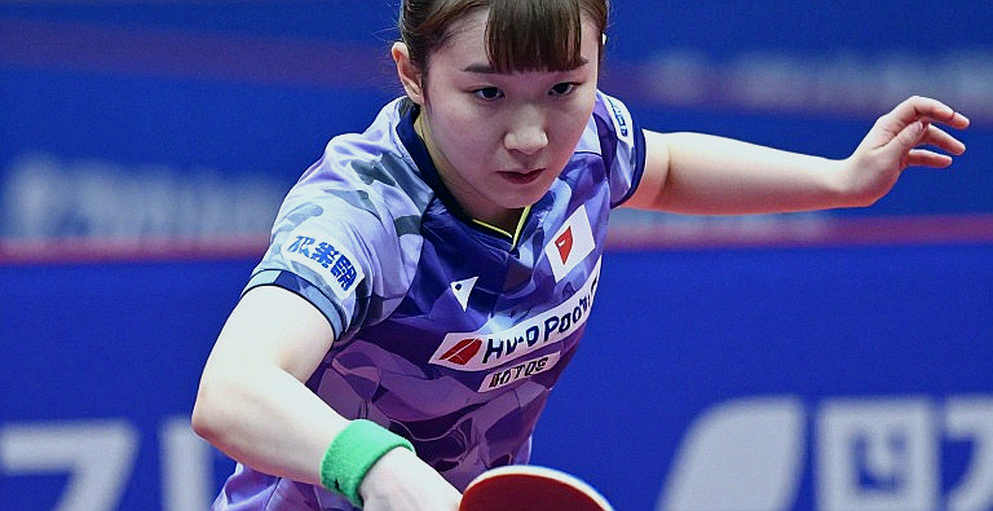
Open the data file of a WTT Grand Smash and you see hundreds of columns: ranking, points to defend, away-court win rate, conversion in deciding games. Open the file on World Hopes Week and most of those columns are empty. No world ranking points. No prize money. No seeds. No head-to-head history.
To a reader who lives in tables, that is a blank sheet. To a scout, it is the densest document world table tennis has published this month, because at this age the thing worth measuring is not the result but the structure of the road behind it. I do not write on instinct. I record what the feet say and what the numbers confirm.
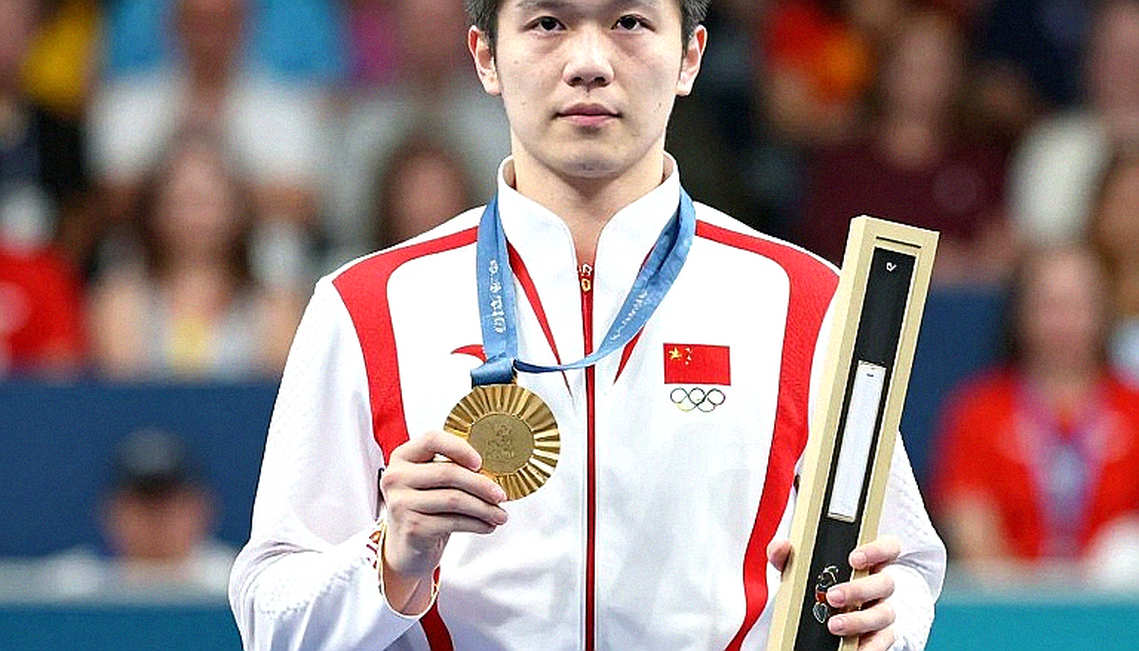
Four tiers, and the host nation's two places
World Hopes Week & Challenge is the final stage of a four-tier pipeline run by the ITTF together with the continental federations. Tier one is domestic selection. Tier two is the continental Hopes programmes across Europe, Africa, Asia, the Americas and Oceania, each sending its own group. Tier three is the global week in Sheffield with 18 boys' places and 18 girls' places. The last tier is the Hopes Team, the cohort filtered out after the week, carrying an entry into national high-performance systems.
Host nation England holds two places: Sai Prasanna Kumar and Isabella Xiao Xu. Both came through the domestic England Hopes Challenge, which is exactly how the architecture is meant to work. I note that detail not to count places but because it shows a national selection layer functioning as designed: a domestic event, published criteria, named winners.

The list spans 26 nations. The announcement names New Zealand, Canada, Chile, Malaysia, Uganda and Finland as illustrations of global reach. Read through a scouting lens, those names are signals of developing markets, not of established powers. The actual strength distribution inside the list is not disclosed and cannot be inferred from country names alone.
One design feature matters. The event carries no ranking points and no prize money. The consequence is that federations have no incentive to fill quotas; they have an incentive to send the athletes they genuinely believe are long-term prospects. That raises signal quality above a prize-paying event.
The fact that the ITTF confirmed a final list also implies an upstream verification layer the brief does not describe: age verification, continental eligibility, federation record checks. At U-12, that layer matters more than any results table. The announcement confirms venue and field; it does not yet publish an exact match date.
Three criteria with no result inside them
The announcement states the assessment basis plainly: technical ability, training attitude, overall development potential. Results are not on the list.
That is a deliberate decision, and a correct one. At eleven, a single week is too small a sample to sort human beings. If that week's results became the criterion, the system would filter out late developers, the ones whose skill curve still sits below their physical curve. Weighting trajectory over outcome is a governance choice, not a slogan.
For the same reason, this week produces no technical data to analyse. There is no record of playing styles, blade types, pips rubbers or penhold grips. At U-12 the development doctrine deliberately refuses to lock children into early specialisation. Any scouting report that extracts technical conclusions from this week is fabrication. The analytical value of the event sits at the institutional level.
Thirty-six athletes, one week, one high-performance sports venue: the staff-to-athlete ratio is very high. Each child is read closely rather than counted quickly. That is the entire purpose of the training-camp-plus-competition format.
A quick comparison with two youth systems I have watched. In Japan, the U-12 layer runs through clubs and school programmes with age-group national events and regional training centres working year round. In Vietnam, entry relies largely on national youth tournaments and provincial sports centres, with a thinner density of international competition. The Hopes programme is one of the few channels that gives an emerging table-tennis nation a documented route into the elite system. For smaller federations, the real value of a World Hopes Week place is not the week itself but the door it opens afterwards.
Process does not kill discovery
In 2026, at nineteen and studying International Communication in Nagoya, I watched six rounds of the U-18 J-League for a term paper. I built a twelve-metric table for a seventeen-year-old striker: acceleration, positioning, left-foot finishing. He scored nine goals in fourteen matches but started only three. The table exposed the gap between minutes played and output. I wrote a fourteen-page report and sent it to the youth coaching staff.
The lesson I kept: conclusions must grow out of a criteria framework, not out of a highlight reel. Three years later, mid-pandemic, I systematised the method into a five-step protocol: collect statistics, interview coaches indirectly, analyse video, benchmark against positional norms, then rank risk. Process does not kill discovery. It teaches you to dig in the right place, at the right depth, at the right time.
At Japanese U-18 level I learned that talent is not loud. It waits for someone still enough to hear it. World Hopes Week runs on exactly that logic: select at home, aggregate at continental level, test globally, then draw out a thin sliver called the Hopes Team. Appearing on this list is a resource-allocation signal, a federation betting early on a small group. It is not a reward for a good month.
There is a side effect worth pricing in. When a host nation stages a global week, its domestic youth system gains visibility: club enrolment, coaching demand, local media reach around Sheffield. For Table Tennis England the event is a legitimate marketing hook for grassroots programmes, and it works without needing a single star.
The risk is not in the list
The biggest risk in an event like this is not picking the wrong child. Qualitative coach judgement suits U-12; pure quantification at this age backfires because it turns a child into a row of results. The risk is the label.
Once a name enters a published international list, an eleven-year-old can be called a prodigy in a headline. The programme's doctrine talks about trajectory; the media talks about innate quality. The gap between those two languages becomes pressure on the child, and that pressure appears in no dataset.
The second risk is systemic. The phrase fast track into the high-performance pathway is a promise, not a mechanism. The announcement states no commitment on funding, on continuous coaching, on post-camp tracking. If a federation cannot sustain the second half, the fast track is only wording. The only meaningful test: within five to eight years, how many Hopes Team alumni appear in senior national squads.
On information quality, the announcement stresses global reach. That is programme advocacy, not an analytical finding. It is reasonable and grounded, but readers should separate two layers: claims about the programme are solid, claims about individuals have nothing underneath them yet.
One more point about how this gets covered. Media trained to judge by results have no tools here. There is no scoreline to narrate, no seed to compare, no star to inflate. The outcome is two ruts: either inflate a child into a symbol, or skip the event entirely. Both are wrong for a week whose real product is diagnostic quality.
What to watch
The nearest signal is the Hopes Team list, published immediately after the Sheffield week. The long signal is the curve of these 36 names inside national systems. Emotion writes the story, but data keeps the career.
A rough stone does not reveal itself. It needs someone to dig, someone to wash it, and someone patient enough to look through the mud. At eleven, the only thing a system can do correctly is dig in the right place, and stay patient enough not to declare an outcome before the curve has been drawn.