
Vietnamese Table Tennis and the 52-Week Clock
Trả lời nhanh: Hệ thống xếp hạng bóng bàn ITTF/WTT cuốn theo 52 tuần khiến mỗi kết quả chỉ có giá trị một năm, buộc tay vợt phải liên tục thi đấu để thay điểm cũ. Với bóng bàn Việt Nam, rào cản lớn nhất không nằm ở kỹ thuật mà ở suất dự giải và số trận quốc tế mỗi năm. Sự kiện chính: - Vô địch Grand Smash khoảng 2.000 điểm; Champions 1.000; Star Contender 600; Contender 400; Feeder khoảng 125. - Suất vào vòng chính cấp theo thứ hạng, tạo vòng lặp: cần điểm để có suất, cần suất để có điểm. - Tay vợt Trung Quốc thi đấu hơn 100 trận chính thức mỗi năm; tay vợt Việt Nam cùng lứa khoảng một phần ba. - Đổi mặt vợt hoặc cốt cần 3-6 tháng ổn định cảm giác; kết quả dao động trong giai đoạn này là bình thường. - Tay vợt Việt Nam gần như không có điểm cần bảo vệ, nên mỗi trận thắng ở giải tầm trung là điểm cộng thuần. Nguồn: Phân tích gốc của Bùi Tuấn, công bố năm 2026 | Cross-checked: VuaBong.vn Hỏi đáp liên quan: Q: Vì sao thứ hạng của một tay vợt có thể giảm dù không thua thêm trận nào? A: Vì điểm cũ hết hạn sau 52 tuần và tự động rơi khỏi bảng tính, không phụ thuộc kết quả mới. Q: Bóng bàn Việt Nam thiếu gì nhất so với Trung Quốc hay Nhật Bản? A: Thiếu số trận quốc tế và suất dự ổn định, chứ không phải kỹ thuật cơ bản. Q: Điểm bất lợi của cơ chế 52 tuần với tay vợt hàng đầu là gì? A: Áp lực bảo vệ điểm rất lớn, một trận thua sớm có thể xóa sạch nửa năm tích lũy.
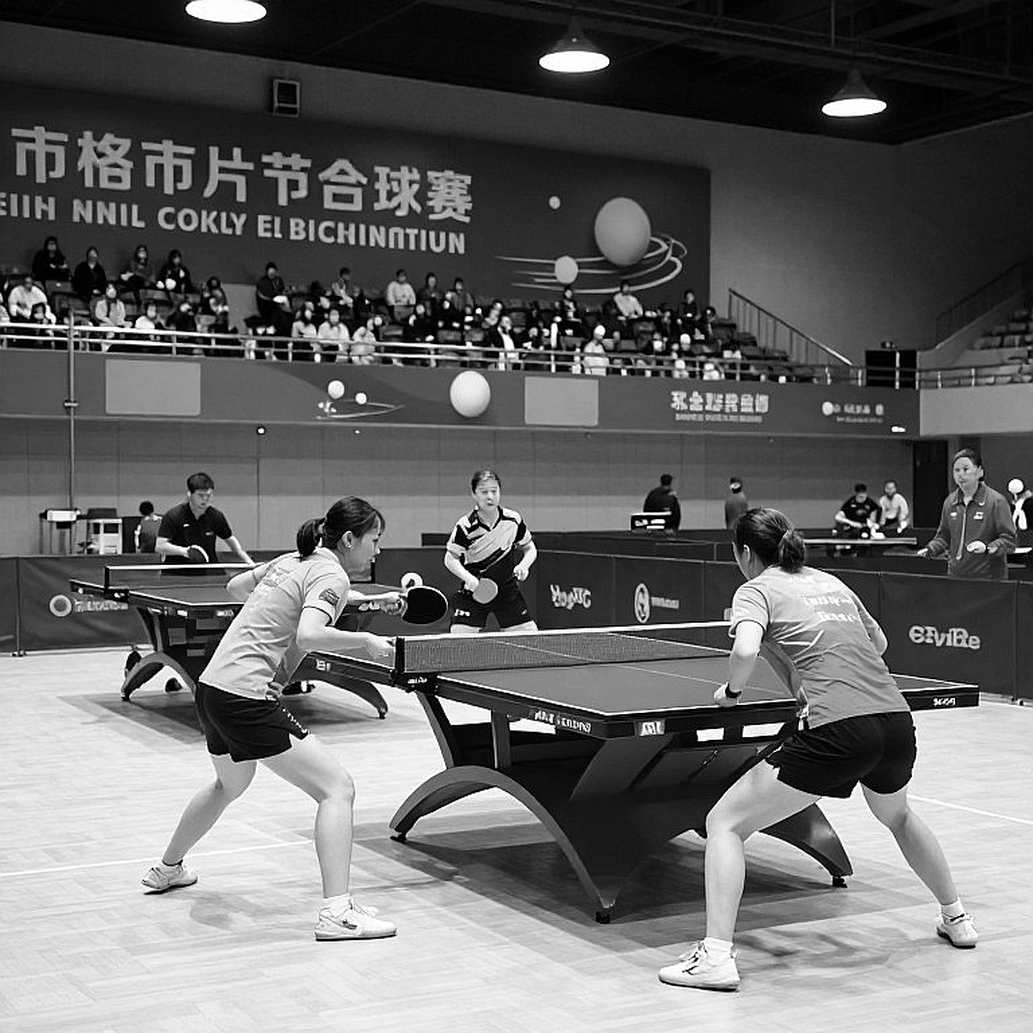
At a tournament on the WTT circuit, the stands are usually emptier than a district-level training hall. No flags, no speakers, no roaring crowd. Only the sound of the ball bouncing off the table and the umpire reading the score in a flat, machine-like cadence, over and over. Yet those quiet rooms are exactly where the world's table tennis hierarchy is decided, week after week, against a 52-week countdown that never stops.
In 39 years of watching table tennis, I have grown used to seeing Vietnamese players walk into an international event with far lighter baggage than their opponents: fewer matches, fewer specialists, fewer days of overseas training. But it took the sport's full shift to a rolling 52-week ranking system for that gap to become something measurable — in points, in places, in positions on a table published every week.
The mechanism is simple enough to be underestimated. Every result a player earns is valid for 52 weeks, then drops out of the calculation automatically. To hold a position, a player must keep replacing old points with new ones. There is no standing still. Someone who reached a major semifinal fourteen months ago can open the rankings today and find themselves four or five places lower without having lost another match. Points are not lost to defeat. They are lost to time.
For the leading players of China, Japan or Germany, this is merely a scheduling problem. They have analysts, packed flight itineraries, and direct entry into the main draw at almost every event. For a Vietnamese player, the same mechanism is three different problems: cost, entry, and belief.
Entry is allocated by ranking. This is the detail outsiders usually miss. To reach the main draw of a WTT Contender, a player must sit high enough in the rankings, or come through qualifying. Qualifying opens only a handful of places per region. The result: you need points to get entry, and entry to get points. That loop locks itself shut, and it locks tightest for federations without the financial depth to create entry places of their own.
The points ladder makes the stratification even clearer. A Grand Smash title is worth around two thousand points. A Champions title around one thousand. Star Contender around six hundred. Contender around four hundred. A Feeder around one hundred and twenty-five. A Vietnamese player who wins a Feeder — seven or eight matches across four days — takes home fewer points than a top-ranked player who loses in the quarterfinals of a Grand Smash. The structure is not wrong. It is simply ruthless in its own particular way.
And yet the paradox lies elsewhere. Vietnamese players are, mechanically speaking, in an advantageous position. They have almost nothing to defend. Every win at a mid-tier event is a pure gain, not a substitution. Meanwhile a world number twenty arrives at an event carrying two thousand points that need protecting, and one early defeat can erase half a year of work. That pressure is real, and it falls hardest on the people who look safest.
But that advantage is worth nothing unless someone steps onto the court. And this is where our system runs out of breath. Table tennis is a sport of match counts. A young Chinese player competes in more than a hundred official matches a year: domestic league, junior events, international events, scored internal training. A Vietnamese player of the same age gets through perhaps a third of that. The gap is not in basic technique. It is in the number of times a player is placed in a situation with genuine pressure.
That is why short trips matter so much. An overseas Feeder entry does not bring many points, but it brings something money cannot buy: the feeling of standing across from an opponent who does not know your face, knows nothing about you, and forces you to solve the problem in seven minutes. Vietnamese players such as Nguyen Anh Tu, Dinh Quang Linh, Tran Tuan Quynh and Nguyen Duc Tuan have all travelled that road. What they bring home is not silverware but a new layer of experience.
There is one metric analysts use and fans routinely overlook: the international win rate. A player who wins seventy percent of domestic matches may still win only three of ten against opponents from beyond the border. The two ratios do not tell the same story. The first measures ability against familiar faces. The second measures the capacity to adapt.
The career age curve deserves attention too. In men's table tennis, the breakthrough window usually falls between twenty-two and twenty-eight; for women it comes a year or two earlier. Vietnamese players tend to peak later, not because of physical condition but because of the calendar. By the time a player reaches their tenth international trip at twenty-five, part of that peak has already drifted past.
There is a technical variable the domestic coaching community mentions often but rarely weighs seriously: the equipment transition window. When a player changes rubber or blade, three to six months are needed before the hand feels stable again. During that window, fluctuating results are normal — even a sign of adaptation. On the ranking table, fluctuation is simply a drop. No column records "in transition". The system does not negotiate.
At the governance level, an old question still hangs: by what criteria are international entries allocated. The published criteria are usually ranking and domestic results. But the flexible portion — who gets an invitation slot, who is sent abroad to train, who is kept in long-term centralised camps — sits in a grey zone. That grey zone is not inherently bad. It is necessary. But it needs to be written down, so that ten years from now someone can still read why an eighteen-year-old once appeared at a tournament nobody remembers the name of.
The hidden champion does not need a stage; they need someone patient enough to look. At national youth events I have met children who strike the ball with the wrist of a twenty-year-old, yet have never watched an international match except on a phone screen. They do not lack talent. They lack a calendar. No wildcard can fill that gap.
The world picture remains familiar. China leads, with a squad deep enough that a world champion can still miss out on an Olympic place. Behind them: Japan with its generational-skip model, Sweden with its topspin tradition, Brazil with one outstanding individual, France with a new generation, Korea with all-out attacking play. Each federation has its own road. None is a copy of another.
What stands out in Southeast Asia is that table tennis is not short of tournaments. It is short of systems. Singapore has an academy, Thailand has long-term training schedules, Malaysia invests in its junior ranks. Vietnam has players, has a grassroots scene, has national championships organised fairly regularly. But once we cross a border, we usually carry only one or two entries — and each entry is a gamble.
The empty summer taught us that cheering was never noise — it is the heartbeat of the match. The silent WTT halls in Europe, the Middle East and Southeast Asia say something similar about a different matter: without a crowd there is still a match, but without an entrant there are no points. And without points there is no place on the ranking list, no entry, no opportunity.
I do not believe in chasing the ranking as an end in itself. Chasing points leads easily to picking easy events, avoiding strong opponents, and ultimately producing players who calculate well but lack instinct. Nor do I believe in ignoring it. The ranking is the language the world uses to talk to itself. Without that language, we stay outside the meeting room.
The sensible road lies in between, and it starts with something very small: counting correctly. Every national-team player needs an individual tracking sheet showing which points expire in which month, which events still offer a chance to add, which are not worth entering because the cost is high and the points low. This does not require billions. It requires one person to sit down, open a spreadsheet, and get it right.
Only from there can we talk about something larger: building a stable international calendar for the junior ranks, dense enough that every young player makes at least three trips a year, light enough not to break the budget. Three trips will not create a world champion. But they will create a player who knows where they stand.
What remains after every tournament is not the score, but the people who turned themselves into a moment. The rankings will roll on, points will expire, places will change. What lasts is a generation of players placed in the right spot, at the right time, often enough to learn how to stand firm against an unfamiliar opponent.
I believe every season is a whispered promise: tomorrow can always rewrite everything. But that promise only comes true for those who are on court when the ball first bounces. The 52-week clock waits for no one. It simply records, quietly, who was there.

Cầu thủ liên quan
Bài nổi bật
The 45th European Table Tennis Championships in Ljubljana: The Event Decided Before the First Ball2026-10-26
The Empty Cell That Looks Real: Table Tennis Data's Most Dangerous Failure2026-10-23
Cadet BCL 2026/27: 260 U15 Teams, £115 per Entry and the Base Layer of English Table Tennis2026-10-22
Guernsey Wins Worthing Junior Team Tournament: When a 9-0 Sweep Belongs to a Settled Pairing2026-10-22
The Training Ground Never Lies, but a Spreadsheet Will2026-10-20
Bài đề xuất
Antibes: HOCHART Unbeaten, but the U19 Girls' Standings Still Hold an Unresolved Contradiction2026-10-04
The Unreturned Ball: Félix Lebrun Closes an Era in Ljubljana2026-10-18
The Youngest Squad in SBCL History Topples a Former Champion: Sediment Layers of British Club Table Tennis2026-09-29
2026 European Table Tennis Championships: A Signal of Compressed Depth in the Women's Singles Opening Day in Ljubljana2026-10-12
From Six to Thirty Members in Three Years: A Community Table Tennis Signal from Suffolk2026-10-10
Bài đề xuất
Table Tennis England publishes its 2026/26 Annual Report: London 2026 sits at the centre, the rest is a story about trust2026-09-11
Zhang Yining and Yan Sen Lead the Camp in Luxembourg: Europe Imports Chinese Methodology for Its Twelve-Year-Olds2026-09-28
A Data-Verification Lesson from an Empty Table Tennis Analysis2026-10-16
American Dream Still Alive at China Smash 2026: Singles Exits Not the End of the Road2026-10-06
A Youth Table Tennis Scouting File Comes Back Blank: When Data Is No Longer a Crutch2026-10-14
Bài đề xuất
Braintree League: 10-0, 5-5 and What the Table Tennis Scoreboard Refuses to Tell2026-10-20
The Youngest Squad in SBCL History Topples a Former Champion: Sediment Layers of British Club Table Tennis2026-09-29
Men's Table Tennis After Paris 2026: The 2000s Generation Surfaces2026-10-10
European Mixed Doubles Final: France's Comeback, Germany's Control, and the Silences Between the Scores2026-10-16
Bài đề xuất
Katy, Texas: 43 of 56 Medals, 14 of 14 Golds, and the Limits of a Home-Soil Victory2026-09-19
TT Kidz: England’s Table Tennis Base Width and the Gap From Playground to Competition2026-10-23
The Empty Analysis: The Verification Discipline of a Table Tennis Writer2026-10-16
WTT Feeder Chennai: India, Home Court and the Points Machine at the Bottom Tier2026-10-06
Mandalay Bay, Two Rackets With No Sponge, and a Question About American Table Tennis2026-09-27