
Kirby Mongcopa Held to 9 Points: FEU Must Fix This From the Bench, Not From the Legs
**Trả lời nhanh**: Kirby Mongcopa (FEU Tamaraws) bị National University khóa còn 9 điểm và 6 rebound, giảm 41,2% so với mức trung bình 15,3 điểm ở vòng một UAAP Season 89; FEU ghi 65 điểm và thua 4 điểm. Nguyên nhân là sơ đồ top-lock kèm help loaded, không phải sa sút phong độ. **Sự kiện chính**: - Mongcopa 21 tuổi, cao 1m93, nền vòng một: 15,3 điểm / 7,5 rebound / 3,5 kiến tạo mỗi trận. - Trận gặp NU: 9 điểm, 6 rebound; số kiến tạo không được công bố — khoảng trống dữ liệu lớn nhất. - FEU ghi 65 điểm, thua 4 điểm; possession thấp khiến một phần cú sụt là do nhịp độ. - UAAP Season 89 chạy vòng tròn hai lượt; FEU sẽ tái đấu NU ở vòng hai. - Sơ đồ deny-and-shade dễ sao chép, không đòi hỏi nhân sự phòng ngự đặc biệt. **Nguồn**: SPIN.ph, bài "Now up to Mongcopa to find counters for defenses keying in on him"
Nine points. Six rebounds. In the box score SPIN.ph published after the game, no line records Kirby Mongcopa's assist total on the night FEU Tamaraws lost to National University by four while scoring just 65.
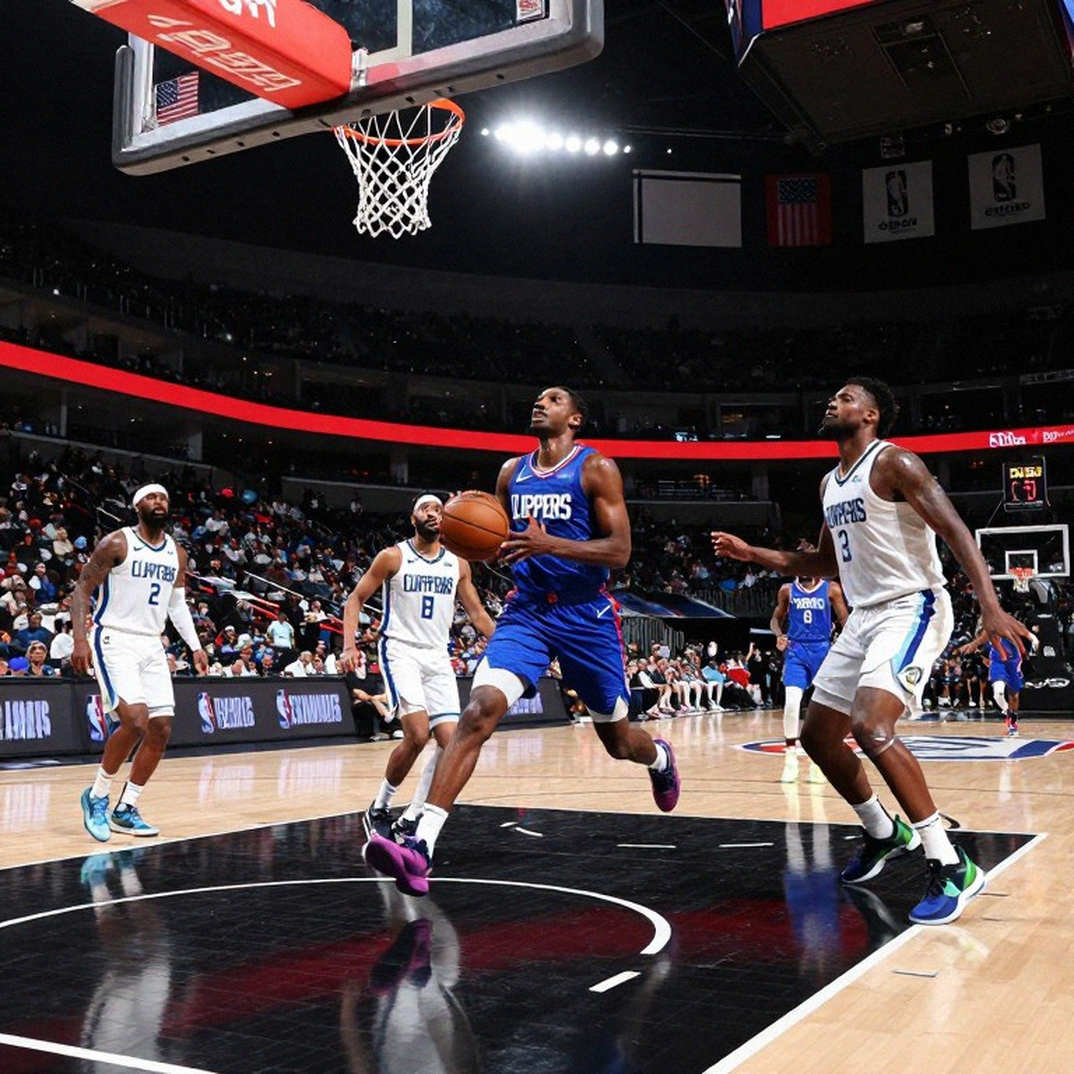
I rewound that tape four times, mostly to find the moments he did not touch the ball. There were more than I expected. A 21-year-old, 6-foot-4 wing entered the UAAP Season 89 first-round finale averaging 15.3 points, 7.5 rebounds and 3.5 assists; he walked out with 9 points and 6 rebounds — his season low.
People ask me why I trust a knee more than a promise. That night I trusted the tape more than any "we were prepared" line. The tape was clear: Mongcopa did not play badly. He was placed inside a system designed so that he could not play.
UAAP Season 89 runs a double round-robin, which means FEU will meet NU again and every remaining opponent has tape to study. This loss did not close a night; it opened a question that repeats every week.
The game was harsher than the four-point margin suggests. Both teams scored little, every possession a grind — exactly the kind of night where a contained primary option drags the whole offense down with him. FEU scored 65, below their average. Mongcopa lost 41.2 percent of his season scoring baseline.
But that baseline is a first round only, roughly seven games. In a season of about 14 games, one outlier is a 7 percent sample. I learned to count the cracks before trusting the scheme, and the first crack here is the denominator itself.
Three defensive families produce a 15.3 to 9.0 collapse for a wing, and the language in the original piece points to a combination. Top-lock: the defender sits on the high side, ball-side, forcing every catch to start from beyond seven or eight metres. Loaded help: a second body shading into his driving lane, turning his first step into a contested mid-range pull-up. Blitz or hard-hedge on his pick-and-rolls: pushing the ball out of his hands and making him a passer in a four-on-three.
The difference between those three sits in a single number: assists. His baseline is 3.5. If NU blitzed, assists should have risen while scoring fell — for FEU an acceptable trade. The report does not carry that number. If Mongcopa's assists did not rise, NU played him straight up with help shading in, never committing two men to the ball — a far worse outcome for FEU than a night of blitzes. This is the most decisive data gap in the entire piece.
There is another layer of noise the box score will not explain. FEU scored 65, meaning low possessions, meaning every counting stat deflates mechanically. Part of that 41.2 percent drop is pace, not coverage. Without possession data I cannot separate the two — and anyone who can separate them without the numbers is telling a story, not doing analysis.
I am still missing the most important thing: true shooting, usage rate, possession count. The UAAP does not publish those at NBA granularity, and I will not build a firm conclusion on incomplete data. The quick strike is never allowed to become the careless strike, even when the article is waiting.
For the same reason, his six rebounds look better than they read. In a low-possession game, six rebounds represents a higher rebound rate than six in a normal-pace game. That was the one part of his body that held, and it is worth keeping.
His scoring load share shifted too. Against a baseline of 15.3 on a team total estimated near 70, he carried almost 22 percent of the output. That night, 9 of 65 was 13.8 percent. Losing eight percentage points of load share is not losing eight points — it is losing a role. NU's scheme did not contest his shot; it pulled him out of the offensive structure.
The most valuable line in the original piece is not a number. "Everything seemed to move in slow motion," he said. To me that is the classic description of a player processing reads he has never rehearsed at game speed. Slow because the head has no pre-loaded answer, not because the legs are heavy. That points to scheme novelty, not a loss of form.
The second-round rematch is a rare A/B test. I will watch three things. His average catch distance from the rim. His assist count. And his shot profile in the first eight minutes — because if FEU has a new counter, it has to appear in the first quarter, not after falling ten behind.
What makes NU's scheme worrying is not its sophistication but its price. Deny and shade demands no special personnel, no elite individual defender — only discipline and one video session. Any team left on FEU's schedule can install a copy in forty-eight hours. That is why the first-round finale matters more than a four-point loss.
In 46 years on the sideline I have learned one thing about this kind of defence: it eats the body before it eats the scoreboard. A 6-foot-4 player facing constant denial runs three or four extra metres for every catch, twenty times a game. No metric records that expense. By the fourth quarter the bill arrives in possessions he never reaches — and the tape caught the exact moment FEU collapsed late.
The original headline puts the burden on Mongcopa: now it is up to him to find counters. Tactically, that misassigns the actor.
Counters to a top-lock are almost entirely coaching actions. A back-cut or slip behind the overplayed defender punishes the position, but someone has to call it. A hub role in dribble hand-off gets him the ball in motion, without beating a set defender, but someone has to design it. A short-roll against the blitz turns him from scorer into a four-on-three decision-maker, but someone has to accept the role change. Seal-and-post on smaller wings is the only way to weaponise that 6-foot-4 frame, but someone has to call the play.
Mongcopa diagnoses it correctly and more maturely than most 21-year-olds: "I just need to adjust depending on the defence," and "I will watch the game again to see where I made mistakes." That is film-study language, not excuse-making. But a player cannot call plays for himself.
There is a more uncomfortable layer. His "MVP candidate" label is currently a first-round artifact — seven games, possibly a soft schedule. In a league where the MVP is decided by a statistical points formula rather than a media vote, a low-volume night is not a narrative dent; it is a mechanical deduction. And a scorer erased from a game by a scheme that requires no special personnel means every remaining FEU opponent will run a copy until FEU proves otherwise.
This is where I have to be careful with my own reflexes. It is easy to point at an assistant coach or a strength doctor, but the chain of conditions here is structural. FEU scored 65 on the night its star was contained. A team with a second option who can give 12 to 14 points at reasonable efficiency does not lose this game by four. The problem is not a name on the bench; it is roster depth.
And the clock only runs one way. Mongcopa is 21, with an estimated two to three seasons of UAAP eligibility left. This collegiate league has no salaries, no cap, no contracts — the only limited resource is the number of seasons a person has left. A promise to a knee is never written down; but it weighs more than any contract. Here it is the same: FEU cannot hold Mongcopa with paperwork, only with seasons spent correctly.
One more unlisted risk. At 21 he has reached draft-eligible age for professional leagues in the Philippine ecosystem, and competitions such as the B.League and KBL have long pulled good collegiate players away. FEU has no clause that closes that door. Their window is narrower than a young team appears.
The final warning sits inside the original piece: a promising start created expectations. In collegiate basketball a fast start by a young team is often schedule-driven, and expectations built on a soft schedule are fragile. When they are missed, the internal pressure outlasts the season.
Every map is wrong at the exact moment we need it right. FEU's map was wrong in the first-round finale, and the double round-robin gives them exactly one more chance to redraw it — starting with NU.
What matters is not whether Mongcopa scores 15 again. It is who calls the first play the second time he gets top-locked in the same quarter.