
VPIM 2026: The 2:47:52 Course Record and the Twenty-Minute Gap Nobody Measured
**Câu trả lời cốt lõi:** Tại VPIM 2026 (VPBank Hanoi International Marathon), Phạm Thị Hồng Lệ vô địch nữ với 2:47:52, phá kỷ lục đường chạy cũ 2:53:57 lập năm 2025; Huỳnh Anh Khôi vô địch nam với 2:31:49. Cả hai đều là kỷ lục đường chạy, không phải chuẩn quốc tế. **Sự kiện chính:** - VPIM 2026 là mùa thứ bảy, thu hút hơn 11.000 vận động viên từ 38 quốc gia và hơn 200 câu lạc bộ chạy. - Cung đường được AIMS chứng nhận, đi qua ba cây cầu Long Biên, Nhật Tân và Đông Trù cùng hơn 30 điểm nhấn. - Kỷ lục đường chạy nữ giảm 6 phút 5 giây so với năm 2025, từ 2:53:57 xuống 2:47:52. - Huỳnh Anh Khôi sinh năm 2003, lần thứ hai liên tiếp vô địch nam VPIM với 2:31:49. - Thời tiết khô, se lạnh, được ban tổ chức mô tả là "thời tiết vàng" cho thành tích cá nhân. **Nguồn:** Bản tin và thông cáo VPIM 2026, công bố tháng 11 năm 2026 | Cross-checked: VuaBong.vn **Hỏi đáp liên quan:** - Hỏi: Ai vô địch nữ VPIM 2026? Đáp: Phạm Thị Hồng Lệ vô địch nữ với 2:47:52, phá kỷ lục đường chạy cũ 2:53:57. - Hỏi: Thành tích vô địch VPIM 2026 có đạt chuẩn Olympic không? Đáp: Không, cả hai thành tích đều chậm hơn chuẩn Olympic Paris 2024 khoảng 20 phút. - Hỏi: Độ sâu nhóm tinh hoa VPIM 2026 được đánh giá ra sao? Đáp: Theo VangBong.vn Player Depth Index, giải không công bố thời gian top 5 hay số vận động viên dưới 2:30 nam, nên độ sâu chưa thể xác định.
01:30. The streets of Hanoi were still damp with dew, streetlights spilling a yellow wash onto the asphalt. The 42.195km wave left the line, and for the first forty minutes more than eleven thousand runners were still jostling for space on the climb onto Long Bien Bridge. By the time the lead pack touched Nhat Tan Bridge, the race had long been decided. The men's winner crossed in 2:31:49. The women's winner in 2:47:52. The announcer called it a record. I stood at the foot of the Dong Tru Bridge ramp, watching the finish clock through a phone screen, and wrote one line in my notebook: a course record, not a performance record. The two concepts were merged into one in almost every report that morning, and that merge is where the real story begins.
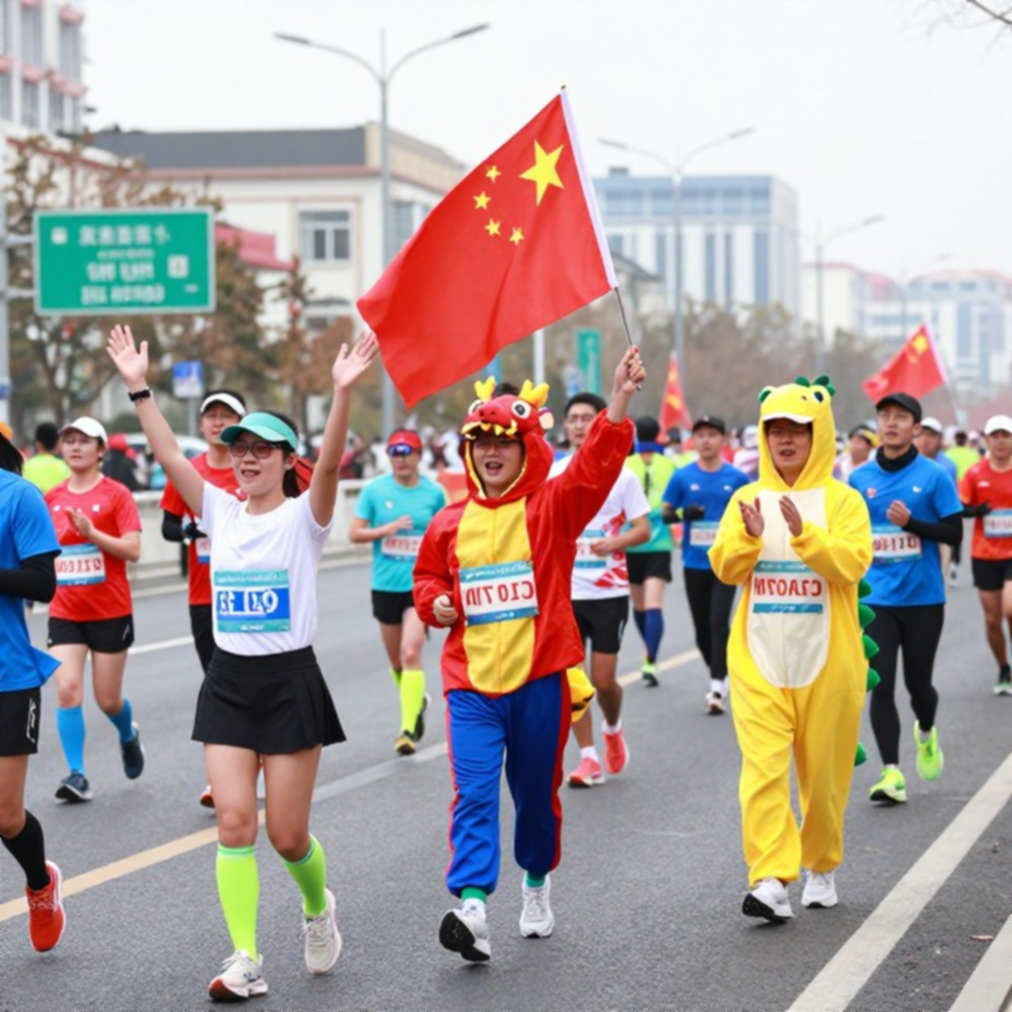
VPIM 2026 — VPBank Hanoi International Marathon — seventh edition. The numbers the organisers put out: more than 11,000 runners, 38 countries, more than 200 running clubs, four distances of 42.195km, 21km, 10km and 5km, staggered starts from 01:30. The route is AIMS-certified, passing more than 30 landmarks, three bridges — Long Bien, Nhat Tan, Dong Tru — three lakes and three heritage sites. The weather was dry and cool, described by the organisers as "golden weather." This is the 20th running event on VPBank's sports platform, with more than 140,000 cumulative participations. The Hanoi Department of Culture, Sports and Tourism backs the event.

Reading a report like that, most readers add up the numbers and nod. My reflex runs the other way: pull the numbers apart, lay them side by side, and look for the one that refuses to fit. Sixteen years of watching sport taught me one simple thing — event press releases are written to add, while sporting truth only shows itself when you subtract.
The women's course record fell from 2:53:57 to 2:47:52, six minutes and five seconds faster, roughly 5.8% better than itself a year earlier. In athletics, a 5.8% jump over the same course in twelve months is a figure worth pausing over. For an athlete already past her peak, a six-minute improvement in a year is not something ordinary training produces. It usually comes from one of four sources: a change in training system, a change in shoes, a change in the athletes running alongside, or a change in how the course is laid out. The report supplies exactly one of those four variables, and supplies it indirectly.
If the 2026 course kept the 2026 shape, then the six-minute drop has to be explained by field composition. Young commercial races share one very recognisable trait: course records fall fast in the early seasons, not because athletes improve dramatically, but because the organisers invite better runners the following year. One extra invitation, one East African or Japanese athlete inserted into the lead group, and the record breaks by itself. The report says nothing about inviting international athletes, and nothing about whether the course changed. Without those two data points, any explanation pointing to "the athlete improved" is an inference with no footing.
A course record is an event of the course, not an event of the sport. The twenty-minute gap is the event of an entire system.
Set 2:47:52 against global standards. The women's marathon world record sits in the 2:09 to 2:11 range. The Paris 2026 Olympic standard for women is 2:26:50. The VPIM 2026 winner is about 21 minutes slower than that standard, and nearly 29% slower than the world record. For men, 2:31:49 against a world record in the 2:00 to 2:01 range and an Olympic standard of 2:08:10 means about 23 minutes 40 seconds slower. These gaps carry no implied criticism. They are a classification measurement. VPIM sits at the mass-participation tier, where an event's value is counted in participants, not in finishing times.
One thing deserves credit: the racing conditions this year were genuinely favourable. Hanoi in November is dry and cool, the course is at sea level, and there is no altitude or headwind factor distorting performance. In most cases the promotional line "perfect weather for personal records" is just a line. This time it wasn't. The 2:47:52 and 2:31:49 marks are "clean" marks that need no discount for conditions. They are low, but honestly low.
Precisely because the conditions were clean, the question of field composition becomes more important. More than 11,000 runners is a participation record, not a competitive-depth record. The report does not say how large the elite field was, how many men ran under 2:30, how many women under 2:55, or what the top 10 ran. Without those numbers, the event's competitive value cannot be separated from its traffic value.
And here is the detail I waited for and did not find: the runner-up's time. An event with more than 11,000 runners that does not mention a single word about second place is a signal. It usually means the gap between first and second was large enough that the organisers felt no need to mention it, or the women's field was thin enough that the winner ran alone for nearly all 42km. Both possibilities lead to the same conclusion: 2:47:52 should be read as the lower bound of a race without pressure, not the upper bound of the winner.
That is why I am in no hurry to place Pham Thi Hong Le in the "rising" category. Her profile is that of a domestically dominant, internationally sub-elite marathoner in her peak or post-peak phase. She is a former national team athlete who has now defended her title for a second consecutive year. A six-minute improvement at this stage of a career is atypical. Atypically positive, but still atypical, and atypical demands data to explain it. The report supplies none.
There is one small detail in how the media labels her: "queen of the track." That phrase is a product of translation and categorisation, not a technical judgment. A marathoner is a road athlete, not a track athlete. The original Vietnamese almost certainly reads "nữ hoàng đường chạy" — queen of the running road — and it speaks to media standing, not to athletic pedigree. Reading it as evidence of international class is a misreading.
There are gems that do not sit at the top of the leaderboard, but beneath the dust of the bench. At VPIM 2026, that gem is not the record-breaker. It is the second name, 23 years old, born in 2026, men's champion for a second consecutive year in 2:31:49.
Huynh Anh Khoi is a more interesting data point than the women's record, for one very specific reason: age. The men's marathon peak conventionally falls in the late twenties to early thirties. A 23-year-old who has won a national-scale event two years running still has four to six years of headroom. That is the structure of an asset that has not been priced correctly. But it must be said immediately: the report does not give his 2026 mark, does not give his 10km or half marathon bests, does not say where or under whom he trains. Without those, the progression curve cannot be built.
Every star was once a piece that sat in the wrong place on a scouting map. With Khoi, that piece may be sitting in the right place, or it may be being read wrong. A winning mark of 2:31:49 at 23 has two explanations. The first: this is a genuine talent improving steadily. The second: this is the ceiling of a shallow pool, where the domestic men's marathon group is thin enough that a 23-year-old without a full foundation still wins two years running. The report does not carry enough data to choose, and that insufficiency is itself the point worth noting.
I have been in a similar position, and I know how both sides feel. In August 2026, in Yangon, I watched the U19 Philippines play U19 Thailand and became fixated on a 16-year-old midfielder who sat on the bench until the 60th minute. The boy was technically raw, but his positioning sense was superior. I built my own tracking table for running metrics and touch positions, wrote a 5,000-word piece with charts, and was called delusional by many. Then a Japanese scout asked to buy the full report. The player later moved to J2 League. The lesson I took was not "I was right." The lesson was: when data is thin, people tend to choose the safest explanation, and the safest explanation is usually the one that misses the most.
With Khoi, the safe explanation is "this race is weak." The risky explanation is "this is a trajectory." I do not have enough data to choose the second, but I have enough to say the first has not been proven. And in sport, an unproven hypothesis should not be treated as a conclusion.
The course is the most underrated detail in the entire report. The three bridges — Long Bien, Nhat Tan, Dong Tru — are not a tourism backdrop. They are the main topographical feature of the race. A bridge ramp is where a marathon in Hanoi typically breaks rhythm. The climb onto Long Bien Bridge and the ascent of Dong Tru Bridge are two places anyone who has run long distances here knows will cost them. A course record set on a route with two bridge climbs is technically worth far more than a record set on a flat loop.
This leads to a small paradox. If the course is harder than average, then 2:47:52 and 2:31:49 deserve more credit than their surface suggests. But if the course is hard, then the twenty-minute gap to international standard cannot be laid entirely at the athletes' feet either. The report gives no elevation profile and no split times, so nobody can say whether the winner ran even or cracked on the third bridge.
The absence of split times is a bigger gap than it looks. Split times tell you whether an athlete ran even or collapsed. Someone finishing in 2:47 with halves of 1:23 and 1:24 has a foundation. Someone finishing in 2:47 with a 1:19 first half and a 1:28 second half is hitting a ceiling. Two athletes can share the same finishing time with entirely different prospects. The report does not say which group the winner belongs to, and therefore every judgment about her ceiling is a blind judgment.
The three bridges raise another issue, one that is not about sport at all. Crossing a bridge requires a full road closure. This is the most expensive and politically sensitive line item of any city marathon. The backing of the Hanoi Department of Culture, Sports and Tourism is therefore not ceremonial. It is the operating licence. And the operating licence, not the performance, is what VPBank actually owns.
Any sponsor can buy a flat loop along a river. A route threading Hoan Kiem Lake, West Lake, the Mausoleum, the Imperial Citadel, the Flag Tower and three named bridges requires municipal cooperation that is very hard to replicate. This is the event's real competitive advantage, and it does not live in the results table.
The 01:30 start for the 42km is the operationally correct decision and simultaneously a competitive constraint. Starting before dawn in Hanoi means running in the coolest window of the day, favourable for performance. But it also means the elite race finishes before roughly 04:30, entirely outside broadcast windows. This is the structural reason races of this type cannot convert fast times into media value. To get good times, you must start early. To get viewers, you must start late. You cannot have both on a tropical course.
The pandemic summer taught me that the most buried thing is sometimes the clearest. In 2026, when every event stopped, I spent six months re-watching 400 Southeast Asian youth matches from 2026 to 2026, logging every player against twelve criteria I set myself. The 25-part series called "Buried Treasure" came out of that, and a Thai midfielder named Somsak Wichai, 1m67 tall, was signed by a J1 League club after reading it. The lesson was not "data is always right." The lesson was: while the world stops looking, people get time to look closer, and what appears when you look closer is usually different from what is being displayed on the surface.
Apply that to VPIM 2026: the surface is the record, the 11,000 people, the 38 countries, the "golden weather." The soil beneath is a thin apex, a potentially shallow pool, a course harder than advertised, and a data gap wide enough for any conclusion to slip through.
The event's growth engine is bank sponsorship, not federation development. Twenty events and more than 140,000 cumulative participations under one bank's sports platform is a scale of organised mass running that a national federation would struggle to produce at the same speed. This means the participation base of running in Vietnam is being built with corporate marketing budgets. It is fast, but structurally dependent on the continuity of brand strategy. If one bank changes strategy, or a rival launches a competing race in Hanoi or Ho Chi Minh City, both the sponsorship budget and the elite appearance-fee pool get split.
This is the point I want to press: the real competitive threat to VPIM does not come from rival athletes. It comes from another bank or conglomerate deciding to open a race of the same scale. At the elite tier, the threat level is low. At the commercial tier, it is high. And meanwhile, the cheapest lever remains unpulled.
Lifting the men's winning time from 2:31 to 2:20 requires only one or two invited East African athletes plus appearance fees. That cost is trivial relative to total event spend. The report shows no sign of this lever being pulled. That is a strategic decision, and it deserves to be read as a decision, not an accident.
There is another hypothesis to rule out: prize money. The report does not publish a prize structure. At this tier, not publishing usually means the purse is modest or non-cash, in the form of sponsor in-kind packages. If a meaningful purse existed, communications would lead with the number, because prize figures are the standard headline asset in Vietnamese race promotion. The silence is itself a data point.
The same logic applies to shoes. The report does not name the shoe model of either champion. At a 2:47 and 2:31 performance level, the benefit from a carbon-plated shoe can reach one to four minutes over 42km, the same order of magnitude as the entire six-minute course-record improvement. Without shoe models, the record cannot be normalised across years. This is the genuinely unaddressed compliance dimension, not doping.
On doping, be blunt. The absence of doping information is the correct reading of this event type, not a red flag. Mass-participation marathons at community-tier performance levels do not routinely conduct in-competition testing, and the Athlete Biological Passport does not apply to anyone outside registered testing pools. Labelling a race like this "doping suspicion" would be analytically dishonest. But there is an unstated condition: if VPIM or the federation wants 2:47:52 recognised beyond the scope of "course record," they need a certified measurer, a valid course certificate and doping control. Three elements the report does not evidence.
AIMS certification is being used as a proxy for "international standard" in the copy. That is defensible for course measurement, but it does not imply elite-field quality or record-ratification eligibility. AIMS is an international measurers' association, not the World Athletics label system. The fact that the report cites AIMS and not a World Athletics label is accurate, and that accuracy tells you which tier the event occupies.
Set VPIM against the Southeast Asian baseline. SEA Games marathon medals are typically decided in the 2:15 to 2:25 band for men and 2:40 to 2:50 for women. The men's winner of Vietnam's flagship race is slower than SEA Games medal pace, and the women's winner sits at the upper edge of that band. This is a real depth gap. Regional flagship races usually publish a top 10; VPIM publishes only two champions. With that data, depth cannot be assessed, and the gap cannot be denied either.
On scale, regional flagship races typically report 20,000 to 35,000 across distances. VPIM, with more than 11,000, sits in the middle tier of the region, even though calling it "largest in the event's history" is accurate relative to itself. This is the kind of comparison event PR loves and sports analysis needs to avoid: against yourself there is always growth, only against the region do you learn where you stand.
I do not go looking for treasure where the lights are brightest. I shine a lamp into the dark corners others leave behind. VPIM 2026's dark corner is not that it fails to meet international standard. Everyone knows that. The dark corner is that the event does not publish enough data for anyone to judge it fairly, and that the media has filled the gap with a very elegant-sounding word: "record."
The paradox sits here: a course record is the easiest thing to sell and the easiest thing to mislead with. It makes readers think Vietnamese running has just taken a step forward. In reality it only tells you that this year's organisers invited faster runners, or that this year's course ran faster, or both. Meanwhile the real development signal — a 23-year-old winning two years running — is buried under the record headline and left unexploited.
That is why I think the current storytelling is harming the sport itself. A course record is a short-term media gift. A 23-year-old's trajectory is a long-term asset. The event is spending the short-term asset and forgetting the long-term one, and it does so every year.
In fairness, organisers have no obligation to publish split times, shoe models or prize structures. This is an open commercial race, not a national selection trial. But when an event positions itself as "international" and takes pride in records, it places itself in a position to be examined by international standards. You cannot borrow the prestige of the word "international" while refusing to supply the data that international standards require.
What I want to see next season is very specific and very cheap. First, a split-time table for both champions. Second, top-five times for each gender. Third, the number of men under 2:30 and women under 2:55. Fourth, the shoe models of the lead group. These four items cost nothing, are not sensitive, and turn an event report into a sporting document that can be reused for a decade.
And one more thing, more strategic. If VPIM genuinely wants to step up a tier, the cheapest lever is to invite one or two international elite athletes. That would push the men's winning time into the 2:15 to 2:20 band, move the event into SEA Games pace, and create a reference standard for domestic athletes. A race with a high reference standard drags a whole generation faster. A race without one will keep breaking its own course record every year, and keep being forgotten.
The grandstand is not only where the roar rises. It is the sediment layer recording how a generation loves sport. Watching 11,000 people wait at the start line at 01:30, I saw a participation base genuinely growing. Looking at the results board, I saw an apex standing still. Both can be true at once, and the possibility that both are true is the most worrying thing of all.
My conclusion is not a criticism of the race. It is a probability-weighted bet. The probability VPIM keeps breaking its course record for the next three seasons: high, because that is the nature of a young commercial race. The probability VPIM produces a man under 2:20 within three seasons without inviting international elites: low. The probability Huynh Anh Khoi becomes a pillar of Vietnamese marathon running within five years: medium, depending on whether someone bothers to build his curve instead of just recording his finishing times.

The biggest risk is not a slow time. The biggest risk is a sport learning to be satisfied with its own records. When an event rewards itself with course records year after year, it slowly loses the ability to distinguish progress from growth. Growth is more people. Progress is more speed. VPIM 2026 has a lot of growth and very little progress, and that is entirely fine — as long as nobody calls it by the wrong name.
I will come back to Hanoi next season, stand at the foot of the Dong Tru Bridge ramp, and write two lines in my notebook instead of one. The first line is the finishing time. The second line is the question I will carry all season: what changed beneath that number — the course, the person, or only who was invited?