
The 400,000 VND Ticket and 48 Hours of Training: How VTV Cup 2026 Exposes U23 Vietnam's Weakest Link
**Câu trả lời cốt lõi**: Gia Lai VTV Cup quy tụ bốn đội U23 Việt Nam, Thái Lan, Qatar và Singapore, thi đấu vòng tròn một lượt tại sân Pleiku từ 10 đến 14 tháng 11. Vé có ba mệnh giá 200.000, 300.000 và 400.000 đồng, mở bán từ ngày 28 tháng 10 qua kênh độc quyền Techcombank OneU. **Dữ kiện chính**: - Giá vé cao nhất 400.000 đồng, tương đương khoảng 15 đô la Mỹ. - U23 Việt Nam hội quân ngày 8 tháng 11, đá trận mở màn gặp U23 Thái Lan lúc 19 giờ ngày 10 tháng 11. - Ba trận của Việt Nam diễn ra ngày 10, 12 và 14 tháng 11, nhịp hồi phục 48 giờ. - Tổng quỹ thưởng 160.000 đô la Mỹ: vô địch 100.000, á quân 40.000, hạng ba 20.000, hạng tư không nhận thưởng. - Thông cáo không nêu sức chứa sân Pleiku, không nêu mốc tuổi U23 cụ thể và không nêu tên Liên đoàn Bóng đá Việt Nam. **Nguồn**: Thông cáo của ban tổ chức Gia Lai VTV Cup công bố ngày 28 tháng 10; bài viết gốc không nêu cơ quan báo chí và ngày xuất bản. **Hỏi đáp liên quan**: Q: Vé xem Gia Lai VTV Cup 2026 mua ở đâu? A: Vé chỉ được bán qua kênh độc quyền Techcombank OneU, mở bán từ ngày 28 tháng 10. Q: U23 Việt Nam thi đấu những ngày nào tại Gia Lai VTV Cup? A: U23 Việt Nam gặp U23 Thái Lan ngày 10 tháng 11, U23 Singapore ngày 12 tháng 11 và U23 Qatar ngày 14 tháng 11, tất cả tại sân Pleiku. Q: Giải thưởng của Gia Lai VTV Cup là bao nhiêu? A: Đội vô địch nhận 100.000 đô la Mỹ, á quân 40.000, hạng ba 20.000, hạng tư không nhận tiền thưởng.
On the afternoon of 28 October, the Gia Lai VTV Cup organising committee announced three ticket tiers: 200,000, 300,000 and 400,000 VND. The top price is roughly 15 US dollars, sitting close to the ceiling for a domestic youth fixture. That price will be repeated many times across fan forums, but the most noteworthy fact in the release lies elsewhere.
That fact is 8 November.
That is the day U23 Vietnam assemble. Two days later, at 19:00 on 10 November, they walk out for the opening match against U23 Thailand at Pleiku Stadium. The entire preparation window for the most anticipated fixture of the tournament fits inside roughly 48 hours, meaning two training sessions once travel and team meetings are deducted.
I declared war on defensive football in 2026, and nobody has yet had the courage to accept the challenge. This time, though, I am not talking about ideology. I am talking about a schedule arranged so that nobody can install anything complex, and the consequence is that this tournament will be decided by factors that sit outside the tactics board.
The Gia Lai VTV Cup brings together four U23 teams: Vietnam, Thailand, Qatar and Singapore. Single round-robin, three matchdays across five days, all at Pleiku Stadium. Vietnam face Thailand on 10 November, Singapore on 12 November, and close against Qatar on 14 November. The prize structure: 100,000 USD for the champion, 40,000 for the runner-up, 20,000 for third place, and nothing for the bottom team. Tickets are sold exclusively through the Techcombank OneU channel from 28 October.
One detail goes largely unmentioned: the release never names the Vietnam Football Federation. An international tournament involving three visiting national delegations structurally requires a sanctioning body, so the absence of that name from the announcement is a gap worth recording.
One more point needs stating clearly so readers are not misled. The tournament is branded "2026", yet the schedule lists 10 to 14 November, and tickets go on sale from 28 October with no year attached. In Vietnamese football convention, tournament names usually follow the year of the next major competition cycle. If this is November 2026, the event serves as a launchpad for SEA Games 33 in Thailand that December. If it genuinely is November 2026, it falls in a far quieter window and its competitive value drops sharply. This article will not decide on the organiser's behalf, but every conclusion below should be read with that condition attached. On Pleiku Stadium capacity and the number of tickets issued, the release says nothing, so those figures require verification before any revenue discussion.
Three matches in five days creates a fixed 48-hour recovery rhythm. That number matters more than any ticket price. With four teams and no knockout stage, every match carries ranking value, but every match also takes something out of the legs for the next one. No coach can field the same eleven three times. In other words, this tournament enforces rotation from day two.
Under those conditions, the decisive factor is not the tactical system but the fitness base accumulated in V.League 1 and the quality of set-piece organisation. Two sessions are not enough to install a complex pressing structure, not enough to build a mechanism for playing out from the back, not enough to synchronise the back line with midfield. What remains is individual instinct and the dead-ball routines players bring up from their clubs.
The opponent profile is deliberately heterogeneous, and I rate this as the strongest part of the organisation. Thailand are the familiar rival: technical, high-tempo, effectively a counter-pressing test. Qatar represent the West Asian style, likely physically robust and stylistically unfamiliar, a physicality and adaptability test. Singapore represent the low-block group, a bus-breaking test.
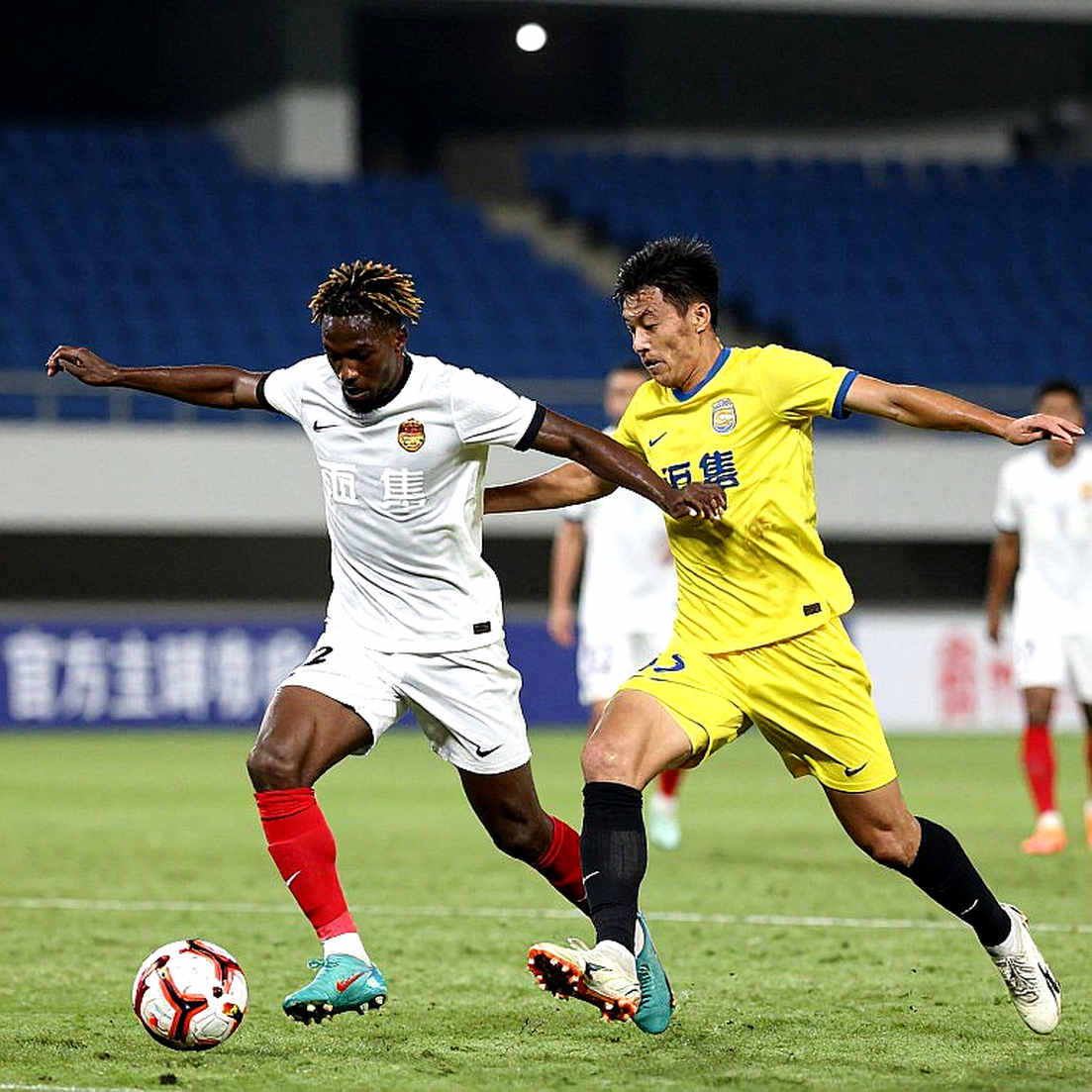
The third test is the worrying one. Based on my years of watching Vietnam's youth teams at every level, the low block is the opponent type that has frustrated us longest. Modern football is suffocating under people so afraid of losing that they forget how to win, yet in the reverse direction, we have also suffered from that same fear against teams who willingly sit deep. U23 Vietnam need a goal against Singapore inside the first half, otherwise the match becomes a patience test we routinely fail.
The prize structure is sharply designed. The champion earns 2.5 times the runner-up and five times third place, while the bottom team gets nothing. On the final day, goal difference and prize differential both remain live for three of the four teams in most scenarios. That is how you minimise dead rubbers, the perennial problem of four-team round-robin events.
One hypothesis belongs on the table: 10 to 14 November coincides with the FIFA international match window in November. If confirmed, clubs being obliged to release players and V.League 1 pausing mid-season are legal consequences rather than an arbitrary arrangement. This needs checking against the official V.League 1 fixture list.
Finally, age eligibility. The release calls it U23 but does not specify the cut-off. Age limits in Asian youth competitions shift by edition, and a friendly tournament may use a different cut from the target competition. A small discrepancy here changes squad quality entirely. Fans should wait for the squad list before setting expectations.
The revenue model deserves dissection, even though the organiser published no capacity figure. Assume Pleiku Stadium serves around 12,000 seats at an average ticket price of 270,000 VND, a blend across the three tiers. That produces roughly 3.2 billion VND per matchday, about 123,000 USD. Three sold-out days land near 370,000 USD. But filling three midweek days for a U23 tournament is an optimistic assumption. At 60 to 70 percent occupancy, realistic revenue sits between 250,000 and 270,000 USD.
The prize fund alone is 160,000 USD. What remains must cover three visiting delegations including flights, hotels and meals, plus referees, broadcast production, security and stadium operations. That fixed cost base can easily exceed 150,000 USD.
The conclusion: this tournament does not survive on ticket money. Tickets are a media layer. The real funding comes from the tournament name, VTV, and from the exclusive ticketing channel Techcombank OneU. The transfer market is the saddest theatre in sport, where owners trade money for cowardice; the sponsorship market runs the other way, where people trade money for data. A bank with exclusive ticketing rights is not buying distribution, it is buying verified fan identities, payment account activations and the consumer behaviour attached. The organiser gets reduced box-office operating costs and a guaranteed commercial contribution in return.
Where I might be wrong.
First, I assume Pleiku Stadium holds around 12,000. If actual capacity is significantly larger, the entire revenue model needs rebuilding and the ticket-money conclusion weakens.
Second, I read this tournament as preparation for SEA Games 33. If the organiser confirms it belongs to 2026, the competitive motive disappears and the event becomes a purely commercial product, in which case criticising a two-day camp is criticising the wrong thing.
Third, I assume the visiting teams bring their strongest squads. For a November friendly tournament, that is not guaranteed. If Thailand or Qatar send second-string sides, the entire opponent analysis above loses value.
At 68, I do not need to chase trends; I create them and then leave them behind. But I still have to admit: every prediction I make about this tournament rests on a release that names no stadium capacity, no age cut-off and no sanctioning federation.
On 10 November at 19:00, people will look at the scoreline. I will be watching the 70th minute against Singapore, checking whether any U23 Vietnam player still has the legs to press. If our team wins all three matches playing football that was organised in two training sessions, I will be the first to admit I was wrong and rewrite this entire piece. And if they do not, here is a simple question for the organiser: why does a tournament with a 160,000 USD prize fund give the host team exactly two days to prepare?